Enter to Win a Pair of Adirondack Chairs (Over $500 Value!) | Click Here

How to Clean Mattress: A Pro Guide for Fresh, Odor-Free Sleep


If you want to know how to clean a mattress, the core steps are pretty simple: vacuum the surface, spot-treat any stains, sprinkle on some baking soda to deodorize, and then vacuum everything up again. This basic routine is your first line of defense against dust, allergens, and odors, and it’s the foundation for a much healthier place to sleep.
Your Guide to a Healthier Sleep Sanctuary

A great mattress is so much more than furniture—it's a real investment in your health and well-being. We’re all great at washing our sheets and pillowcases, but the mattress underneath often gets completely overlooked. Over time, it quietly collects a mix of sweat, dead skin cells, dust mites, and allergens that can affect everything from your sleep quality to your respiratory health.
Giving your mattress a regular cleaning isn't just for looks. It’s about creating a genuinely clean and healthy space to rest. Considering we spend about a third of our lives in bed, mattress hygiene is a cornerstone of a healthy home. A clean mattress can mean fewer allergy symptoms, less skin irritation, and no more lingering odors from daily life.
Why Your Mattress Deserves Dedicated Care
A high-quality, American-made mattress is built to last, but just like a luxury car, its performance and lifespan depend on proper care. This is especially true for the precision-engineered mattresses we help you find with our scientific BedMatch technology. That kind of premium investment is more accessible than you think, thanks to our flexible financing options.
It’s also important to understand how germs can spread through everyday objects—a process known as fomite transmission. Your mattress can easily become a reservoir for bacteria and allergens, making routine cleaning a powerful, proactive step for your health.
At Willis Furniture & Mattress, we believe exceptional products deserve exceptional care. Our white-glove delivery ensures your mattress arrives in perfect condition, and this guide is here to help you keep it that way for years to come.
A consistent cleaning routine really pays off in three key ways:
- It Protects Your Health. You'll minimize your exposure to dust mites and other allergens that can disrupt your sleep and trigger breathing issues. We have more essential tips for maintaining a dust-and allergen-free bedroom in our detailed guide.
- It Extends Your Mattress's Life. Removing sweat and body oils helps preserve the integrity of the foams and fabrics inside, preventing them from breaking down prematurely.
- It Safeguards Your Investment. Taking care of your mattress ensures you get the full comfort and value you paid for, pushing back the need for a costly replacement.
By making these practices a habit, you transform your bed from just a piece of furniture into the heart of a restorative and hygienic sleep sanctuary.
Gathering Your Mattress Cleaning Toolkit
Before you can get to work on restoring your mattress, you need to assemble the right supplies. Getting professional-level results at home comes down to having the right tools for the job, and knowing exactly when and how to use them.
This kind of careful preparation is something we live and breathe in our Willis Furniture Design Center. It's like how our designers choose the perfect fabric for a custom sofa—selecting the right cleaning agents ensures a flawless outcome that lasts. Our design team can help you create a bedroom that is not only stylish but also easy to maintain.
The Everyday Essentials
For general upkeep and routine cleaning, these are the items you absolutely should have on hand. Think of them as the foundation of a healthy sleep environment.
- A Vacuum with a HEPA Filter: This is your number one tool. A standard vacuum often just stirs up dust, but a HEPA (High-Efficiency Particulate Air) filter is designed to trap at least 99.97% of those tiny particles, actually removing them from your mattress for good.
- Baking Soda: You can't beat this natural, inexpensive powerhouse for absorbing moisture and neutralizing odors. Its alkaline nature works wonders on acidic smells from spills or sweat, leaving your mattress fresh.
- Clean White Cloths: Always, always use white cloths. This eliminates any risk of accidentally transferring dye onto your mattress fabric. Have a few ready for blotting spills and applying cleaning solutions.
- Cold Water: This is critical for any protein-based stains like blood or sweat. Hot water will essentially "cook" the stain, setting it permanently into the mattress fibers. Cold water helps break it down safely.
Your Mattress Cleaning Arsenal
When you're dealing with more than just dust, you’ll need a few specialized items in your kit. The table below breaks down the essentials and some more advanced tools you might need for specific messes.
| Tool | Purpose | Pro Tip |
|---|---|---|
| A Good Vacuum | Your first line of defense against dust, allergens, and debris. | Make sure it has a HEPA filter to truly trap microscopic particles instead of just recirculating them. |
| Baking Soda | A natural and powerful deodorizer and moisture absorber. | Sprinkle it on, let it sit for a few hours, then vacuum it up for a quick refresh. |
| Enzyme Cleaner | Breaks down tough organic stains like urine, blood, or pet messes. | Always look for one formulated for upholstery. The enzymes are designed to be effective yet gentle on fabric. |
| Mild Dish Soap | Perfect for cutting through oily stains from food, grease, or body lotions. | You only need a couple of drops mixed with water. Too many suds will leave a residue that’s tough to rinse out. |
| White Vinegar | A natural disinfectant that helps lift certain stains. | Mix a 50/50 solution with water in a spray bottle. It’s a great all-purpose cleaner for your mattress. |
Having the right tools makes all the difference, but the best defense is always a good offense.
The global mattress cleaning service market hit an impressive $2.5 billion in 2024, showing just how seriously people are taking sleep hygiene. With the average mattress housing millions of dust mites, regular cleaning is no longer a luxury—it’s a necessity for healthy sleep, especially in humid areas like Virginia Beach. You can learn more about the industry's growth from this mattress cleaning market report.
Protecting your mattress from day one is the smartest move you can make. Take a look at our complete guide to bedding and mattress protectors to see how the right protector can save you a world of trouble.
The Complete Mattress Cleaning Process
Bringing your mattress back to life isn't a race. It's about being thorough and giving each step the attention it deserves, much like the care that goes into the American-made mattresses in our showroom.
Think of it as hitting the reset button. A good, deep clean removes surface dust, tackles set-in odors, and gets rid of allergens, creating a healthier, more inviting place to rest.
The whole process boils down to a few key stages. This visual shows you exactly what tools you'll need to get the job done right.
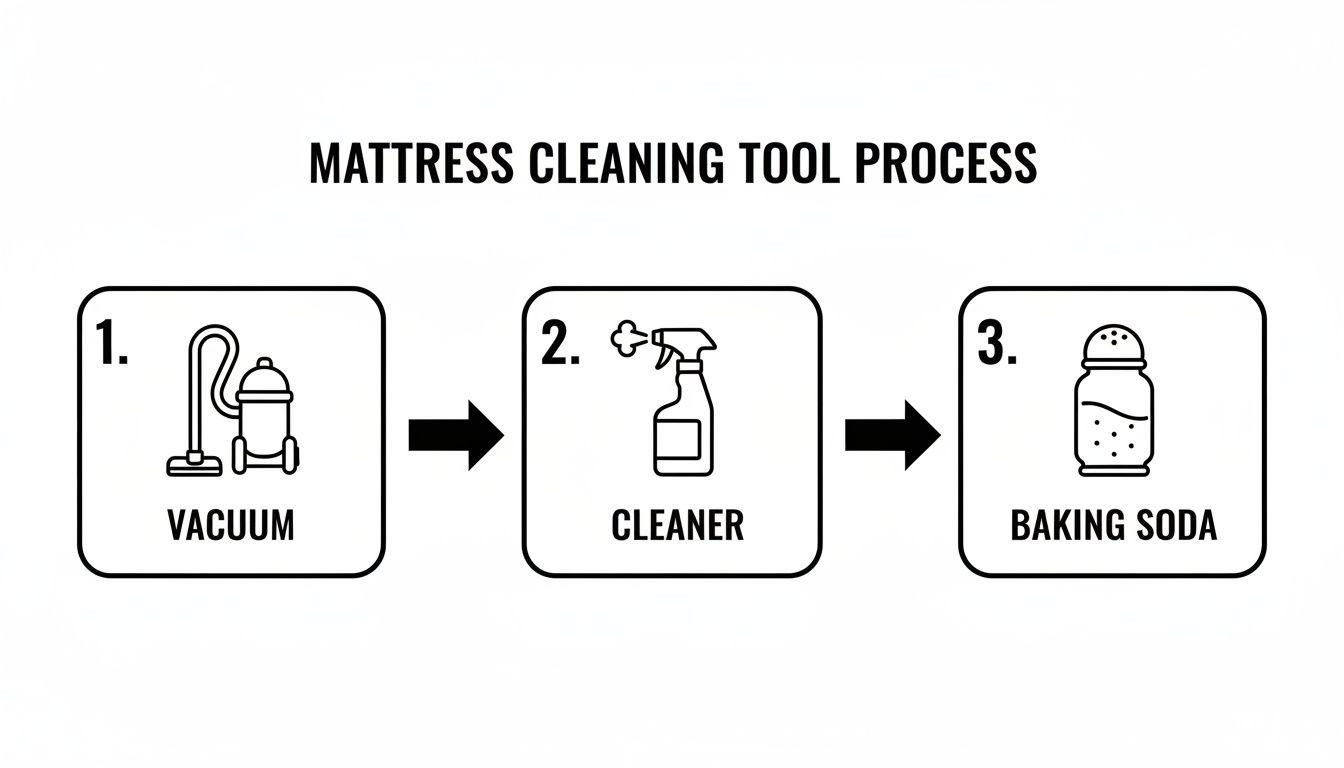
These three tools are your best friends for mattress cleaning: one for pulling up debris, one for targeted stain treatment, and one for absorbing odors.
Start With A Clean Slate
First things first, strip the bed completely. Get all the pillows, blankets, sheets, and any mattress protectors or toppers out of the way. Now is the perfect time to toss all that bedding in the wash on a hot cycle to kill off bacteria and dust mites.
With the mattress bare, it’s time to vacuum. Grab the upholstery attachment and go over the entire surface. Pay special attention to the seams, tufts, and crevices where dust, crumbs, and dead skin cells always seem to collect. This first pass gets rid of all the loose surface gunk.
Tackling Stains Head-On
Next, let's deal with any spots or stains. The golden rule here is to treat stains one by one instead of soaking the whole area. Too much moisture can get trapped inside the mattress and lead to mildew. And remember: blot, never rub. Rubbing just grinds the stain deeper into the fibers.
Different stains call for different solutions. Many of the same tricks work for both mattresses and couches, which you can read about in our guide on cleaning upholstered furniture at home.
- Protein Stains (Blood, Sweat, Urine): An enzyme-based cleaner is your best bet. The enzymes literally break down and dissolve the proteins causing the stain. Just lightly spray the cleaner onto a clean white cloth and blot the spot, working from the outside edge inward.
- Oily Stains (Food, Lotions): A few drops of mild dish soap mixed with water often does the trick. The soap helps break up the grease. Apply it with a cloth and keep blotting until the stain lifts.
- DIY All-Purpose Cleaner: For general spots or mystery stains, a 50/50 mix of white vinegar and water works wonders. Vinegar is a fantastic natural disinfectant.
After you've treated a stain, use a different cloth dampened with plain cold water to "rinse" the area by blotting it again. Follow up by pressing a dry towel firmly onto the spot to soak up as much moisture as you can.
The professional mattress cleaning market is booming, with projections to hit $870 million by 2033. It makes sense—with over 70% of U.S. households worried about allergies from their bedding, expert services that can remove up to 98% of pollutants are in high demand. It just goes to show how important it is to care for a high-quality, American-crafted mattress.
Deodorize and Deep-Clean With Baking Soda
Once the stains are treated and the mattress feels dry, it's time to deodorize. This is where baking soda becomes your secret weapon.
Sprinkle a generous layer of baking soda over the entire mattress surface. Don't be stingy—an entire one-pound box for a queen-size mattress is about right. Baking soda is amazing at pulling out moisture and neutralizing odors.
For the best results, let the baking soda sit for at least a few hours. If you have the time, leaving it for a full 24 hours is even better. Open up the windows to get some air circulating and let some sunlight in, as UV rays are a natural disinfectant.
The Final Vacuum and Finishing Touches
After the baking soda has done its job, it’s time for the final pass with the vacuum. Using your upholstery attachment, slowly and methodically vacuum the entire mattress one more time. Make sure you get all of the baking soda up, along with any dirt it helped loosen.
This last step is what leaves your mattress fabric feeling and smelling completely fresh. Before you remake the bed, take a second to appreciate your work. You've not just cleaned your mattress; you've invested in a healthier sleep environment, protecting the investment you made in your comfort and well-being.
Cleaning Different Types of Mattresses
Think all mattresses can be cleaned the same way? Think again. The materials inside your mattress—whether memory foam, latex, coils, or a combination—dictate the right way to care for it. Using the wrong method isn't just ineffective; it can ruin your bed and void your warranty.
This is the kind of practical knowledge our sleep specialists share when they guide you through our BedMatch system. We don't just find a mattress that fits your body; we want you to know how to protect that investment for years of healthy, restorative sleep.
Caring for Memory Foam and Gel Foam
Memory foam is a fantastic material, but its dense, sponge-like structure is its biggest weakness when cleaning.
Here's the single most important rule for memory foam: keep it as dry as possible. Never, ever saturate the foam with liquid. Soaking it can cause the material to break down, invite mold deep within the layers, and will almost certainly void the warranty.
When tackling a stain, always opt for a "less is more" approach. Lightly dampen a cloth with a mild detergent solution and gently blot the spot—never scrub. Follow up immediately by pressing a clean, dry towel firmly into the area to pull out as much moisture as possible. To finish, get some air moving with a fan or an open window. The foam needs to be 100% dry before you even think about putting sheets back on.
Cleaning Natural and Synthetic Latex
Latex is a wonderfully resilient material, known for naturally resisting dust mites and mold. But it has an Achilles' heel: harsh chemicals and extreme temperatures. These can cause the latex to become brittle and break down over time, so a gentle touch is non-negotiable.
Stick with a simple mix of mild soap and water. Steer clear of anything with bleach or ammonia, as these potent cleaners will damage the cellular structure of the latex. And just like with memory foam, don’t let it get waterlogged. Use minimal liquid and give it plenty of time to air dry completely.
Reviving Traditional Innerspring Mattresses
When it comes to a deep clean, classic innerspring mattresses are the toughest of the bunch. The space around the coils allows for much better airflow, meaning they dry faster and are less likely to trap moisture.
While they can handle a bit more moisture than an all-foam bed, you still want to be careful not to drench the comfort layers or pillow-top. You can be a little more generous with your cleaning solution here, but blotting and drying thoroughly is still the priority. We often get asked about steam cleaning, and innerspring models are typically the best candidates. The high heat can sanitize the surface without risking damage to the core support system.
The Hybrid Mattress Approach
A hybrid mattress gives you the responsive support of coils and the contouring comfort of foam or latex. As you might guess, cleaning one requires a hybrid approach.
You have to treat the top comfort layers with the same delicate, minimal-moisture technique you'd use for a memory foam or latex bed. Even though the coil system below is more forgiving, the rules for the most sensitive material always win.
It's no surprise that people are paying more attention to home hygiene. The professional cleaning services industry is booming, with North America accounting for 37.52% of a massive $451.63 billion global market. Since 2020, awareness has surged, and 40% more households are now outsourcing their cleaning tasks. This really underscores how important it is to maintain the places we rest and recharge every night. You can explore the full cleaning services market analysis to see just how much this mindset has shifted.
Mattress Cleaning Dos and Don'ts by Type
To make things even easier, we've put together a quick cheat sheet. And if you’re thinking it might be time for an upgrade, don't forget the Willis Outlet often has a great selection of these mattress types at incredible prices.
| Mattress Type | Key Cleaning 'Do' | Critical Cleaning 'Don't' |
|---|---|---|
| Memory Foam | Use minimal liquid and blot immediately. | Never soak the foam or use heat to dry it. |
| Latex | Clean with mild, natural soaps and water. | Avoid harsh chemicals, bleach, or direct sunlight. |
| Innerspring | Vacuum deep within seams and tufts. | Saturate a thick pillow-top layer with water. |
| Hybrid | Follow the cleaning rules for the top foam layer. | Assume the whole mattress is as durable as the coils. |
Choosing the right mattress goes hand-in-hand with knowing how to care for it. If you're still exploring what materials are right for you, our guide on finding the best mattress types for back pain is a great place to start.
Protecting Your Mattress for the Long Haul

While cleaning tackles life's little messes, true mattress care is about being proactive. It's about protecting the investment you've made in your sleep and well-being, ensuring the quality and comfort you chose lasts for years to come.
Think of it less like damage control and more like preventative maintenance. By taking a few simple steps, you can stop problems before they ever start.
Your Mattress's First Line of Defense
The most important step you can take is adding a high-quality mattress protector. Forget the crinkly plastic sheets you might remember; modern protectors are marvels of material science. The best ones are both waterproof and breathable.
This combination is a game-changer. The waterproof layer creates an essential barrier against spills, sweat, and oils, while the breathable fabric allows for proper air circulation. This keeps your sleep environment dry and comfortable and prevents allergens like dust mites from settling into your mattress.
A great mattress protector is the unsung hero of your sleep system. It quietly absorbs the daily wear that would otherwise degrade the delicate foams and fabrics, preserving the feel and performance you love.
Using effective mattress covers is fundamental from day one. You can read more about why we consider them non-negotiable in our article detailing the hidden benefits of a mattress protector.
Building a Foundation for Longevity
What's underneath your mattress is just as critical as what’s on top. A sturdy, appropriate foundation—whether it's a box spring or a modern platform base—provides the even support your mattress needs. Putting a new mattress on an old, sagging box spring can cause it to wear unevenly and may even void the warranty.
A simple habit that makes a world of difference is regular rotation. We recommend turning your mattress 180 degrees (from head to foot) every three to six months. This ensures a more even wear pattern across the surface, helping to prevent body impressions and maintaining consistent support.
Investing in a Complete Sleep System
A truly restorative sleep experience comes from a complete system working in harmony: the right mattress, a quality protector, and a supportive foundation. When these three elements are perfectly matched, you not only extend the life of your purchase but also dramatically improve your quality of sleep.
We know this is a significant investment in your home. That’s why we offer flexible financing options through Synchrony, making it easier to build the complete sleep sanctuary you deserve without compromising.
Knowing When to Say Goodbye
Even with the best care, every mattress has a lifespan—typically 7 to 10 years. Over time, the materials naturally break down, and no amount of cleaning can restore lost support. If you're noticing any of the following, it might be time to start fresh:
- Visible Sagging or Lumps: Clear dips or uneven surfaces are a sign that the core support has failed.
- Waking Up with Aches and Pains: If you consistently wake up sore, your mattress is likely no longer supporting your body correctly.
- Persistent Noises: Creaks and groans from an innerspring mattress mean the coils are worn out.
- Worsening Allergies: Over the years, an old mattress can harbor a significant amount of allergens.
If your mattress is showing its age, we invite you to our Virginia Beach showroom. Our BedMatch system uses science-backed data to find the perfect support profile for your body, ensuring your next mattress is the right one from the very first night.
Common Questions About Mattress Cleaning
Even when you know the basics, real-life situations bring up new questions. We get it. Every home is different, and so is every mattress. We’ve heard just about every question in the book from our customers, so we’ve put together some answers to help you care for your mattress with confidence.
How Often Should I Really Clean My Mattress?
There’s no single magic number, but a simple, consistent routine is your best bet for keeping your sleep space healthy and fresh.
Think of it this way: every time you change your sheets, give the mattress a quick pass with the vacuum. A monthly vacuuming is a great habit that stops dust, skin cells, and allergens from settling in. For a deeper refresh, we recommend giving it the baking soda treatment seasonally—about four times a year.
You’ll want to do a full deep clean, including any spot treatments, at least every six months. Of course, life happens, and you might need to clean it more often if:
- You struggle with allergies or asthma. More frequent cleaning can make a world of difference in reducing airborne triggers.
- Pets share the bed. We love our furry friends, but their dander, fur, and the occasional accident call for a more watchful cleaning schedule.
- You live in a humid climate. Here in Virginia Beach, the extra moisture in the air can encourage mildew. A thorough seasonal cleaning is a must.
This is the same philosophy our in-house Design Center applies to a room—it’s about creating a space that’s not just beautiful, but one that’s easy to live in and maintain for years of enjoyment.
Is It Safe to Use a Steam Cleaner on My Mattress?
This is a big one, and the wrong move can cause real damage. Whether you can use a steam cleaner comes down entirely to what kind of mattress you have.
For a traditional innerspring mattress, steam cleaning is generally okay. The heat does a great job of sanitizing the surface, and the open coil system allows air to circulate, helping it to dry out properly. However, you should never, ever use a steam cleaner on memory foam or latex mattresses.
The intense heat and moisture from a steamer will break down the delicate cell structure of the foam. This causes permanent damage, feels terrible to sleep on, and will almost certainly void your warranty.
When in doubt, always check the manufacturer’s care tag first. If you’re unsure, it’s far safer to stick with targeted spot cleaning and letting it air dry. At Willis, we’re all about protecting your investment for the long haul, and that means avoiding risky cleaning methods.
What Is the Best Way to Remove a Stubborn Odor?
So you’ve tried the standard baking soda trick, but a funky smell is still hanging around. It’s time to bring out the heavy-duty solution, which mostly involves two things: more baking soda and more time.
Get a full box of baking soda and sprinkle it generously over the entire mattress. If you want to add a fresh, calming scent, mix in a few drops of lavender or eucalyptus essential oil first. Then, let it sit for as long as you possibly can. Eight hours is the minimum, but for really tough odors, letting it work for up to 24 hours is ideal.
While the baking soda works its magic, open the windows and get a fan going to circulate the air. This helps pull the moisture and odor-causing particles right out of the mattress. When the time is up, use your vacuum’s upholstery attachment to suck up every last bit of the powder.
If a musty smell still lingers after all that, it might be a sign of mildew deep inside the mattress core. At that point, the healthiest choice is often a replacement. Our BedMatch system can help you find a fresh start and a perfect new mattress for a clean, restorative night’s sleep.
A clean mattress is the foundation of a healthy home and truly restful sleep. By following these guidelines, you're not just cleaning; you're caring for an important investment in your well-being. And when the time does come for an upgrade, the experts at Willis Furniture & Mattress are always here to help you find your perfect match.