
Best Pillows for Neck Pain: Your Guide to Perfect Sleep Support

For most people, the hunt for the best pillows for neck pain often leads them to a supportive, contouring option like memory foam or latex—materials expertly designed to keep your spine perfectly aligned. Of course, the right choice really boils down to how you sleep, with side sleepers generally needing a thicker, higher pillow and back sleepers finding comfort in a medium one.
Your Journey to a Pain-Free Morning Starts Here
There’s nothing worse than waking up to that familiar, frustrating ache in your neck. If that sounds like your typical morning, you are far from alone. Between desk jobs, constant screen time, and just plain bad posture, neck pain has become an epidemic.
But the solution might be simpler than you think. In fact, it's probably right under your head.

Think of this guide as your roadmap to understanding pillows not just as fluffy cushions, but as crucial tools for your spinal health. We're going to dive into why the right pillow is so important for keeping your neck aligned and how one small change can bring you incredible relief. We’re passionate about helping people discover the keys to waking up refreshed, and it all starts here.
Why the Right Pillow Matters More Than Ever
The search for a good night's sleep has fueled a massive demand for better sleep products. Just look at the numbers: the global market for ergonomic pillows shot up from $1,700 million in 2021 and is expected to hit nearly $3,982 million by 2033. This isn't just a trend; it's a reflection of a simple truth people are waking up to: a quality pillow is a non-negotiable investment in your health.
A good pillow works hard all night as a support system for the delicate curves of your neck and upper back. Its main jobs are to:
- Maintain Neutral Alignment: Your head shouldn't be pushed too far forward or allowed to droop back. The pillow's goal is to keep your neck in a straight, happy line with the rest of your spine.
- Relieve Pressure Points: It should gently cradle your head and neck, preventing the muscle strain that builds up over eight hours and leads to morning stiffness.
- Support Your Sleep Position: Whether you're on your back, side, or stomach, your pillow needs to fill the unique space between your head and the mattress to maintain that crucial alignment.
At Willis Furniture & Mattress, we know that great sleep is the bedrock of a great life. Our experts are here to guide you, using advanced tools like our BedMatch technology to pinpoint the perfect pillow and mattress combination for your body.
Quick Guide to Pillows for Neck Pain by Sleep Position
Finding the right pillow can feel overwhelming, so we've put together this simple chart to get you started. Think of it as your cheat sheet for matching your sleep style with the pillow that will give you the best support.
| Sleep Position | Recommended Pillow Loft | Best Pillow Material/Shape | Why It Works |
|---|---|---|---|
| Side Sleeper | High Loft (4-6 inches) | Memory Foam, Latex, Buckwheat | Fills the significant gap between your ear and shoulder, keeping your spine straight. |
| Back Sleeper | Medium Loft (3-5 inches) | Memory Foam, Feather, Down Alt. | Cradles the head and supports the natural curve of your neck without pushing it forward. |
| Stomach Sleeper | Low Loft (under 3 inches) or None | Soft Down, Shredded Foam | Prevents your head and neck from being forced into an unnatural upward angle. |
| Combination | Adjustable Loft | Shredded Memory Foam, Water Pillow | Allows you to change the height and feel as you shift positions throughout the night. |
This table is a great starting point, but remember that personal comfort is key. The best way to know for sure is to try a few options and see what feels right for your body.
Understanding How Your Pillow Causes Neck Pain
Think of your spine as a single, continuous line. All day long, it’s working overtime to keep you upright. At night, it needs a break—a chance to rest and recover in a completely neutral, straight position. The wrong pillow throws a wrench in that whole process, creating a bend in the line and setting off a chain reaction that ends in morning stiffness and pain.
For eight hours a night, a pillow that's too high or too flat is forcing your neck into an awkward angle. This isn't just uncomfortable; it's actively straining the muscles, pinching nerves, and messing with the natural curve of your spine. It’s the difference between a quick, gentle stretch and being held in an uncomfortable yoga pose for your entire sleep cycle. One feels good, the other is a recipe for soreness.
The Science of Support: Loft and Firmness
To get this right, we need to talk about two crucial pillow characteristics: loft and firmness. These aren't just industry buzzwords; they are the two elements that must work in perfect harmony to cradle your head and keep that all-important neutral alignment. Getting them right is the foundation of a pain-free morning.
-
Loft (Pillow Height): This is simply how thick your pillow is. A pillow with the wrong loft is almost always the main culprit behind neck pain. Too high, and it shoves your head upwards, creating a kink. Too low, and your head droops down, causing the same problem in the opposite direction.
-
Firmness (Support Level): This is all about how much your head sinks into the pillow. If a pillow is too soft, your head will sag right through it, offering no real support. But if it’s too firm, it can create uncomfortable pressure points and won't conform to the unique curve of your neck.
Imagine your pillow is a custom support system built just for your head and neck. If that system is the wrong height (loft) or made of flimsy material (firmness), the whole structure fails. It puts your neck under constant stress all night long.
How Your Sleep Position Changes Everything
Here's the kicker: the perfect blend of loft and firmness is completely dependent on how you sleep. There's no single "best" pillow for everyone, because a pillow that’s a dream for a side sleeper will be a nightmare for someone who sleeps on their back.
This is where a little sleep ergonomics goes a long way. Side sleepers, for instance, have a much larger gap between their head and the mattress. They need a higher, firmer pillow to fill that space and keep their spine straight. A back sleeper, on the other hand, needs something with a medium loft to support the natural curve of their neck without pushing their chin to their chest. And for the stomach sleepers out there, a very thin, soft pillow is usually the only way to avoid arching the neck back at an unnatural angle.
Beyond the Basics: The Willis Standard of Comfort
Choosing the right pillow isn't just about avoiding pain—it's about investing in the kind of deep, restorative sleep that powers your entire day. At Willis Furniture & Mattress, we believe this is a decision that's too important to leave to guesswork. It’s part of our "Willis Standard" of living: the idea that high-end comfort and foundational wellness should be within everyone's reach.
While a premium pillow from a brand like Tempur-Pedic is a worthy investment, we understand it can be a significant one. That's why our flexible financing options are designed to make it easy to afford the quality your body truly deserves. Don't let your budget be the thing that stands between you and waking up feeling fantastic.
Matching Your Pillow to Your Sleep Position
How you sleep is the biggest clue to solving your neck pain. A pillow that feels like a dream for a back sleeper can easily become a nightmare for someone who sleeps on their side. Why? It all comes down to the space between your head and the mattress.
Your pillow’s only job is to fill that gap perfectly, keeping your spine in one straight, happy line from your head to your hips. Think of your pillow as a bridge for your neck. If that bridge is too high or too low, the whole structure gets strained. Finding the right pillow isn't about luck; it’s about simple ergonomics.
The Side Sleeper Solution
If you're a side sleeper, you’ve got the widest gap to fill—the entire space between your ear and the outside of your shoulder. To keep your head from drooping down and straining your neck all night, you need a pillow with a higher loft (that’s the height or thickness) and a firmer level of support.
A firm, high-loft pillow acts like a strong pillar, holding your head and neck in perfect alignment with the rest of your spine. This is what stops those neck muscles from being overstretched for hours on end. Memory foam and latex are often fantastic choices here. They provide that sturdy support without feeling like a rock. For side sleepers, finding the ideal support for your unique body type is a complete game-changer.
The Back Sleeper Balance
For back sleepers, it’s all about finding that delicate balance. You want to support the natural C-curve of your neck without propping your head up so high that your chin tucks into your chest. This usually calls for a pillow with a medium loft and medium firmness.
Many people who sleep on their backs get amazing relief from cervical or contour pillows. You've probably seen them—they have a dip in the middle for your head and a raised, rounded area that fits right into the curve of your neck. This design cradles your head and supports that natural curve perfectly, taking the pressure off.
The Stomach Sleeper Strategy
Let’s be honest: sleeping on your stomach is tough on the neck. Having your head cranked to one side for hours puts a lot of stress on your cervical spine. Because of this, most sleep experts will tell you to use a very thin, soft pillow—or maybe no pillow at all.
The goal here is simple: keep your head as flat to the mattress as possible. This minimizes that backward arch in your neck. A super low-profile pillow, maybe made of soft down or a thin slice of shredded foam, can give you just enough cushion without wrecking your alignment. For a budget-friendly option that delivers this minimalist comfort, be sure to explore the selection at the Willis Outlet.
This handy decision tree shows exactly how your pillow's height can make the difference between a sore neck and a great night's sleep.
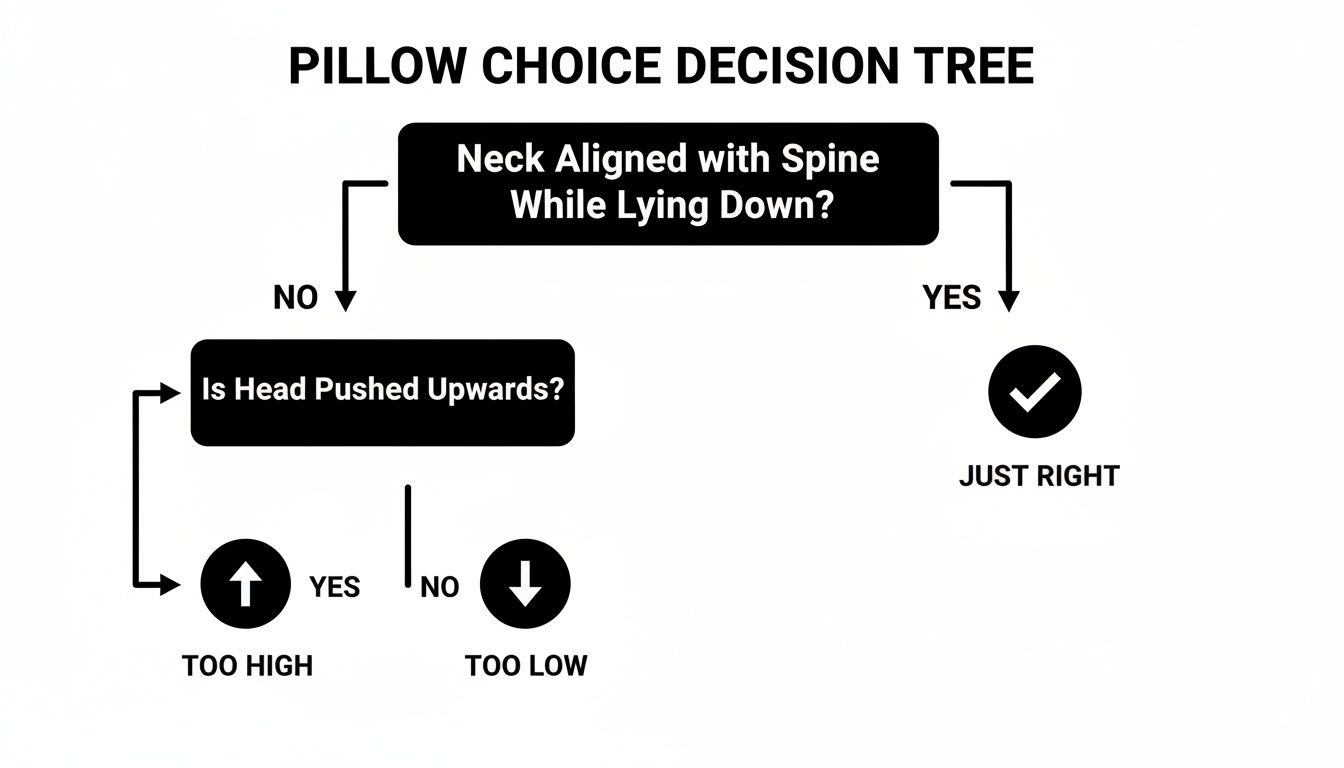
As you can see, getting that "just right" pillow height is the key to maintaining a neutral spine and waking up refreshed.
Beyond Guesswork: The Willis Standard
Choosing the right pillow shouldn't be a random shot in the dark. According to "The Willis Standard," making high-end living accessible means we also provide the expert guidance to make sure your investment in comfort truly pays off. We believe in data, not guesswork.
That's precisely why we use our exclusive BedMatch technology. This advanced system goes way beyond asking how you sleep; it analyzes your specific body measurements and sleep habits to recommend the exact pillow and mattress combination for your body. Whether you’re a side, back, or stomach sleeper, BedMatch takes out all the uncertainty and points you toward a scientifically-backed solution for a pain-free morning.
Choosing the Right Pillow Material and Shape
Once you’ve figured out the right loft and firmness for your sleep style, it's time to get into the fun part: picking the material and shape. This is where personal preference really comes into play, because different materials deliver very different experiences when it comes to soothing a sore neck. The idea is to find a pillow that doesn't just fill that space between your head and the mattress but perfectly molds to your body's unique curves.
It’s a bit like buying a new pair of running shoes. They all get you from point A to point B, but the material—whether it's plush foam or a barely-there sole—completely changes the feel and support. It's the same with pillows. The best ones for neck pain use smart materials and ergonomic shapes to give you targeted relief exactly where you need it.
Common Materials for Neck Pain Relief
The stuff inside your pillow is what really defines its feel, how well it holds up, and how long it lasts. While you’ll find tons of options out there, a few materials are consistently recommended for people dealing with neck pain.
- Memory Foam: This is pretty much the gold standard for contouring support. It uses your own body heat to soften and mold to the exact shape of your head and neck. The result is a personalized cradle that spreads weight evenly, eases pressure points, and keeps your spine perfectly aligned.
- Latex: If you prefer a more responsive, buoyant feel, latex is a fantastic choice. It gently supports your head without that deep "sinking" feeling you get from some memory foams, which is great if you tend to shift positions at night. Plus, it’s naturally hypoallergenic and stays cooler.
- Down Alternative: Love the soft, fluffy feel of traditional down but need something that offers more consistent support? Down alternatives are your answer. These advanced microfiber fills give you that cloud-like softness but are designed to resist clumping, providing a more stable and reliable surface for your neck.
Finding the right material is a huge step. To learn more, you can check out our guide on choosing the perfect pillow for a deeper dive into these options and more.
Now, let's take a closer look at how these materials stack up against each other for relieving neck pain.
Comparing Pillow Materials for Neck Pain Relief
Each material brings something different to the table. This chart breaks down the key benefits and things to keep in mind for the most popular options.
| Material | Key Benefit | Best For | Considerations |
|---|---|---|---|
| Memory Foam | Excellent contouring and pressure relief. | Back and side sleepers needing precise, stable support. | Can retain heat; some people find it too firm initially. |
| Latex | Responsive, buoyant support that sleeps cool. | Combination sleepers, hot sleepers, and those with allergies. | Can be heavier and more expensive than other materials. |
| Down Alternative | Plush, cloud-like softness with no allergens. | Sleepers who love a soft feel but need consistent support. | May need occasional fluffing to maintain its loft. |
Ultimately, the best material is the one that feels most comfortable and supportive to you. Trying them out in person can make all the difference.
The Power of Ergonomic Shapes
Forget the simple rectangle. Many of the best pillows for neck pain have special ergonomic shapes designed to work with your body, not against it. These curves aren’t just for show—they're engineered to support the natural C-curve of your neck.
The most effective pillows don’t just cushion your head—they actively guide your neck into a neutral, healthy posture. A well-designed contour pillow acts like a gentle support system, holding your spine in its natural alignment all night long.
You'll often see two popular shapes:
- Cervical Pillows: These usually have a distinct wave-like design. The higher curve is meant for side sleeping, and the lower one is for back sleeping. A dip in the center cradles your head while the raised edge supports your neck.
- Contour Pillows: Similar to cervical pillows, these are shaped to fit the natural lines of your head, neck, and shoulders. They’re fantastic at providing targeted pressure relief and are a top pick for back and side sleepers.
The market has definitely taken notice of these designs. Memory foam pillows, for example, have become the go-to choice in the neck pillow category in 2024, thanks to how well they mold to the body. This is all part of a larger trend of people focusing on their sleep health, especially as global health spending shot up by 6% in 2021 across OECD countries, pushing more of us to find real, ergonomic solutions.
Bringing It All Together with the Willis Standard
According to "The Willis Standard," the perfect pillow is one that fits your whole life. It’s not just about function; it’s about creating a sleep sanctuary that feels both deeply restorative and beautifully put together. Our in-house Design Center can help you find pillows that not only feel amazing but also perfectly match your bedroom decor with custom fabrics and styles.
We believe that investing in your well-being should never be out of reach. If you find a premium pillow that feels just right, our flexible financing options make it easy to bring home the quality sleep you deserve. And if you're looking for incredible value, the Willis Outlet offers top-tier pillows at budget-friendly prices, ensuring everyone can wake up feeling refreshed and pain-free.
How to Know When It’s Time to Replace Your Pillow
Finding the perfect pillow to beat neck pain feels like a huge win, but even the best ones have a shelf life. Over time, every pillow—whether it's memory foam, latex, or a down alternative—starts to lose its magic. The materials just naturally break down.
This slow-motion collapse means your pillow can't deliver that crucial support your neck and head rely on. Before you know it, that familiar morning stiffness and those frustrating aches start creeping back into your life.
And it’s not just about support. An old pillow is basically a magnet for allergens like dust mites and dead skin cells, which can mess with your breathing and overall sleep quality. While regular cleaning helps, it won't stop the internal materials from wearing out. For a deep dive into keeping your sleep space fresh, check out our essential tips for maintaining a dust and allergen-free bedroom.
Key Signs Your Pillow Needs an Upgrade
So, how do you know when it’s time to call it quits? Don’t worry, your body and your pillow will send some pretty clear signals. Ignoring them is like undoing all the good work you did finding the right pillow in the first place.
Keep an eye out for these tell-tale signs:
- It’s Getting Lumpy: If you can feel clumps and bumps inside that you can’t fluff away, the filling has lost its integrity. The internal structure is officially broken.
- You See Stains or Smell Odors: Yellowish stains from sweat and body oils that just won't wash out are a clear indicator that bacteria and grime have settled in for the long haul.
- The Pain Is Back: This is the most obvious red flag. If the neck pain, stiffness, or headaches you’d gotten rid of are suddenly making a comeback, your pillow is likely the culprit.
- You’re Always Fluffing It: Find yourself punching, folding, or reshaping your pillow every night just to get comfortable? It’s lost the ability to hold its shape and do its job.
The Simple Fold Test
Still on the fence? There’s a super quick and easy test you can do right now (it works for almost any pillow type except solid memory foam).
The Fold Test: Just fold your pillow in half. If it springs right back to its original shape, it’s still got some life in it. But if it stays folded or unfolds like it’s in slow motion, the supportive core is shot. It’s time for a new one.
As a rule of thumb, most sleep experts suggest replacing your pillow every 1 to 2 years. Taking a moment to check its condition every few months is a small habit that makes a huge difference for your long-term neck health. When you decide it's time for an upgrade, our team at Willis is always here to help you find your next perfect match for a pain-free morning.
Finding Your Perfect Sleep System at Willis Furniture
You've done the homework—you understand how loft, firmness, and your sleep style all play a part in neck pain. Now, let’s put that knowledge to work and find you some real, lasting relief. At Willis Furniture & Mattress, we specialize in turning that science into personalized comfort, making sure your investment in a good night's sleep truly pays off for your health.

We take all the guesswork out of finding the best pillow. Our whole approach is built on data and one-on-one analysis, and it all revolves around our exclusive BedMatch technology. This isn’t some flimsy questionnaire; it’s a seriously sophisticated diagnostic tool designed to find your perfect match.
A Data-Driven Approach to Comfort
The BedMatch system runs over 1,000 scientific calculations and uses 18 statistical measurements to map out a sleep profile that is 100% unique to you and your body. It looks at everything from your height and weight distribution to your specific pressure points, then recommends the ideal mattress and pillow to support you.
This powerful analysis makes sure your entire body, from head to toe, is properly aligned and supported. After all, a fantastic pillow can’t do its job if your mattress isn't pulling its weight. We dive deeper into how these two work together in our ultimate guide for choosing a mattress.
Think of your pillow and mattress as a team with one goal: perfect spinal alignment. BedMatch is the coach, using science to pick the absolute best players for your body’s needs. It’s a winning strategy for pain-free sleep.
This data-first method gets rid of that overwhelming, "where-do-I-even-start?" feeling that often comes with shopping for a new bed. You can walk out the door knowing your choice is backed by proven science.
Experience the Willis Standard in Person
Reading about proper support is one thing, but actually feeling it is something else entirely. We personally invite you to come down to our Virginia Beach showroom and experience the difference for yourself. Our showroom isn't just a store; it’s a discovery zone where you can find out what true comfort feels like, with genuine experts to guide you.
Our sleep specialists are non-commissioned, which means their only priority is your comfort and well-being. They're here to walk you through your BedMatch results and let you test the recommended products in a relaxed, no-pressure space. Their job is to help you find the system that delivers the alignment and pressure relief you need to finally say goodbye to that nagging neck pain.
Living up to "The Willis Standard" means we believe everyone deserves access to exceptional comfort and restorative sleep. An investment in a quality sleep system is an investment in your long-term health, and through our flexible financing options, we make it simple and affordable to bring that quality home. We’re here to be your partner on the journey to waking up refreshed and pain-free, every single day.
Answering Your Questions About Pillows and Neck Pain
It's natural to have questions when you're trying to solve a problem like neck pain. We hear them all the time in our showroom. To help clear things up, we’ve put together answers to some of the most common questions our customers ask.
How Long Does It Take to Get Used to a New Pillow?
Switching to a new pillow, especially an ergonomic one designed for support, isn't always an overnight fix. Think of it like breaking in a new pair of shoes—your body needs time to adapt. For your neck, it's learning a new, healthier posture.
We usually tell people to expect an adjustment period of a few nights, though it can sometimes take up to two weeks. A good tip is to ease into it: use the new pillow for just a few hours the first couple of nights, then switch back to your old one. If you're still uncomfortable after two weeks, the pillow probably isn't the right one for you. Our non-commissioned experts can always help you find a better match.
Can My Mattress Cause Neck Pain Even with a Good Pillow?
Yes, one hundred percent. Your pillow and mattress are a team—they have to work together. If your mattress is old and sagging, or just isn't the right firmness for your body, your spine will be thrown out of alignment no matter how perfect your pillow is. A great pillow can't fix a bad foundation.
This is exactly why we use our BedMatch technology. It looks at your whole body, not just your head and neck, to build a complete sleep profile based on over 1,000 scientific calculations. The result is a total sleep solution, mattress and pillow, that keeps your entire spine aligned for real, lasting relief.
Are More Expensive Pillows Always Better?
Not at all. The best pillow isn't about the price tag; it's about the fit. While higher-end materials can offer incredible durability and unique support features, the most important thing is matching the loft and firmness to your body and how you sleep.
At Willis, we believe in "The Willis Standard," which means making high-end living accessible to everyone. We have fantastic, high-value pillows for every budget, especially at our Willis Outlet. Plus, with flexible financing options, you never have to put off investing in your well-being.
A pillow's value isn't just in its price—it's in its ability to provide consistent, personalized support night after night. The right fit is the most valuable feature of all.
What Should I Look for in a Travel Neck Pillow?
When you’re trying to sleep on a plane or in a car, your needs are totally different. You need a pillow that gives you 360-degree support to stop your head from falling forward or slumping uncomfortably to the side. Memory foam is a great material for this, as it’s firm enough to hold you in place but still easy to pack.
It’s no surprise the travel pillow market is growing so fast. As more people travel, the demand for better on-the-go comfort is skyrocketing. The market is expected to jump from USD 1.67 billion in 2026 to USD 2.64 billion by 2035. You can discover more insights about these market trends on businessresearchinsights.com to see just how big this trend is.
At Willis Furniture & Mattress, we know that a pain-free morning starts the night before with the right support. Visit our showroom to try our BedMatch technology and let our experts help you find the pillow that's just right for you. Explore our collection and start your journey to better sleep today.