Why Does My Mattress Sag in the Middle? An Expert Guide

That sinking feeling you get when you lie down isn't just in your head—it's in your mattress. The simple truth is that when a mattress sags in the middle, its core materials have given up. The foams and coils have broken down after countless nights of pressure, creating a dreaded "hammock" that actively works against a good night's sleep.
The Sinking Feeling That Is Hurting Your Sleep
A mattress isn't just a big cushion; it's an engineered support system designed for your body. Think of its inner core—whether it's springs, foam, or a hybrid of both—as the structural support of a bridge. For years, it holds up against nightly "traffic," but eventually, that constant pressure takes its toll.
This is precisely why your mattress develops that dip right in the center. The middle third of your bed supports the heaviest parts of your body, mainly your hips and lower back. Over time, the materials in this high-pressure zone simply get tired. They lose their resilience and can no longer bounce back, leaving you with a permanent sag.
A sagging mattress does more than just feel lumpy. It forces your spine into an unnatural curve, which is a major reason so many of us wake up with back pain, stiffness, and that feeling of having tossed and turned all night.
If this constant battle for comfort has left you feeling exhausted day after day, getting to the root of the problem is key. For those dealing with persistent tiredness, learning how to cure chronic fatigue can offer some helpful strategies for reclaiming your energy.
Why This Problem Is So Common
If you're dealing with a sagging mattress, you are far from alone. This issue is so widespread that it's one of the main reasons the global mattress market is projected to hit $46.5 billion. North America alone makes up 33.6% of that spending.
This isn't just a random statistic. It points to a huge shift in how we think about sleep. More and more people are realizing the importance of durability and are finally replacing those old, worn-out beds with something built to last.
Getting to the root cause of your sag is the first real step toward fixing it. While you might just notice the symptom—tossing and turning—the real problem lies deep inside your mattress’s failing core. For some immediate relief, you can read our guide on how to stop tossing and turning at night. Ultimately, the best path forward is choosing a mattress designed for superior, long-term support, which is a true investment in your health.
The Top 5 Causes of Mattress Sagging
That frustrating dip in the middle of your bed isn't just in your imagination. It’s a telltale sign that a key part of your sleep setup has given out. To get to the bottom of it, you have to play detective. Let’s look at the five most common reasons your mattress might be creating that dreaded hammock effect.
As this graphic shows, a sagging mattress does more than just feel uncomfortable—it directly impacts your spine, which in turn ruins your quality of sleep.
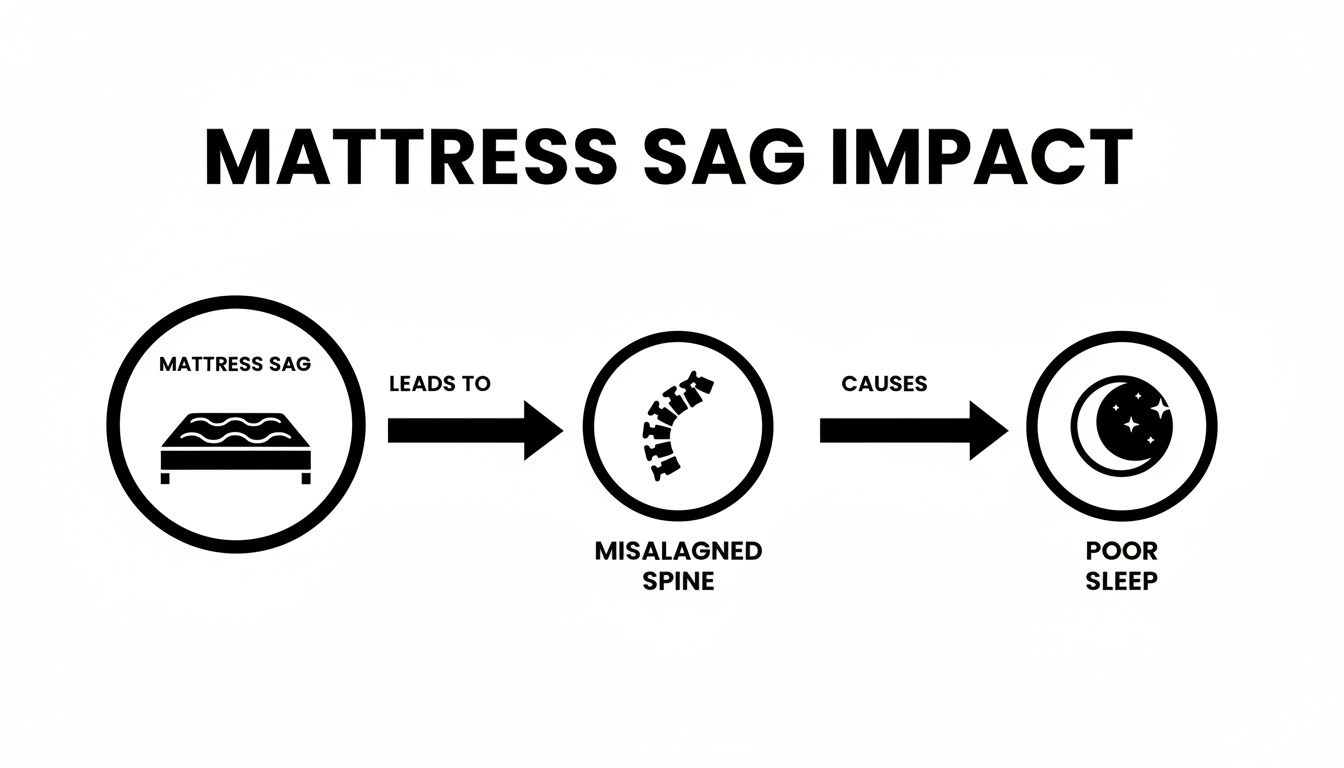
When your mattress can't hold its shape, your spine falls out of alignment. This prevents your body from truly resting and recovering overnight.
1. The Quality of the Materials
More often than not, the culprit behind premature sagging comes down to the quality of the materials inside your mattress. Think of it like comparing a cheap kitchen sponge to a high-density cleaning pad—one falls apart after a few uses, while the other holds its shape.
Foam mattresses are a perfect example. While they make up a huge part of the market, not all foams are created equal. Lower-density foams, typically in the 2.5-4 pounds per cubic foot range, are far more likely to develop permanent impressions where you sleep. These are often found in budget-friendly mattresses that may seem like a good deal initially but can lead to discomfort and the need for a premature replacement. For truly budget-friendly options that don't compromise on quality, the Willis Outlet offers vetted selections that provide both value and durability.
Premium, more durable foams, on the other hand, have densities of 5 pounds per cubic foot or higher, giving them the resilience to bounce back night after night. It’s no wonder the US mattress market is projected to be worth $11.57 billion by 2026; people are willing to invest in quality to avoid this exact problem.
How Different Mattress Materials Handle Sagging
To give you a clearer picture, here’s a quick comparison of how common mattress materials stand up to sagging over the years.
| Material Type | Common Cause of Sagging | Average Lifespan Before Sagging | Prevention Tip |
|---|---|---|---|
| Memory Foam | Cell structure breakdown from repeated pressure and body heat. | 5-10 years | Look for high-density foam (5+ PCF) and rotate regularly. |
| Innerspring | Metal coil fatigue, causing the springs to lose their tension and height. | 5-8 years | Choose a mattress with a high coil count and thicker gauge steel. |
| Latex | Generally very resistant, but can soften and form impressions over a very long time. | 10-20 years | Opt for 100% natural latex for the best durability. |
| Hybrid | A combination of foam breakdown and coil fatigue. | 7-10 years | Ensure both the foam and coil components are high quality. |
Ultimately, investing in better materials from the start is the best defense against a sagging mattress.
2. A Weak or Improper Foundation
You can have the best mattress in the world, but it will fail if it doesn't have the right support underneath it. Your foundation—whether it's a box spring, platform bed, or slatted base—is to your mattress what a foundation is to a house. If it cracks or weakens, everything above it will start to sink.
A weak or broken foundation is a silent mattress killer. If your frame lacks a center support leg or the slats are too far apart, it creates a weak spot right where your mattress needs the most help, causing it to sag in the middle.
We can't stress this enough: a solid base is non-negotiable for mattress longevity. If you're questioning your current setup, our guide on bunkie boards and mattress foundations is a great resource.
3. Uneven Wear and Body Weight
We're all creatures of habit. Most of us tend to sleep in the very same spot every single night. The problem is that our body weight isn't distributed evenly; for most adults, our hips and torso make up the heaviest part of our body.
All that concentrated pressure on the middle third of the mattress causes the foam or coils in that zone to wear out much faster than the materials at the head or foot. That’s precisely why rotating your mattress is so important. It gives that overworked area a much-needed break and helps distribute the wear evenly across the entire surface.
4. Environmental Factors
Believe it or not, your bedroom's environment can also play a role. Heat and moisture are enemies of foam, slowly breaking down its cellular structure over time. Humidity, body sweat, and accidental spills can all seep into the mattress, making it softer and far less resilient.
A simple, high-quality waterproof mattress protector is one of the most effective tools you can use. It acts as a shield, guarding your investment against the kind of gradual damage you might not notice until it’s too late.
5. Manufacturing Flaws
Finally, there’s the rare case of a manufacturing defect. This isn't common, but it can happen. We’re talking about things like a batch of steel coils that weren't tempered correctly or foam that wasn't cured properly at the factory.
This type of issue is almost always covered by the manufacturer's warranty. However, in our experience, a sagging mattress is far more likely to be caused by one of the first four reasons, especially an inadequate foundation or simply low-quality materials.
Temporary Fixes vs Permanent Solutions
That tell-tale dip in the middle of your mattress is more than just an annoyance; it’s a sign that your bed’s support system is failing. It’s natural to want a quick fix, and while a few tricks can buy you some time, it’s important to see them for what they are: band-aids, not a cure.
A lasting solution means addressing the root cause—a mattress core that can no longer do its job.
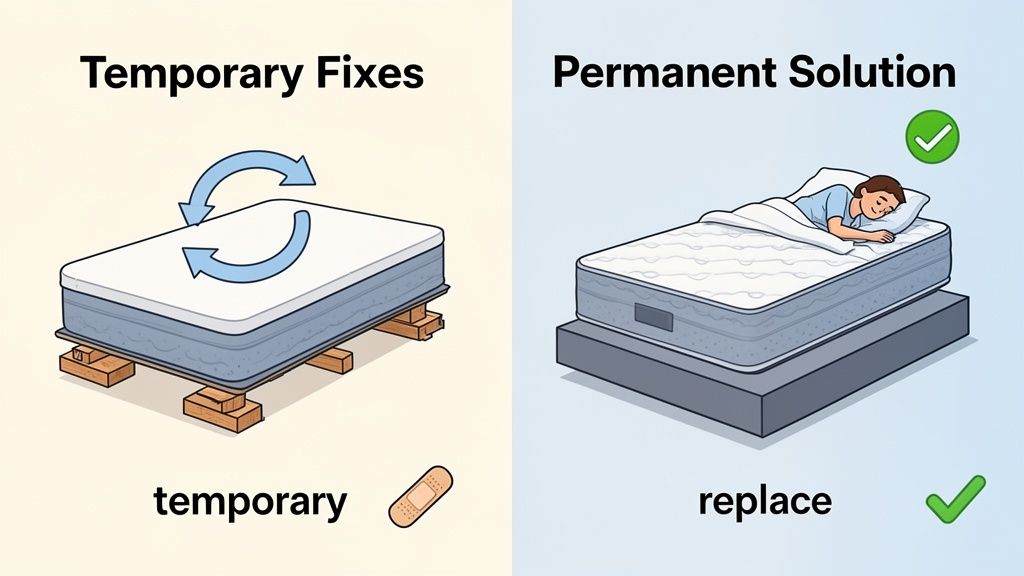
Let's walk through some of the immediate steps you can take, while keeping our eyes on the real goal: a permanently supportive and comfortable bed.
Short-Term Fixes for a Sagging Mattress
If a new mattress isn't in the cards just yet, a few simple adjustments can help ease the discomfort from that dreaded body impression.
Rotate Your Mattress: This is always the first thing to try. Giving the mattress a 180-degree spin moves the worn-out spot away from your hips and shoulders, letting a fresher area take over. Just remember, most modern mattresses are built from the ground up and cannot be flipped over. Always check the manufacturer's care instructions first.
Use a Mattress Topper: A quality topper, usually 2 to 4 inches thick, can introduce a fresh layer of comfort and help smooth over the dip. It's like putting a plush rug over an uneven floor—it makes the surface feel better, but the structural problem underneath is still there.
Check and Reinforce Your Foundation: Before you point the finger at the mattress, look at what’s holding it up. A weak or inadequate frame is a common culprit. Queen and King size beds absolutely need a center support leg, and slats should be no more than 3 inches apart to prevent the mattress from sinking between them. For a temporary boost, a solid piece of plywood between the mattress and the base can add some much-needed reinforcement.
These fixes might buy you a little more time, but they can't reverse the internal breakdown. A sagging mattress has fundamentally lost its ability to keep your spine aligned. No amount of rotating or padding can rebuild that essential support core.
The Only Permanent Solution
No matter how clever the workaround, a temporary fix will never bring a mattress back to life. The only permanent solution for a mattress that sags in the middle is to replace it with one that's properly constructed and suited for your body.
This isn't just about chasing comfort—it's about protecting your health. Sleeping on a failed mattress night after night can contribute to chronic aches, pains, and persistent fatigue. A new mattress is an investment in your well-being, one that pays off with years of restorative sleep. To get the most out of your next purchase, take a look at our guide on mattress maintenance and cleaning tips to extend its lifespan.
We know that a high-quality mattress is a significant investment. That's why at Willis, we partner with premium brands celebrated for their durability and resistance to sagging. We also offer flexible financing options to make long-term comfort an accessible reality for your home. Our passion is helping you find a lasting solution, not just another temporary patch.
Knowing When It Is Time for a New Mattress
While short-term fixes can buy you a little time, they can’t turn back the clock on a mattress that's truly worn out. So, how do you know when you’ve crossed the line from "needs a little help" to "it's time for a replacement"? It can feel like a tough call, but there are a few unmistakable signs that your mattress is past the point of saving.
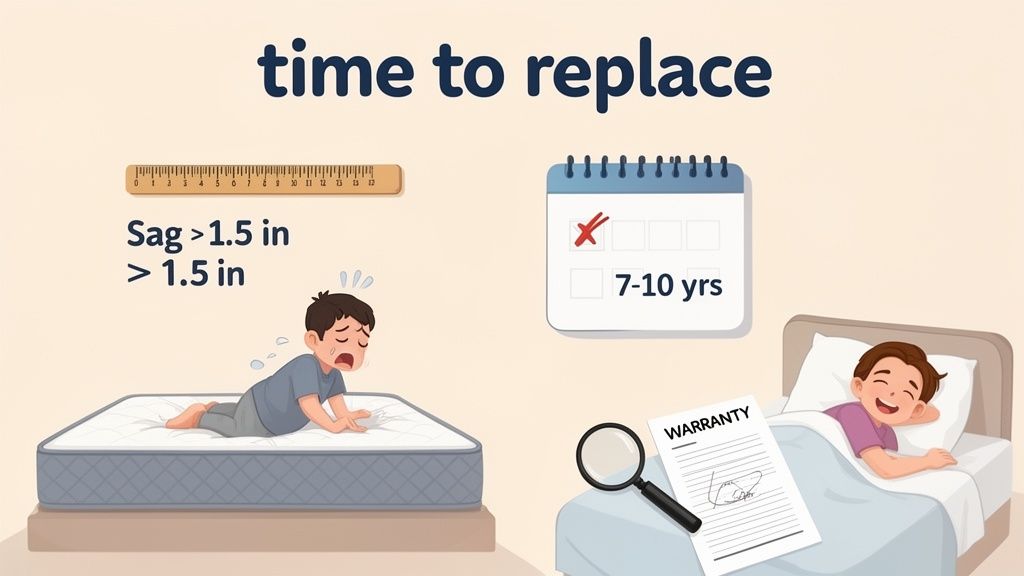
When you start noticing these markers, a new mattress stops being a luxury and becomes a necessity for your health and well-being.
Your Decisive Checklist for Replacement
Think of this as the final exam for your mattress. If it fails on any of these points, it’s time to say goodbye and start looking for a better sleep solution.
- The Sag Is Deeper Than 1.5 Inches: This isn’t just a number—it’s the industry standard for when a mattress has failed structurally. To measure it yourself, strip the bed, pull a string tightly across the surface from edge to edge, and use a ruler to measure the gap. If that dip is 1.5 inches or more, the mattress's support core is officially compromised.
- You Wake Up With Chronic Pain: Are you starting your day with a sore back, aching neck, or tight hips that seem to get better as you move around? That’s a huge red flag. Your bed should be a sanctuary that relieves pressure, not one that creates new pain points while you sleep.
- The Mattress Is Over 7-10 Years Old: Even the most well-made mattress isn't meant to last forever. After around 8 years, the materials have endured thousands of hours of compression and have naturally started to break down, losing their ability to support you properly.
- You Sleep Better Elsewhere: This might be the most telling sign of all. If you find yourself getting a fantastic night's sleep in a hotel bed or at a friend's house, it’s a clear signal that your own bed is the problem.
For an even deeper dive, check out our guide on the top signs it's time to replace your current mattress. These clues will help you know for sure when a sagging mattress has gone from a minor annoyance to a major health issue.
Navigating Warranty Claims
You might be thinking your warranty will be your safety net, but making a claim can be a surprisingly tricky process. Most manufacturers require a visible sag of 1.5 inches or more—measured with no one on the bed—to even consider a claim. And here’s the real kicker: almost any stain will void your warranty on the spot, as it’s often considered a sign of misuse or an unsanitary condition.
At Willis, our sleep experts act as trusted advisors. We can help you assess your mattress, understand the fine print of your warranty, and determine if a new bed is the smartest investment for your health.
If your mattress is truly beyond repair, the next step is finding a replacement that won’t let you down. Learning how to choose the best pressure relief mattress is a fantastic starting point for finding a bed that delivers both superior comfort and lasting support.
Investing in a high-quality, durable mattress is one of a great investment in your long-term well-being. To help make this important purchase more accessible, we offer flexible financing options so you never have to compromise on the restorative sleep you deserve.
Finding a Truly Sag-Proof Mattress at Willis
Once you’ve identified the sag and tried a few quick fixes, it's time to think about a permanent solution. Buying a new mattress shouldn't feel like a gamble where you're just hoping it doesn't end up with that familiar dip in the middle. This is where we do things differently at Willis Furniture & Mattress—we take the guesswork out of finding a bed that’s built to last.
Our process starts with the exclusive BedMatch diagnostic system. This isn't your typical showroom experience of just lying on a few beds and hoping for the best. BedMatch uses 18 statistical measurements and more than 1,000 scientific calculations based on your unique body—your height, weight distribution, and even your sleeping posture—to pinpoint exactly what you need.
The system gives us a data-driven blueprint for your ideal postural support, ensuring your spine stays perfectly aligned all night. It’s a scientific approach that matches you with a mattress that’s truly right for your body.
Curated Brands Built for Durability
After BedMatch tells us what your body needs, our job is to connect you with a mattress that delivers. We've personally curated a collection of premium, American-made brands that are known for their exceptional engineering and sag-resistant designs. These aren't just average beds; they are designed with true longevity in mind.
We focus on mattresses that include:
- High-Density Foams: These premium materials hold their shape and resist body impressions far better than standard foams, preventing that frustrating sag.
- Reinforced Coil Systems: We look for stronger, more resilient coils that offer robust support for years, especially in that critical center third of the bed.
- Enhanced Edge Support: A solid, sturdy perimeter keeps the edges from breaking down, giving you a bigger and more stable surface to sleep on.
Choosing a mattress with these features means you're investing in a sleep system engineered from the inside out to fight sagging. For more tips on choosing the right model, you can explore our complete guide on how to find the right mattress.
Making High-End Sleep Accessible
At Willis, we believe everyone deserves to own a high-quality, sag-proof mattress. It’s a key part of "The Willis Standard"—making superior sleep an affordable reality. A premium mattress is an investment in your well-being, and our accessible financing options make sure you never have to compromise.
We are not just a store; we are a legacy brand that makes high-end living accessible. Our flexible financing plans empower you to invest in a durable, sag-resistant mattress today, so you can enjoy restorative sleep for years to come.
Our commitment means you can confidently choose the best mattress for your body and your budget, without the stress.
Finally, our service extends well beyond the sale. Our professional white-glove delivery team makes sure your new mattress and foundation are set up perfectly in your home. A proper installation is the final, crucial step to preventing premature wear and tear, ensuring you get the lasting comfort you paid for from the very first night.
Common Questions About Mattress Sagging
We’ve covered a lot of ground on why mattresses sag, but you probably still have a few practical questions. These are the ones we hear most often from customers dealing with this frustrating issue, and we want to give you the straightforward answers you need.
Can a Mattress Topper Fix a Sagging Mattress
Many people wonder if a topper can be a quick fix. While a high-quality mattress topper can certainly add a layer of cushioning, it cannot fix a sagging mattress.
Think of it this way: a topper is like putting a beautiful new rug over a floor with a warped board. It might disguise the problem for a little while, but it doesn’t fix the structural issue underneath. A sagging mattress has a failed support core, and a topper simply can't restore the proper spinal alignment your body needs for restorative sleep. It’s a temporary patch, not a long-term solution.
How Often Should I Rotate My Mattress
Regular rotation is your best defense against premature sagging, as it helps distribute wear evenly. As a rule of thumb, we recommend rotating your mattress 180 degrees every 3 to 6 months.
If your mattress is brand-new, it’s a great idea to rotate it more frequently—maybe once a month for the first six months. This helps the materials break in evenly across the whole surface. But before you start spinning, always double-check the manufacturer's care guide. Some modern mattresses with zoned support layers aren’t designed to be rotated at all.
Will My Warranty Cover Sagging
Most mattress warranties do cover sagging, but the terms are very specific. Typically, the indentation must reach a certain depth, usually 1.5 inches or more, measured without any weight on the bed. You’ll also need to prove you’ve been using a proper, supportive foundation.
Keep in mind that something as simple as a stain can void your warranty entirely, as manufacturers may see it as a sign of neglect. If your mattress is causing you pain but the sag doesn't meet the warranty depth, that's a clear signal your health comes first and it’s time for a replacement, regardless of coverage.
The team at Willis Furniture & Mattress can help you navigate your warranty and decide if a new mattress is the right choice for your well-being.
What Is the Best Bed Frame to Prevent Sagging
The right foundation is absolutely non-negotiable if you want your mattress to last. In our experience, an unsupportive frame is one of the top reasons even the best mattresses fail prematurely.
For any queen or king-sized mattress, the frame must have a center support beam with at least one leg that makes firm contact with the floor. If you're using a slatted foundation, the slats should be no more than 3 inches apart. This provides the consistent support your mattress needs to perform its best for years to come. Our Design Center can even help you select a stylish bed frame that incorporates these crucial support features, blending safety and design perfectly.
At Willis Furniture & Mattress, we believe investing in your sleep is an investment in your well-being. If you're tired of battling a saggy mattress, explore our curated collection of durable, sag-resistant mattresses and find your perfect match with our BedMatch technology. Visit us online at https://www.willisfurniture.com to start your journey toward better sleep.