Enter to Win a Pair of Adirondack Chairs (Over $500 Value!) | Click Here

Best Wood Furniture Polish: Your Guide to best wood furniture polish


The "best" wood furniture polish? That really depends on your furniture's finish. A high-quality beeswax polish is a fantastic choice for nourishing and protecting unsealed or oil-finished wood. But for a quick cleanup on sealed surfaces like lacquer or varnish, a silicone-free spray polish is far more convenient.
It’s less about finding a single "best" product and more about choosing the right one for the job. That’s the real secret to long-term care.
Why the Right Wood Polish Is a Legacy Investment
Caring for your furniture is about so much more than just cleaning—it's about preserving the stories and memories held within each piece. A quality dining table isn't just a surface for meals; it’s the centerpiece for decades of family gatherings, holiday feasts, and late-night conversations. Selecting the right polish is a crucial step in protecting that legacy for generations to come.
Think of it as an investment in your home's heritage. The right polish doesn't just add a temporary shine. It actively nourishes the wood, protects the finish from environmental damage, and prevents the kind of wear that can diminish its beauty over time. A one-size-fits-all approach just doesn't cut it, especially for high-quality, American-made furniture.
Understanding the Core Polish Types
Before you grab a bottle off the shelf, it’s important to understand the fundamental differences between the main types of wood polishes. Each serves a very distinct purpose.
- Oil Polishes: These are designed to penetrate and feed unfinished or oil-finished woods, keeping them from drying out and cracking. They’re perfect for restoring the wood's natural depth and warmth.
- Wax Polishes: Typically made from beeswax or carnauba wax, these create a hard, protective barrier on the surface. They offer long-lasting protection against moisture and minor scratches, delivering a soft, satin sheen rather than a high gloss.
- Spray Polishes (Emulsions): These are your go-to for quick, routine cleaning on sealed surfaces. They excel at removing dust and fingerprints but offer minimal long-term protection compared to waxes or oils.
At Willis, we believe that maintaining your furniture is key to turning a house into a home. Our commitment to quality doesn't end when you leave the showroom; it extends to providing the expert advice you need to care for your cherished investments, ensuring they remain beautiful for years to come.
This guide will help you move beyond generic advice and care for your furniture with the precision it deserves. For more foundational knowledge, check out our guide on protecting wood furniture from scratches and stains.
Matching Polish to Your Furniture's Finish
Choosing the wrong polish is a classic rookie mistake. It’s like using a Brillo pad on a non-stick pan—you can end up doing more harm than good, creating a hazy buildup or even stripping the very finish you’re trying to protect.
The real secret to getting that flawless, lasting sheen is knowing exactly what kind of finish is on your furniture. From there, you can pick a polish with the right chemistry to make it sing.
So, the first step is figuring out what's protecting the wood. Is it a hard, glossy lacquer? A warm, hand-rubbed oil finish? Or maybe a delicate, historic shellac? Each one has its own personality and needs a specific kind of care.
You wouldn't treat a modern, sleek Barclay Butera dining table the same way you would a vintage, oiled teak patio set from your grandparents. The lacquered table just needs a gentle, silicone-free cleaner to handle dust and fingerprints. That teak, on the other hand, is thirsty; it needs a penetrating oil to replenish its moisture and keep it from cracking in the sun.
This is exactly the kind of deep-dive guidance our in-house Design Center consultants live for. When they help you design a custom piece, they’re not just thinking about looks. They’re thinking about longevity, advising you on the specific care it will need to stay beautiful for years to come.
Identifying Your Furniture's Finish
Alright, time to play detective. Most modern furniture has a tough, factory-applied finish like lacquer or polyurethane varnish. These are built for daily life. Older or antique pieces, however, often have more sensitive finishes like shellac or a simple wax coating.
Here’s a quick test you can do in a hidden spot, like the inside of a table leg:
- The Acetone Test (Lacquer vs. Varnish): Dab a bit of acetone (nail polish remover) on a cotton swab and gently press it to the finish. If it gets sticky or starts to dissolve, you’ve got lacquer. If nothing happens, it’s probably a polyurethane varnish.
- The Denatured Alcohol Test (Shellac): Apply a single drop of denatured alcohol. If the finish gets soft or tacky, you're dealing with shellac—super common on antiques, but pretty rare on new pieces.
- The Oil and Water Test (Oil or Wax): Place a drop of water on the surface. If it beads up neatly, the finish is likely an intact wax or varnish. If it soaks in and darkens the wood, you probably have an oil finish that’s ready for a refresh.
This simple flowchart can also help point you in the right direction, especially when deciding between quick upkeep and long-term protection.
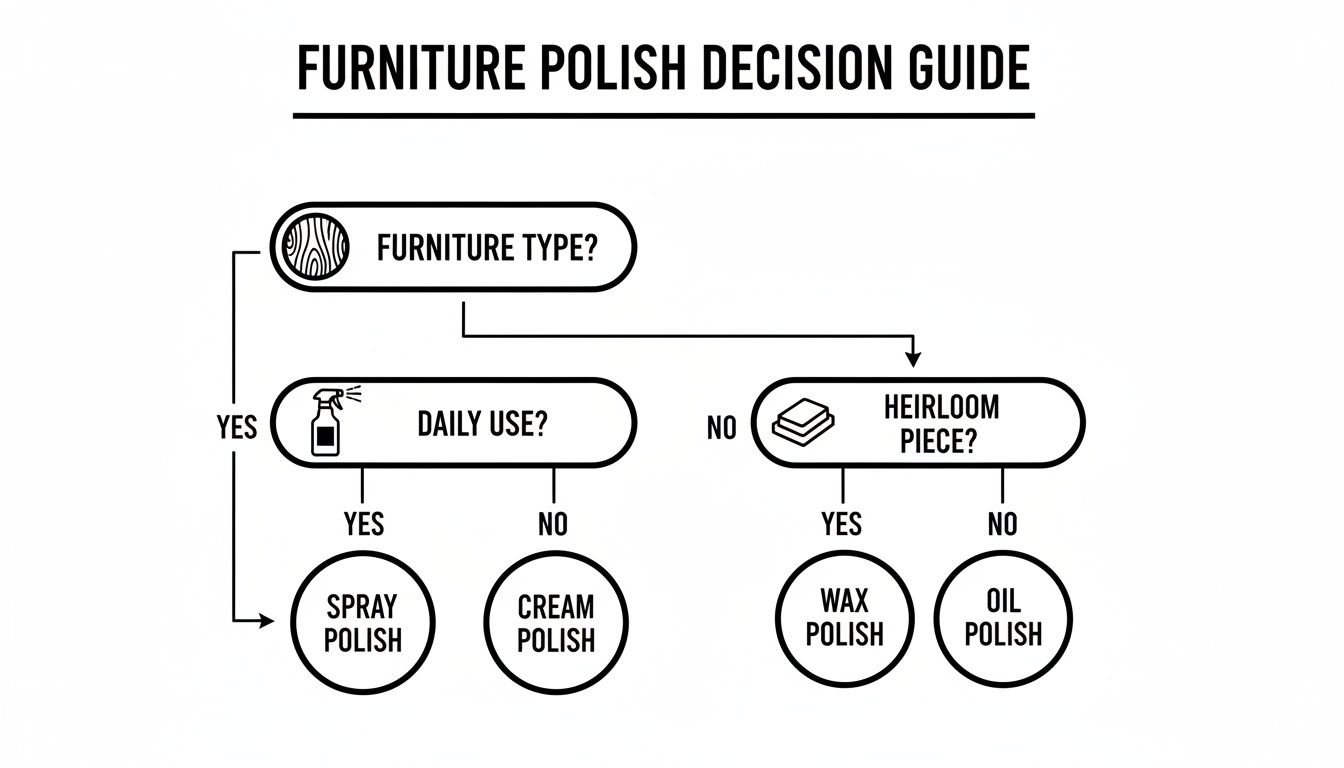
As the guide shows, it really comes down to how the piece is used. A quick spray is fine for high-traffic items, but a cherished heirloom deserves the deep protection of a good wax.
To make things even easier, we've put together a quick-reference chart. It's a simple way to match the right polish to your furniture's finish, helping you avoid common pitfalls.
Furniture Finish and Polish Compatibility Chart
| Wood Finish Type | Best Polish Type | Avoid Using | Willis Furniture Example |
|---|---|---|---|
| Lacquer & Polyurethane | Silicone-free cream or spray | Oil-based polishes, abrasive cleaners | A sleek, modern dining table with a glossy top. |
| Shellac (Antiques) | High-quality paste wax (sparingly) | Water, alcohol, silicone sprays | A vintage sideboard or heirloom chest of drawers. |
| Oil Finish | Tung oil, linseed oil, or teak oil | Wax polishes (can block oil penetration) | A mid-century modern teak credenza. |
| Wax Finish | More paste wax | Liquid or spray polishes | A rustic pine farmhouse table with a soft sheen. |
| Painted Wood | Mild soap and water solution | Any wood polish or oil | A colorful painted accent chair or bookcase. |
Using this chart helps prevent common mistakes, like applying wax over a dirty surface (which just traps the grime) or using an oil-based polish on a lacquered piece (hello, greasy, streaky mess).
It's no surprise that North America commands a dominant 40% share of the global furniture polish market. We appreciate quality, American-made furniture and understand the importance of proper maintenance.
Choosing the best wood furniture polish is an act of preservation. A hard paste wax on a cherished heirloom builds a protective shield, while a nourishing oil on a modern piece maintains its natural warmth. The right choice is always the one that respects the wood's original finish.
Making the right choice ensures your pieces look their best, whether they’re brand new or have been in your family for generations. To get a better handle on the materials themselves, check out our guide on choosing the right hardwood for longevity and style.
Polishing Techniques for a Flawless Sheen
Having the right wood polish is only half the story. The real secret to that stunning, streak-free shine lies in the technique—the kind of pro tips our own white-glove delivery and care teams use to make sure every piece of Willis furniture looks perfect in your home. This is how you can keep that showroom quality long after we've left.
Forget what the bottle says. We're going beyond the basics to cover proper surface prep, choosing the right cloth, and mastering the "less is more" rule that truly makes a difference.
Prepare the Surface Correctly
Before you even think about opening that bottle of polish, the surface needs to be completely clean. Polishing over dust or grime is a huge mistake. It basically grinds tiny abrasive particles right into the finish, which causes microscopic scratches that will eventually dull the surface.
First, grab a dry, soft microfiber cloth and gently wipe away all the loose dust. If you see sticky spots or fingerprints, take a second clean cloth, dampen it slightly with distilled water, and give those areas a quick wipe. Just be sure to immediately follow up with a dry cloth so no moisture is left behind.
Choose Your Tools Wisely
The cloth you use is just as critical as the polish. The wrong applicator can leave behind lint, or worse, scratch delicate finishes.
- Microfiber Cloths: These are the best in the business. Their ultra-fine fibers are fantastic for grabbing dust and applying polish smoothly without leaving any fuzz. Always keep two on hand—one for applying and a fresh one for buffing.
- Soft Cotton Cloths: A clean, old cotton t-shirt can work in a pinch. Just make absolutely sure it has no seams, buttons, or zippers that could cause scratches.
- Avoid Paper Towels: Never, ever use paper towels. They're made with abrasive wood fibers that can easily create fine scratches, especially on glossy finishes.
Our white-glove delivery team always arrives with the right tools for the job, meticulously inspecting and preparing each piece before placing it in your home. This attention to detail is the foundation of lasting beauty, and it's a practice you can easily adopt.
Proper application is all about preventing that sticky buildup and getting a beautiful, even sheen. And honestly, this is where most people go wrong.
The Art of Application: Less Is More
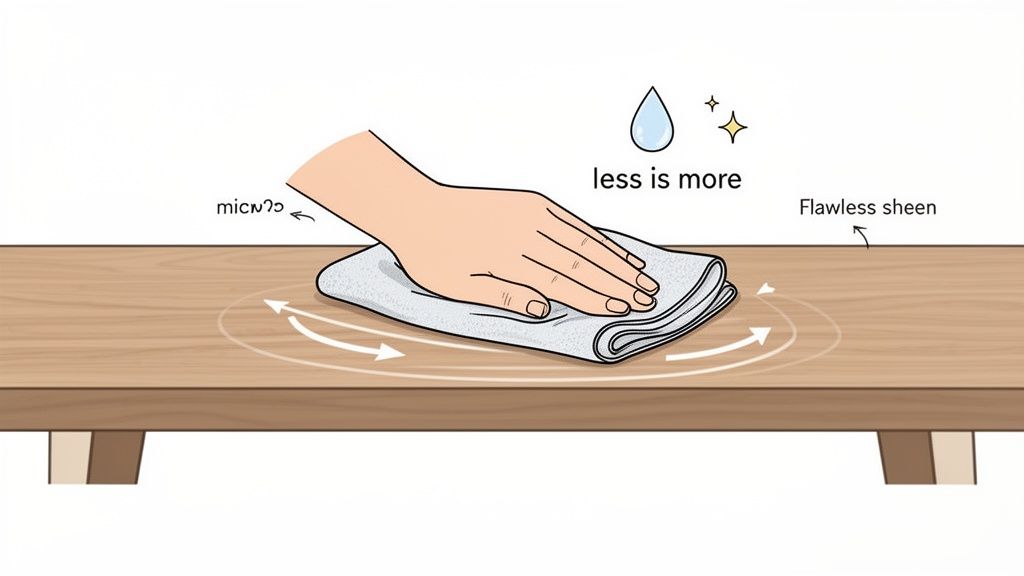
If there’s one mistake we see all the time, it's using way too much polish. This creates a greasy, tacky film that actually attracts more dust and becomes a nightmare to remove. The key to a perfect finish is to be stingy with the polish.
Apply a small, dime-sized amount of polish directly onto your cloth, not onto the furniture. This gives you way more control and stops you from accidentally flooding one area with product.
Work in small, manageable sections, always wiping in the direction of the wood grain. This simple step highlights the wood’s natural beauty and is the best way to prevent streaks. For those interested in traditional, high-gloss finishes, it's worth learning What Is French Polishing to understand the artistry involved.
Mastering Different Furniture Shapes
Of course, not all furniture is a simple flat rectangle. A big dining table requires a different touch than a set of intricately carved chair legs.
- For Large, Flat Surfaces: On tabletops or the sides of a dresser, use long, smooth strokes that follow the grain. Use gentle, even pressure to spread a razor-thin layer of polish.
- For Carvings and Details: For those ornate details, grab a soft-bristled paintbrush or even a Q-tip. Dab a tiny bit of polish into the crevices, work it in gently, and then use a clean corner of your cloth to buff away any excess.
Once you’ve applied the polish, let it sit for a minute or two (or whatever the directions suggest). This gives it time to nourish the wood. Then, take your second clean, dry cloth and buff the surface—again, following the grain—until that gorgeous, streak-free luster shines through.
Natural and DIY Furniture Polish Solutions
If you prefer a more natural approach to home care, you're in luck. Commercial eco-friendly polishes and simple do-it-yourself solutions are fantastic alternatives to harsh chemicals. Choosing plant-based ingredients and non-toxic formulas helps create a healthier environment for your family while giving your furniture the care it deserves.
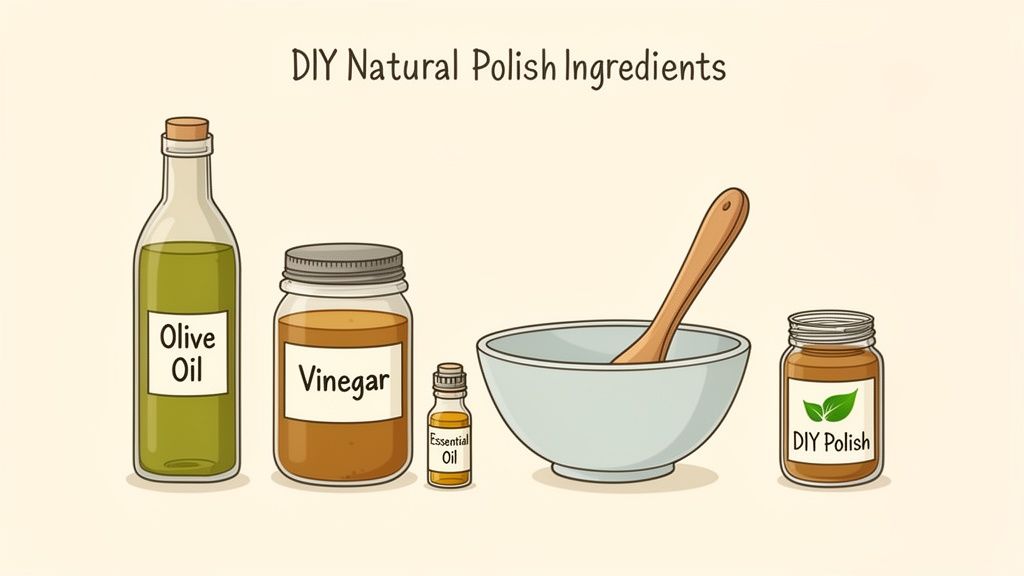
This practical, back-to-basics method is all about 'Maintenance Mastery'—something we live and breathe here at Willis. It’s proof that great care doesn’t always come from a complicated bottle. In fact, making your own polish is surprisingly simple and often uses ingredients you already have in the pantry, giving you total control over what touches your furniture and fills your home's air.
Simple and Effective DIY Polish Recipes
Whipping up a homemade polish is an easy project for a quiet afternoon. The real key is matching the recipe to your furniture's finish, just as you would with a store-bought product. And always, always test any new mixture on a small, hidden spot first.
Here are a few of our go-to recipes:
- For General Cleaning and Shine (Sealed Finishes): Mix equal parts olive oil and white vinegar in a spray bottle. The vinegar is a gentle cleaner that cuts through grime, while the olive oil gives it a light, nourishing shine. We love adding a few drops of lemon essential oil for that fresh, clean scent.
- For Deep Conditioning (Unsealed or Oil Finishes): Combine two parts olive oil with one part lemon juice. This mix is a lifesaver for feeding dry, thirsty wood—think of an older teak or walnut piece with an oil finish. The lemon juice cleans the surface while the oil sinks in deep.
- For a Protective Sheen (Wax or Dull Finishes): Gently melt a quarter cup of grated beeswax with three-quarters of a cup of olive oil in a double boiler. Once it’s all melted and combined, let it cool into a soft paste. This creates a protective, water-resistant layer that’s very similar to a commercial paste wax.
The beauty of a DIY approach is its simplicity. You're using natural ingredients to enhance the wood's inherent character, not mask it with heavy chemicals. It's a method that respects both your furniture and your home environment.
Applying Your Homemade Polish
Putting your homemade polish to work is just like using a store-bought version. Grab a clean, soft microfiber cloth and apply your mixture sparingly, working in the direction of the wood grain.
Let the polish sit for about 10-15 minutes so the oils have time to penetrate the wood. Then, take a second clean, dry cloth and buff the surface to a soft, natural sheen. You'll be left with a beautiful finish and a clean scent—no harsh fumes required. For those who want to dive deeper, exploring natural DIY recipes can open up a world of sustainable and effective options.
The move toward eco-friendly furniture polishes is really changing the game. Brands are responding to the demand for non-toxic, plant-based options, which now see up to 55% higher adoption rates in homes focused on sustainable living. This budget-friendly approach to furniture care is a perfect match for the incredible value you’ll find at the Willis Outlet. You can discover high-quality, beautifully crafted pieces at a great price and keep them looking their best with these simple methods. For more ideas like these, check out our complete spring cleaning guide.
Common Polishing Mistakes to Avoid
Even with the best intentions and what you think is the right wood polish, mistakes happen. We’ve all been there. One simple slip-up can leave your favorite table with a sticky, dust-attracting surface or a cloudy film that completely dulls the wood’s natural warmth. Knowing what not to do is the first step toward protecting your investment and keeping your furniture looking beautiful for a lifetime.
When you invest in a premium piece, protecting it is just as important as choosing it. With flexible financing options through Synchrony HOME™, we make it easier to bring high-end furniture home. Teaching you how to avoid these costly mistakes is part of our commitment to ensuring you love your furniture for years to come.
The Problem of Using Too Much Polish
This is probably the most frequent error we see. It’s an easy trap to fall into—if a little polish makes it shine, a lot must make it even better, right?
Unfortunately, it’s the exact opposite. Excess polish doesn't soak in or buff away. It just sits on the surface, creating a greasy, tacky layer that attracts dust, fingerprints, and everyday grime like a magnet. Over time, this buildup can completely hide the wood grain and become a real nightmare to remove without harsh solvents that could harm the finish.
The fix is simple: always apply polish to your cloth, not directly to the furniture. This one small change gives you total control, letting you apply a thin, even layer every time.
Applying the Wrong Type of Polish
As we've covered, not all polishes are created equal. Using an oil-based polish on a lacquered dining table can result in a streaky, oily mess that never seems to dry. In the same way, spraying a modern silicone polish on a delicate antique with a shellac finish can cause irreversible damage, as the silicone can seep into the finish and make future repairs almost impossible.
Always double-check the finish type before you start. A quick spot test in a hidden area—like the back of a leg or underneath a tabletop—can save you from a major headache. If you do make a mistake and see a hazy film appear, you might be able to remove it with a soft cloth lightly dampened with mineral spirits, but be extremely careful.
For anything more serious, professional help is the safest bet. You can learn more about our expert furniture repair and restoration services if you run into a problem that’s beyond a simple fix.
The Danger of All-Purpose Cleaners
Please, never use a multi-surface or all-purpose household cleaner on your wood furniture. These products are packed with ammonia, alcohol, and other harsh chemicals designed to cut through kitchen grease, not gently care for a fine wood finish. They can easily strip away the protective topcoat, kill the sheen, and leave the wood exposed to moisture and damage.
Investing in your home means caring for the pieces that define it. Avoiding a five-dollar bottle of all-purpose cleaner can save you from a five-hundred-dollar repair bill down the road. Stick to products specifically formulated for wood.
The furniture care market is huge, with sprays and waxes leading the way because they’re easy to use and offer great protection. The global industry is projected to grow from USD 14.8 billion to USD 20.5 billion by 2030. This growth is driven by people like you who want to properly maintain their investments—in fact, 55% of users prioritize products that restore shine and extend the life of their furniture. You can read more about these market trends and consumer preferences.
Your Questions About Wood Furniture Polish Answered
Walking through our showroom, we hear a lot of the same questions about wood care. It's a topic that can feel surprisingly complex, but with a little guidance, you can feel completely confident in your routine. Let's tackle some of the most common queries we get.
How Often Should I Polish My Wood Furniture?
That’s the million-dollar question, and the honest answer is: it depends. How often you polish is directly related to how you use the piece and where it lives in your home. A dining room table that sees daily family dinners might need a light polish once a month to keep its sheen and add a bit of protection.
On the other hand, a quiet accent table in the corner or a bedroom dresser probably only needs attention a couple of times a year. Your first line of defense should always be regular dusting with a soft, dry microfiber cloth. Think of polish as a special treatment, not an everyday cleaner. For pieces that need serious, lasting protection, applying a hard paste wax once or twice a year will do far more than frequent sprays ever could.
Can I Use One Polish on All My Wood Furniture?
We’d strongly caution against a one-size-fits-all approach. Grabbing a single product for every piece of wood furniture is one of the fastest ways to cause problems down the road. Every piece has a unique finish—whether it's lacquer, varnish, oil, or shellac—and each one reacts differently to chemicals.
Using the wrong polish can leave a hazy film, create a sticky residue, or, in the worst cases, actually strip the finish. Always check the product’s compatibility with your furniture’s finish. And most importantly, test any new polish in a small, hidden spot first. This one simple step can save you a world of hurt.
What Is the Difference Between a Wax and a Polish?
It’s easiest to think of it this way: polish cleans, while wax protects. A polish, particularly a cream or spray formula, is made to quickly remove dust, smudges, and fingerprints while leaving behind a temporary, brilliant shine.
A hard paste wax does something entirely different. It creates a tough, sacrificial barrier over the existing finish. This layer is what stands between your furniture and minor scratches, moisture rings, and the general wear and tear of life. For your most-used furniture, we recommend a routine of light polishing for cleaning and a semi-annual wax application for real, long-term preservation.
The ultimate goal of furniture care is legacy. A quick polish maintains its present beauty, but a proper wax application ensures it has a future. It’s an investment of time that pays dividends for generations.
Will Wood Polish Fix Scratches on My Furniture?
While some of the best wood polishes can help hide very fine, surface-level scratches, they aren’t a magic eraser. The polish works by filling in those tiny grooves, making them less noticeable for a while.
However, a polish won't do a thing for deeper scratches, gouges, or real damage to the wood or its finish. Trying to fix significant damage on a beloved piece with just polish can sometimes make the problem worse. For anything beyond a minor scuff, it's always best to get a professional opinion. If you have a piece from our collection that needs some help, you can always contact the Willis Furniture service department for expert advice. Our team is here to help make sure your investment remains a beautiful part of your home for years to come.
At Willis Furniture & Mattress, we believe that expert advice is the cornerstone of lasting quality. From helping you choose the perfect piece in our showroom to guiding you on its care for years to come, our team is dedicated to your satisfaction. Visit us online or in our Virginia Beach store to experience the Willis difference.

