
Chair Height for 30 Inch Table: Perfect Fit Guide

For a 30-inch dining table, the standard chair seat height is 18 to 20 inches, which leaves about 10 to 12 inches between the seat and the tabletop for comfortable posture and legroom. That simple range answers most questions about chair height for 30 inch table sizing, but complications arise when cushions, armrests, and style choices enter the picture.
That's where many homeowners get stuck. The table is already chosen, the room is starting to come together, and then the chair search turns oddly technical. A chair can look perfect online and still feel too low, too tight, or awkward once it's tucked under the table.
The good news is that this isn't guesswork once the right measurements are in place. With a few practical checks, the decision becomes much easier, and the dining room starts to feel intentional instead of pieced together.
Table of Contents
- The Perfect Pairing Your Dining Table Deserves
- The Gold Standard for Dining Chair Height
- How to Measure Chairs Like a Pro
- Accounting for Armrests and Upholstery
- Beyond Measurements Style Scale and Comfort
- From Inspiration to Installation The Willis Way
The Perfect Pairing Your Dining Table Deserves
A common scene plays out the same way. The dining table arrives, it fits the room beautifully, and then every chair option suddenly feels uncertain. The shape may be right, the finish may be right, but one quiet detail decides whether the set feels inviting or frustrating: how the chair sits under the table.
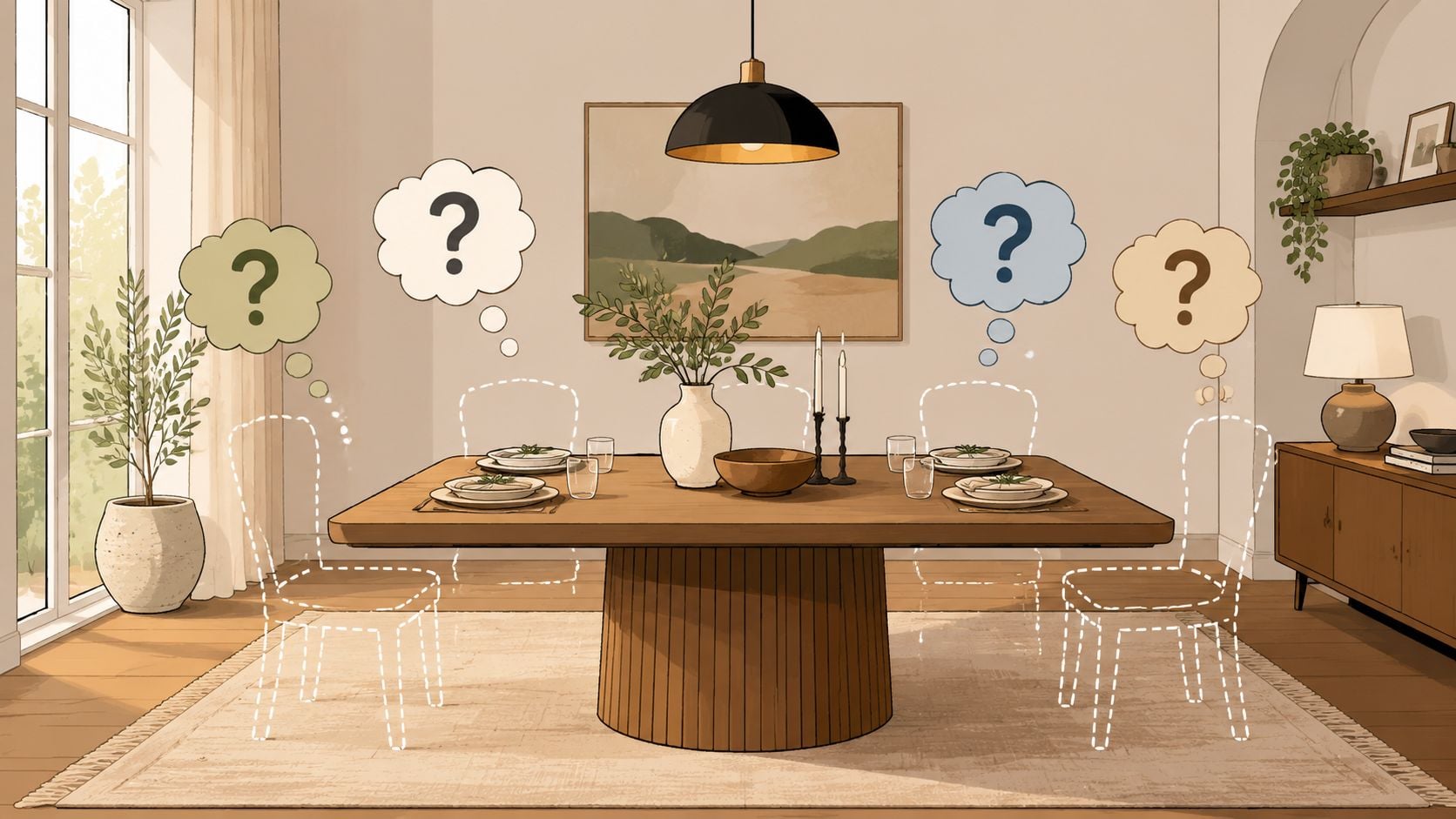
That relationship comes down to what many designers think of as the comfort gap. If the seat sits too high, knees crowd the underside of the table. If it sits too low, diners raise their arms and shoulders to eat comfortably. When the proportion is right, the whole room feels easier to use.
A 30-inch table is a very familiar standard. Modern furniture guidance typically places classic dining tables in the 28 to 30 inch range, with 18 inches often used as the baseline chair pairing and 19 to 20 inches used when the seat cushion is thicker or the apron allows more room, as noted in this dining chair height guide. That's helpful because it means the shopper with a 30-inch table is working with one of the easiest formats to furnish.
Why this pairing matters in real rooms
The table and chair don't just need to match on paper. They need to work during rushed breakfasts, homework sessions, holiday meals, and long conversations after dinner. A strong dining room earns its keep through comfort.
Some homeowners also want pieces that feel lasting, not disposable. For anyone exploring materials and craftsmanship, this look at heirloom quality dining furniture offers useful context on what gives dining seating long-term value.
A dining set can look balanced from across the room and still feel wrong once someone sits down. Fit comes first.
For shoppers comparing complete room ideas, Willis also offers guidance on how to choose a dining set that works together. That's often the easiest way to see how proportion, scale, and seating style come together before making a final decision.
The Gold Standard for Dining Chair Height
The easiest way to choose chair height for 30 inch table sizing is to stop thinking about the chair by itself. The better question is how much open space remains between the seat and the table once someone sits down.
The number that matters most
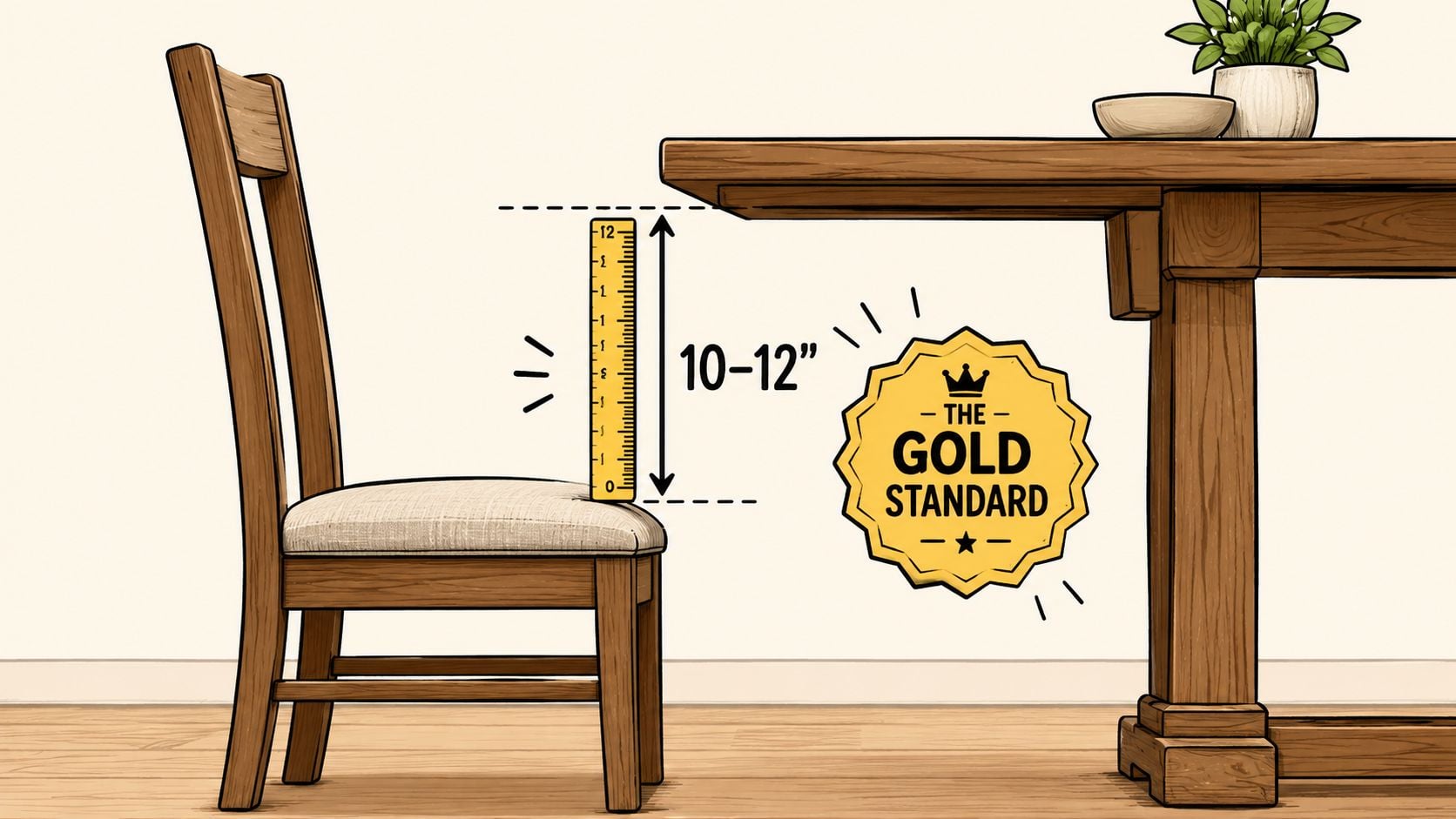
Gold standard: For a 30-inch dining table, the most widely cited chair seat height is 18 to 20 inches from the floor because that leaves about 10 to 12 inches of vertical space between the seat and the tabletop for comfort, according to this reference on dining chair fit for a 30-inch table.
That clearance is the ergonomic sweet spot. It gives the legs enough room to move without forcing the body to reach upward toward the table. It also helps the shoulders stay relaxed during meals, which matters more than people expect.
Why the gap feels so different in use
A dining chair isn't like an accent chair. It supports a more upright posture, and it needs to place the body in a useful working position for eating, talking, and sometimes even reading or laptop use. When the seat is in the right range, the table meets the person naturally.
Consider a countertop and stool designed in tandem. When their relationship is mismatched, the body immediately perceives it, even if the eye does not. This explains why shoppers frequently describe a poorly matched dining chair as “just not comfortable” without being able to pinpoint the exact cause.
A simple way to decide between the lower and upper end
If a chair is firm, clean-lined, and lightly padded, the lower end of the range often feels right. If the seat is plush, upholstered, or expected to compress more with use, the upper end can make more sense.
A few practical cues help:
- Choose lower in the range if the seat feels firm and the table has a tighter underside.
- Choose higher in the range if the chair has a thicker cushion and the table allows more clearance.
- Pause before buying if the seller lists overall chair height but not seat height. Those are not the same measurement.
For homeowners who want a broader overview of dining proportions before selecting chairs, this guide to dining table heights can help connect table measurements to everyday use.
How to Measure Chairs Like a Pro
Once the standard is clear, the next step is accuracy. Many sizing mistakes happen because the wrong part of the chair gets measured, or because the table height is checked while the underside clearance is ignored.
Start with the seat, not the back
Seat height means the distance from the floor to the top of the part a person sits on. It does not mean the top of the chair back, and it does not mean the highest decorative point on the frame.
A straightforward process works well:
- Place the chair on a flat floor. Uneven flooring can throw off the reading.
- Measure from the floor to the top of the seat. For a wood or metal seat, use the highest sitting surface.
- For upholstered chairs, measure the seat before someone sits in it. This shows the chair's listed height, which is usually how retailers describe it.
- Write the number down immediately. Dining shoppers often compare several chairs at once, and memory gets unreliable fast.
A chair can have a tall back and still be a low seat. The tape measure should stop at the seat, not at the silhouette.
Check what happens underneath the table
The next important step is measuring the usable space below the table. A thick apron or support rail can make a standard table feel tighter than expected.
Use this checklist:
- Measure from the floor to the bottom of the table or apron. That's the actual clearance.
- Compare that clearance to the chair seat height. The space between them should feel open, not cramped.
- Look at the chair's full shape. Some seats are thin, but the frame around them rises at the edges.
- If the chair has arms, measure those too. Arm height decides whether the chair can slide in fully.
This process doesn't take long, but it prevents costly mismatches. For shoppers who want a reliable process for room pieces in general, Willis provides a practical guide on how to measure furniture before buying.
Accounting for Armrests and Upholstery
A chair's listed seat height is only the starting point. The way the seat compresses and the way the arms sit under the table can change daily comfort more than many shoppers expect.

Why soft seats change the feel
An upholstered seat works a bit like a mattress top. Two beds can measure the same height, but the softer one lets you sink more. Dining chairs behave the same way.
A tight, firm seat stays closer to its listed height. A plush cushion compresses once someone sits down, which changes how high or low the chair feels in use. That is why a generously padded chair can still feel comfortable near the higher end of the usual range for a 30 inch table.
What matters is the lived experience at the table, not just the catalog number.
Ask a few practical questions before you decide:
- Does the cushion feel firm, medium, or very soft?
- Will this chair be used for quick meals or long conversations?
- Does the front edge keep its shape, or does it dip under weight?
- Will easier cleaning matter in your home over time?
Fabric also plays a role here. Texture, durability, and cleanability all affect how satisfied you feel with the chair six months from now, not just on delivery day. If you are comparing materials, this guide to upholstery fabric types for furniture helps explain the tradeoffs in a clear, practical way.
Why arm height matters as much as seat height
Armchairs often add polish to a dining room. They can frame the heads of the table beautifully and give diners more support. But the arms need enough clearance to slide under the table without rubbing the apron or stopping short.
That detail changes the whole look of the room. If a chair cannot tuck in, the table may feel more crowded, walkways can tighten, and the set may look misaligned even when each piece is attractive on its own.
Use this quick comparison:
| What to measure | Why it matters |
|---|---|
| Arm height | Shows whether the chair can slide under the table |
| Table underside | Reveals the real clearance, especially with an apron |
| Chair width and stance | Affects how neatly the chair sits when pushed in |
Color can influence this choice too, especially with upholstered armchairs that have more visual presence. Dark frames and dark fabrics can feel refined and grounded, while contrast fabrics make the chair shape easier to read against the table. For ideas on pairing darker finishes, understanding black's complementary hues can help you build a dining palette that feels balanced.
The design side and the comfort side converge in this choice. The right chair should fit under the table, support the way your household sits, and look at home in the room. That is how a technical measurement turns into a confident design decision.
Beyond Measurements Style Scale and Comfort
A technically correct fit is only half the story. The right dining chair should also look right with the table and feel right for the people who use it most.
Match the chair's visual weight to the table
A substantial wood table can handle a chair with presence. A lighter table often looks better with a chair that feels open, slim, or more refined in outline. This has less to do with strict rules and more to do with visual balance.
A few examples make the point:
- Rustic or heavy tables usually pair well with chairs that have fuller backs, exposed wood, or a more grounded frame.
- Airy, modern tables often look better with seating that doesn't visually overpower the top.
- Mixed-material rooms benefit from repeating one element, such as wood tone, fabric texture, or line shape, so the set feels connected.
Color matters here too. In darker dining rooms, contrast can help chairs stand apart from the table instead of blending into one block of color. For homeowners styling around black finishes, this guide to understanding black's complementary hues can spark useful color pairings.
Comfort has a personal side
Not every diner experiences the same chair the same way. One person may prefer a firmer sit. Another may want a more padded feel or the support of arms. Families with older adults may value easier sit-to-stand movement, while others care most about how the set handles long meals and entertaining.
That's where in-person testing helps. Sitting in several styles back to back makes differences clear very quickly. Seat shape, back pitch, cushion feel, and arm placement all become obvious once a person uses the chair instead of judging it from a product photo.
For shoppers trying to connect furniture choices to a complete room direction, this Willis article on finding a home decorating style can help narrow the look before choosing final seating. And for those seeking budget-friendly pieces, the Willis Outlet is worth visiting because it gives homeowners access to ready-to-take-home furniture and rugs without losing the chance to see scale and comfort in person.
Good dining rooms don't come from measurements alone. They come from measurements plus a chair people actually want to sit in.
From Inspiration to Installation The Willis Way
By this point, the core decision is much simpler. For chair height for 30 inch table planning, the target is clear, and the remaining work is about matching that fit to real materials, real people, and the room's overall look.

A good plan removes the common mistakes
Many dining room problems don't come from bad taste. They come from small oversights. A chair is measured at the back instead of the seat. The apron is ignored. The armrests look elegant but won't slide under the table. The upholstery compresses more than expected.
That's why design support matters. Through the Willis Design Center, shoppers can get help with space planning, custom upholstery decisions, fabric selection, and room coordination. That support turns a technical sizing question into a finished room plan.
Making a finished room more attainable
The practical side matters too. Premium dining furniture is often a longer-term purchase, and financing can make that choice more manageable for households that want to invest in better materials without trying to do everything at once. The brand also offers white-glove delivery, which helps ensure the final setup is assembled and placed correctly instead of left in boxes at the door.
That combination is what makes the process feel complete. The measurements lead to the right chair. The style choices shape the room. The delivery and setup help the space feel finished from day one.
A well-sized dining chair changes how a room works every single day. For help choosing seating, customizing fabrics, or planning a complete dining space, shoppers can explore Willis Furniture & Mattress for design support, in-store inspiration, financing options, and ready-to-bring-home finds.


