
Counter Height Tables: A Complete Buying Guide for 2026


An open kitchen can be a gift until the dining area starts feeling unresolved. The island looks finished, the living room has its rhythm, and then the table becomes the piece that never quite belongs. A standard dining set can read too low and too separate. A bar-height setup can feel too tall and too specialized for daily life.
That's usually when homeowners start looking at counter height tables. They want one surface that can handle breakfast before work, homework after school, and a glass of wine while dinner finishes in the oven. They also want the room to look intentional, not like two unrelated furniture zones pushed beside each other.
A well-chosen counter height table solves that tension with surprising effectiveness. It can visually connect the kitchen to the dining area, make an open floor plan feel more cohesive, and support the kind of casual living found in many households. The key is choosing one with the right proportions, the right seating, and the right placement so it works as hard as it looks good.
The Modern Dining Dilemma
A common scene plays out in open-concept homes. The kitchen countertops sit at one level, the island anchors the room, and the nearby dining area feels like it belongs to an older floor plan. The family wants a place to gather, but they don't necessarily want a formal dining setup that asks everyone to sit down for long, structured meals.
In that setting, standard dining height can feel visually disconnected. The table sits lower than the surrounding kitchen surfaces, which can break the line of sight and make the room feel segmented. On the other hand, full bar height often brings a more commercial, pub-like energy than most homes need.
Counter height tables land in the middle, and that middle matters. They support quick meals, conversation while cooking, and the kind of flexible use modern households ask from every square foot. For many homes, they feel more natural beside an island or adjacent workspace than a traditional dining table does.
A dining area doesn't fail because it's too small. It usually fails because the furniture doesn't match the way the household actually lives.
That practical middle ground is also why so many shoppers compare them with taller options before deciding. For readers weighing the difference in mood and function, this look at bar-height dining ideas and use cases can help clarify which direction fits the room best.
The appeal isn't only about height. It's about creating a surface that feels integrated into the architecture of the home. When the table works with the kitchen instead of against it, the whole room starts to read as one complete environment.
What Defines a Counter Height Table
A counter height table is not just a taller dining table. Its defining feature is a standardized working height that lets it align with the architecture already found in most kitchens.
According to this overview of counter and bar height dimensions, counter height tables are globally standardized to a specific vertical dimension of 34 to 36 inches from the floor to the tabletop surface, a benchmark established by the American National Standards Institute (ANSI) to ensure ergonomic consistency and smooth integration with kitchen countertops.
Why that height matters
That 34 to 36 inch range isn't decorative. It's what allows the table to act like a bridge between food prep space and dining space. In an open layout, that alignment creates a cleaner visual line across the room, which often makes the space feel calmer and more intentional.
There's a functional benefit too. When the tabletop sits near countertop level, the surface becomes useful for more than eating. It can hold a laptop in the morning, a serving spread in the evening, or a stack of school papers in between without feeling out of place beside the kitchen.
The visual continuity effect
A lower dining table often creates a noticeable drop in the room's sightline. That isn't automatically bad, especially in formal spaces, but it can interrupt flow in homes where the kitchen and dining area need to work together. Counter height tables keep the eye moving across the room at a more consistent level.
That's why they tend to work especially well in these settings:
- Open-plan homes: The table feels connected to the kitchen instead of parked beside it.
- Breakfast areas: The scale suits quick daily use better than a formal dining arrangement.
- Multipurpose rooms: The surface can shift between dining, projects, and casual entertaining.
Practical rule: If the dining area touches the kitchen visually and functionally, matching heights often creates a more settled room than mixing a countertop with a much lower table.
The right way to think about counter height tables is not as a trend piece. They're a proportion choice. When that proportion suits the architecture, the room feels resolved.
Counter vs Dining and Bar Height Tables
Choosing among dining, counter, and bar height comes down to how the room should feel when people use it. Height changes posture, tempo, and the level of formality more than most shoppers expect.
A useful starting point is this direct comparison. For a deeper look at the full range of dining proportions, this guide to common dining table heights is a smart companion read.
Table Height Comparison at a Glance
| Feature | Dining Height Table | Counter Height Table | Bar Height Table |
|---|---|---|---|
| Typical height | 28 to 30 inches | 34 to 36 inches | 40 to 42 inches |
| Overall mood | Traditional and grounded | Casual and polished | Energetic and social |
| Best fit | Formal dining rooms, longer meals, broad accessibility | Open kitchens, breakfast areas, flexible everyday use | Entertainment-focused spaces |
| Seating posture | Relaxed seated posture | More upright seated posture | Perched, elevated posture |
| Visual effect | Keeps the room lower and calmer | Connects visually with kitchen counters | Creates a strong vertical presence |
How each one lives in a room
Standard dining height remains the familiar choice for households that want a universal, easy-to-use table. It suits spaces where people linger, host holiday meals, or need seating that works comfortably for a wide range of ages and mobility levels.
Counter height sits in the lifestyle sweet spot for many modern homes. According to this buying guide focused on counter height dining sets, counter height tables are optimized for everyday meals lasting under 45 minutes and creating "casual elegance," distinguishing them from the 28 to 30 inch standard dining tables which remain the most popular choice for traditional formal dining and families requiring universal accessibility.
Bar height has its place, but it brings a very specific personality. It can be excellent for game rooms, dedicated entertaining areas, or homes that want a high-energy lounge feel. In a primary family dining space, though, it often asks too much from everyday use.
What works and what doesn't
Some decisions become clear once the room's purpose is honest.
- Choose dining height if the space is meant for slower meals, mixed-age family use, or a classic dining-room feel.
- Choose counter height if the dining area shares space with the kitchen and needs to feel social, versatile, and visually connected.
- Choose bar height if the room is more about entertaining than daily dining.
The best table height isn't the one that looks most dramatic in a showroom. It's the one that matches the rhythm of the household on a Tuesday night.
Counter height tables do many things well, but they aren't automatically superior. They're best when the room calls for a middle-ground solution that feels current without becoming impractical.
Finding the Perfect Stool for Your Table
The most common mistake with counter height tables isn't the table. It's the seating. A beautiful table paired with the wrong stool height will feel awkward every single day, no matter how good it looks from across the room.
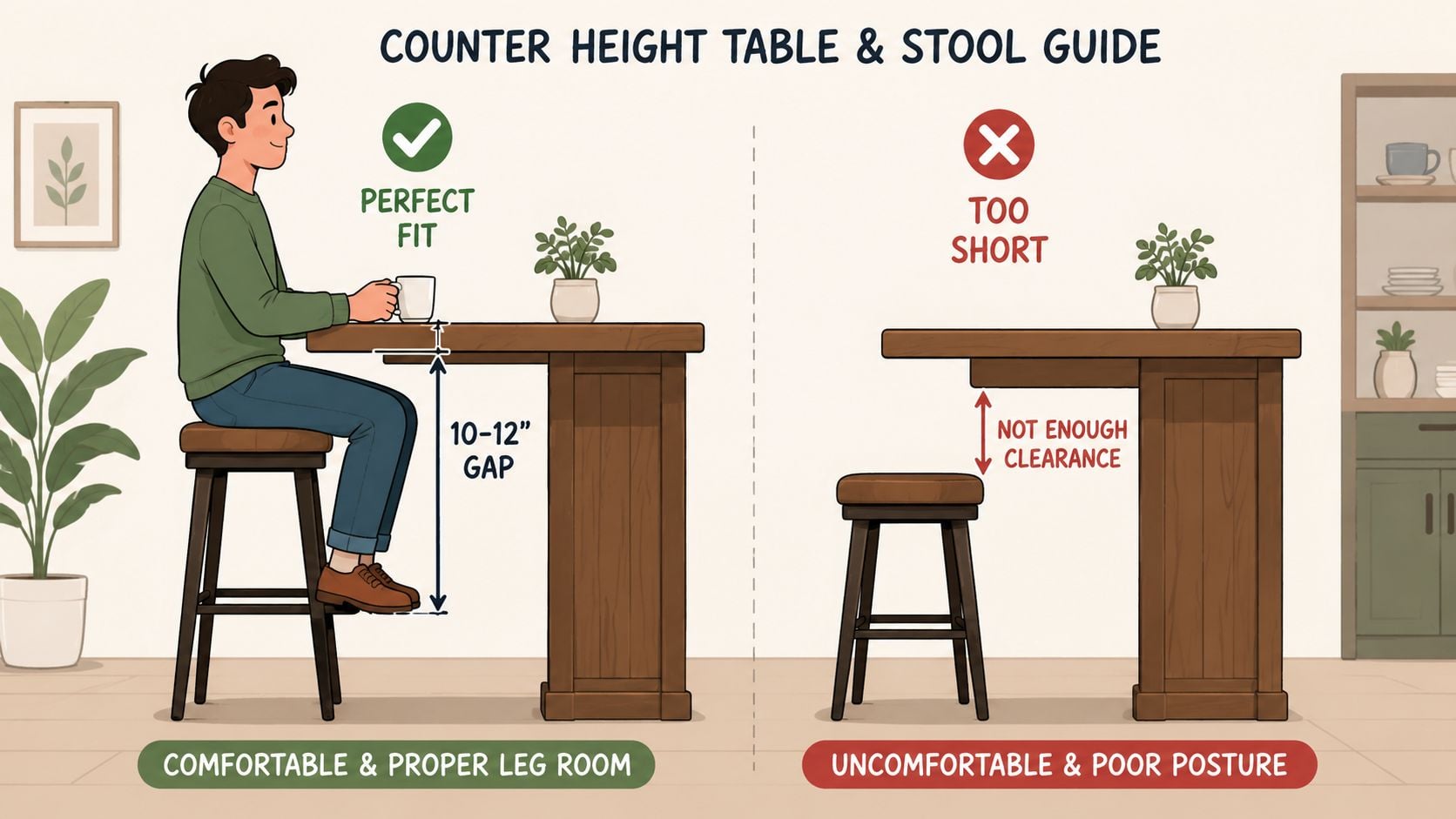
The fit has to be deliberate. According to this ergonomic guide to counter-height table design, optimal ergonomic performance for counter-height tables strictly depends on pairing them with seating featuring a 24 to 26 inch seat height, which yields a 9 to 11 inch vertical gap between the seat and the table underside, the industry-standard delta for comfortable legroom.
Use the clearance rule first
When shopping for stools, style should come after measurement. The seat needs to sit low enough for relaxed arms and comfortable knees, but high enough that diners don't feel like they're reaching up to eat.
That clearance rule shapes nearly every good stool decision:
- 24 to 26 inch seat height: This is the reliable partner for most counter height tables.
- 9 to 11 inch gap: That space keeps the body in a natural eating posture.
- Wrong pairing: Too low feels disconnected. Too high causes knee impact and crowding.
A quick way to avoid expensive mistakes is to measure from the floor to the underside of the table, not just the top. Decorative aprons, thick tops, and support framing can change the usable space more than expected.
Match the stool style to the room
Once the fit is correct, the room's function should guide the stool style.
- Backless stools: Best for compact rooms where seating needs to tuck away cleanly.
- Backed stools: Better for households that use the table for longer stretches like homework or laptop work.
- Swivel stools: Helpful in tighter layouts where turning out of the seat is easier than pushing the stool back.
Material matters too. In busy homes, performance upholstery, easy-clean leather, and durable wood finishes usually age better than delicate fabrics. For readers comparing construction details before they buy, this resource on selecting durable bar stools offers useful context on what contributes to long-term wear.
A footrest is another detail worth taking seriously. Without one, even a properly scaled stool can feel less supportive over time. Well-designed options often solve that with a sturdy rail or integrated stretcher, as seen in pieces like this walnut leather footstool design.
Good stool selection is part geometry, part comfort, and part traffic planning. Ignore any one of those, and the whole setup suffers.
How to Choose the Right Table for Your Home
A counter height table works best when it answers three questions clearly. How much space is available, what shape supports the room, and what finish belongs with the home's overall style. Most buying mistakes happen when shoppers focus on only one of those.
Start with footprint and seating needs
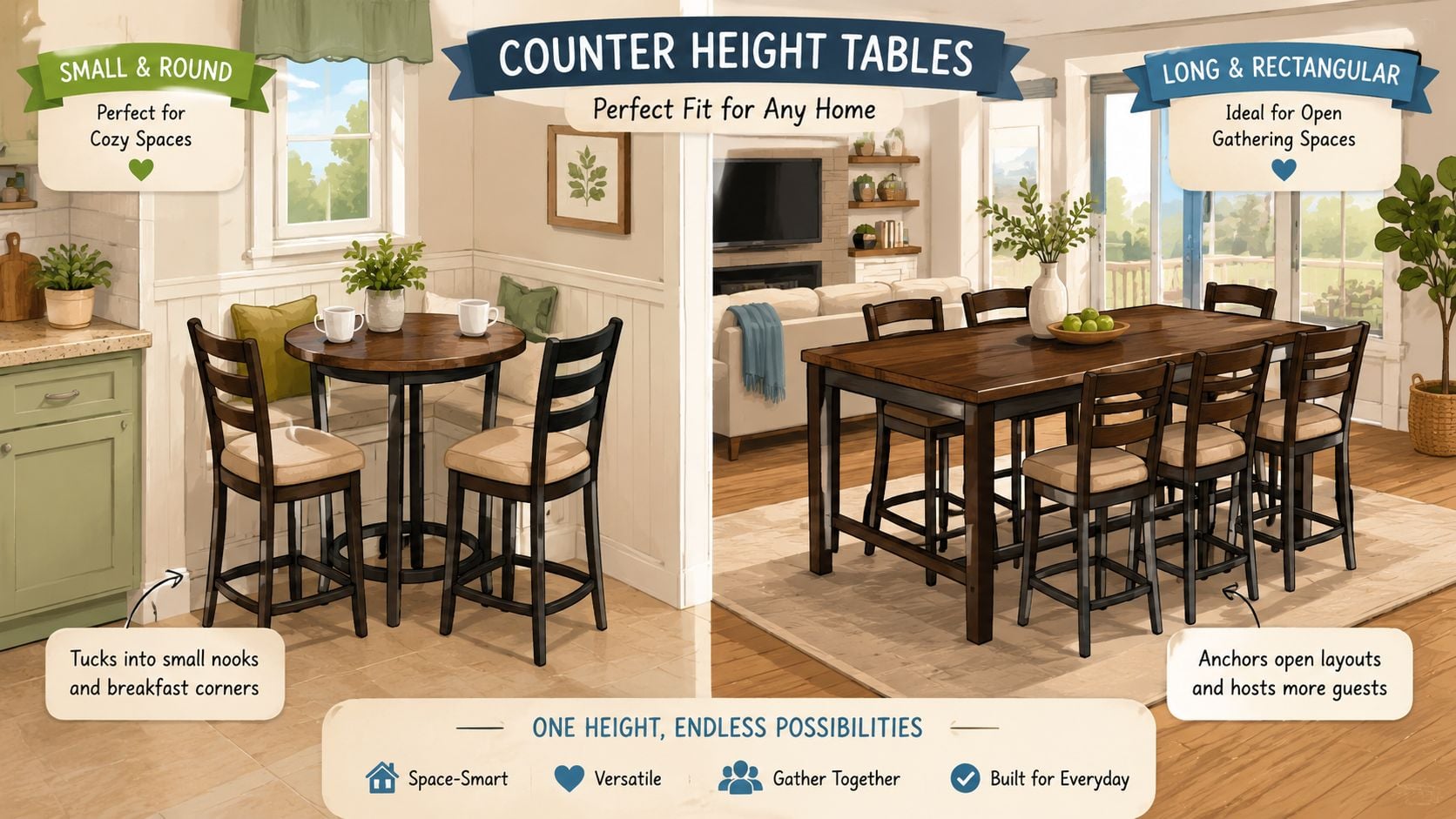
In compact areas, proportion matters more than drama. According to this guide to maximizing space with counter-height tables, for a compact layout for four diners, a counter height table should measure 48 to 54 inches long and 24 to 30 inches deep, ensuring each person has at least 24 inches of width. For two diners, a 36 to 42 inch length is effective.
That means a small breakfast nook usually benefits from restraint. A table that's visually lighter and correctly scaled will almost always perform better than one that fills every inch of the room.

Choose shape based on movement
Shape changes how people move around the table and how the room breathes.
Round tables
Round counter height tables soften a kitchen corner and support easy conversation. They work especially well when there are no strong architectural lines that demand a rectangular layout.
Rectangular tables
Rectangular designs usually make more sense in long, open areas where the table needs to align with cabinetry, islands, or adjacent seating. They also tend to offer the cleanest relationship with traffic flow.
Square tables
Square versions can be excellent in compact, symmetrical rooms, but they need careful scaling. Too small and they feel temporary. Too large and they clog circulation fast.
Let style follow architecture
Counter height tables shouldn't look like an afterthought imported from a different home. The materials and silhouette need to support the architecture already in place.
- For coastal interiors: Light woods, soft painted finishes, woven textures, and airy stools usually feel right.
- For traditional homes: Turned legs, warmer stains, and upholstered seating often create a more settled look.
- For modern rooms: Clean edges, mixed materials, and simple profiles keep the table from feeling heavy.
Customization becomes valuable. A Design Center can help homeowners tailor finish, scale, and upholstery so the table looks built for the space rather than merely placed in it. That matters even more when the table sits in open view from the kitchen and living room.
For those evaluating surface materials and textiles together, this article on understanding custom upholstery quality is a useful read. It helps clarify what separates a durable, design-forward investment from a piece that only looks good on day one.
Balance aspiration with budget
Premium construction is worth paying for when the table will be a daily-use piece. Solid wood, stable joinery, durable finishes, and seating with real support age better than lightweight alternatives. But a polished look doesn't always require a fully custom order.
A practical way to shop is to divide priorities:
- Spend on structure. Table base stability and stool comfort affect daily use most.
- Be selective on finish upgrades. A special stain or upholstery choice can transform the look without changing the basic function.
- Stay open to value finds. Floor samples and one-of-a-kind pieces can offer strong design value for shoppers who want a refined result on a tighter budget.
For homeowners still narrowing down the right shape, size, and use case, this guide on how to choose a dining room table helps connect those decisions in a practical way.
Care, Delivery, and Designing Your Complete Space
A counter height table earns its place through daily use, so care has to be realistic. Households need routines that protect the finish without turning maintenance into a chore.
Care that fits the material
Wood tops usually do best with regular dusting and prompt cleanup of spills. Standing moisture and heat are what create most long-term problems, so coasters, placemats, and a simple wipe-down habit go a long way.
Stone and stone-look tops need a different mindset. They can handle busy use well, but they still benefit from quick cleanup and non-abrasive products. Metal bases tend to be straightforward, though scuffs show more readily on some finishes than shoppers expect.
- Wood surfaces: Keep them dry and avoid harsh cleaners.
- Upholstered stools: Treat spills quickly and follow fabric-specific care guidance.
- Mixed-material tables: Maintain each surface on its own terms instead of using one cleaner for everything.
A dining purchase lasts longer when the care routine matches real life. The best finish is the one a household will actually maintain.

Delivery changes the ownership experience
Large furniture doesn't end at checkout. Delivery quality affects whether the piece arrives ready to enjoy or starts with frustration. Some shoppers exploring logistics options may come across services centered on single item delivery, which is useful context when comparing what basic transport includes versus a more complete in-home setup.
For many households, white-glove service is what makes the difference. The piece is inspected, assembled, and placed properly instead of being left at the curb or in a garage. That matters with counter height tables because level placement, stool spacing, and room positioning all influence how the set functions.
A complete room also benefits from coordination beyond the table itself. Rugs, lighting, art scale, and adjacent seating all shape whether the area feels finished. For readers considering the value of in-home placement and assembly, this explanation of what white-glove delivery includes is worth reviewing.
Frequently Asked Questions
Are counter height tables good for everyday use
Yes, if the household lives casually. Counter height tables shine in homes that use the dining area for breakfast, quick dinners, conversation during cooking, and flexible daily tasks. They usually make less sense for households that prefer long, formal meals in cushioned chairs.
Are they a good choice for families with children
They can be, but the seating matters. Stools should feel stable, easy to get in and out of, and appropriately supportive for the people using them most. In many family homes, backed stools are the better choice because they create a more secure, grounded seat than backless options.
Do counter height tables work for seniors
Many buying guides often oversimplify the topic. According to this discussion of accessibility concerns with counter-height tables, existing guides often fail to address that for seniors and users with limited mobility, the standard 34 to 36 inch counter height can be physically inaccessible compared to 28 to 30 inch dining tables, as the required stool height can exacerbate hip flexion difficulties.
That doesn't mean they never work. It means comfort and mobility should come before style. For some households, standard dining height will remain the better long-term choice.
Can a counter height table replace a formal dining table
Sometimes, but not always. It can absolutely become the primary dining surface in an open-plan home where casual use is the priority. In homes that entertain formally or need the broadest accessibility, a traditional dining table often performs better.
What usually goes wrong with this purchase
Most problems come from one of three mistakes:
- Wrong stool height: The fit feels off immediately.
- Oversized table footprint: The room loses easy circulation.
- Choosing for looks only: The table suits photos better than daily life.
The best results come from treating counter height tables as a planning decision, not just a style choice.
Willis Furniture & Mattress helps homeowners turn ideas like this into rooms that feel complete. From the in-house Design Center and custom upholstery options to flexible financing, white-glove delivery, and value-focused finds at the Outlet and Rug Market, the team makes high-end living feel attainable. Explore inspiration, expert guidance, and curated furniture at Willis Furniture & Mattress.


