
Where to Find Cleaning Code on Couch: 2026 Guide


A spill on the sofa can make even a calm homeowner move too fast. One hand grabs paper towels, the other reaches for the nearest spray bottle, and that's usually the moment a small problem turns into a fabric problem.
The safest move is slower. Before any cleaner touches the upholstery, the priority is figuring out where to find cleaning code on a couch. That small sewn-in tag tells a homeowner whether water is safe, whether solvent is required, or whether liquid should stay away entirely. For a piece that anchors family movie nights, holiday photos, and everyday living, that tag protects more than fabric. It protects the investment.
Table of Contents
- Your Guide to Sofa Stain First-Aid
- A Step-by-Step Search for Your Couch's Care Tag
- Decoding Upholstery Cleaning Codes
- What to Do When the Cleaning Code is Missing
- Protect Your Investment with Smart Fabric Choices
- Knowing When to Call a Professional for Help
Your Guide to Sofa Stain First-Aid
A tipped glass of red wine. A child leaning over the arm with an uncapped marker. A pet accident discovered too late. Most stain emergencies feel urgent, but upholstery care rewards restraint.
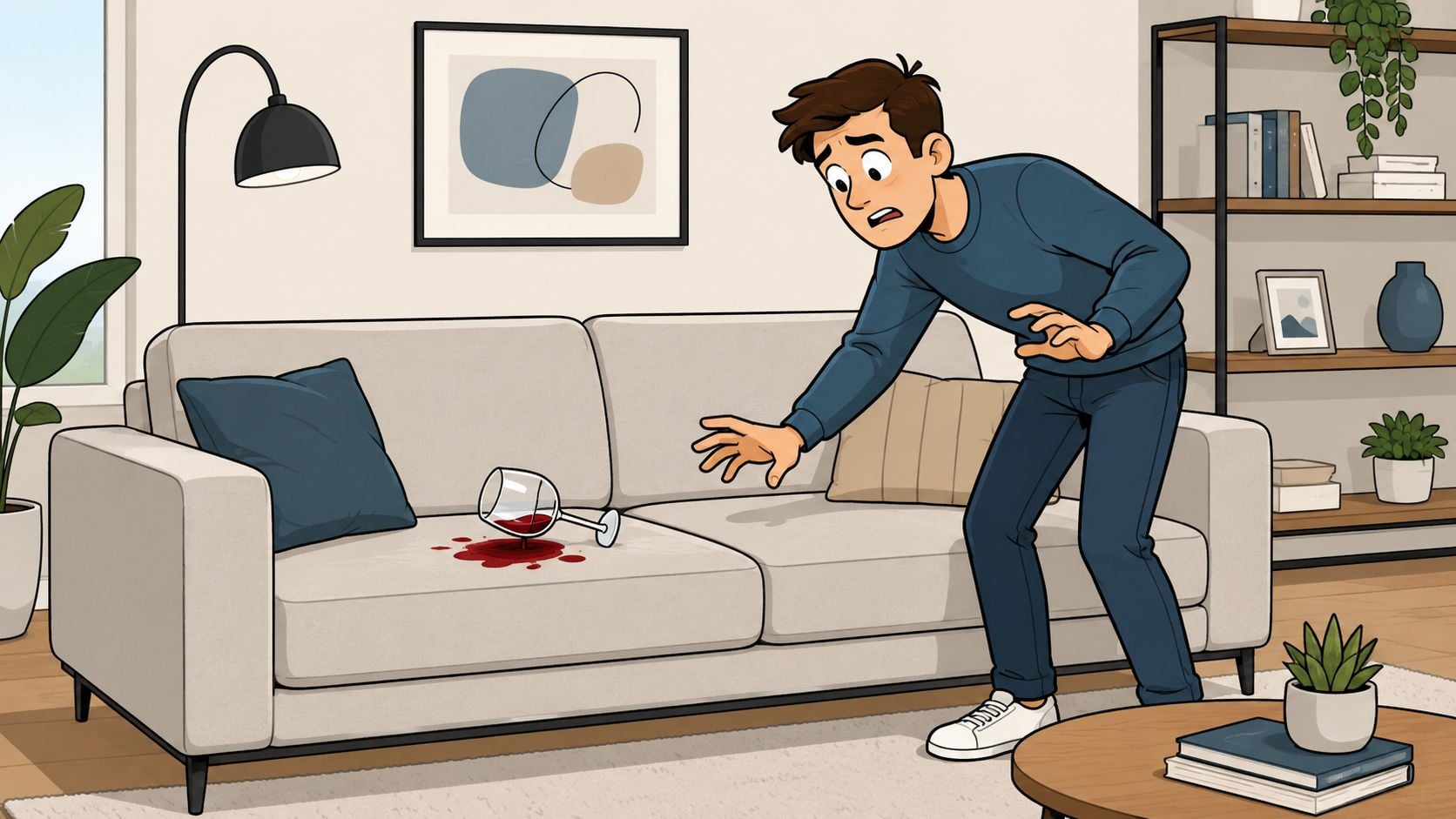
The first job isn't scrubbing. It's protecting the fabric from a second mistake. A homeowner should blot gently, avoid rubbing, and pause before using any all-purpose cleaner. If the issue involves pet accidents rather than a drink spill, odor can linger beyond the visible spot, so guidance on how to eliminate urine odor can be useful once the fabric's care method is confirmed.
What to do in the first few minutes
- Blot, don't grind: Press with a clean cloth or paper towel to lift moisture. Rubbing pushes the spill deeper and can rough up the fabric surface.
- Remove easy solids carefully: If the mess includes food or debris, lift it away gently so it doesn't smear.
- Hold off on cleaner: The right product depends on the hidden care code, not on the stain alone.
- Protect the long-term value: If the sofa is covered by a furniture protection plan, this is the moment to review what care steps and claims guidance may apply.
Practical rule: Fast action helps with stains. Blind action doesn't.
That small label under the cushions or along the frame often decides whether a stain stays manageable or becomes a permanent reminder. Most guides jump straight into code definitions. The essential first-aid move is finding the tag before panic makes the decision.
A Step-by-Step Search for Your Couch's Care Tag
Manufacturers usually hide the tag because it isn't meant to show. That makes it easy to miss when a spill happens. A careful search pattern works better than flipping one cushion and guessing.
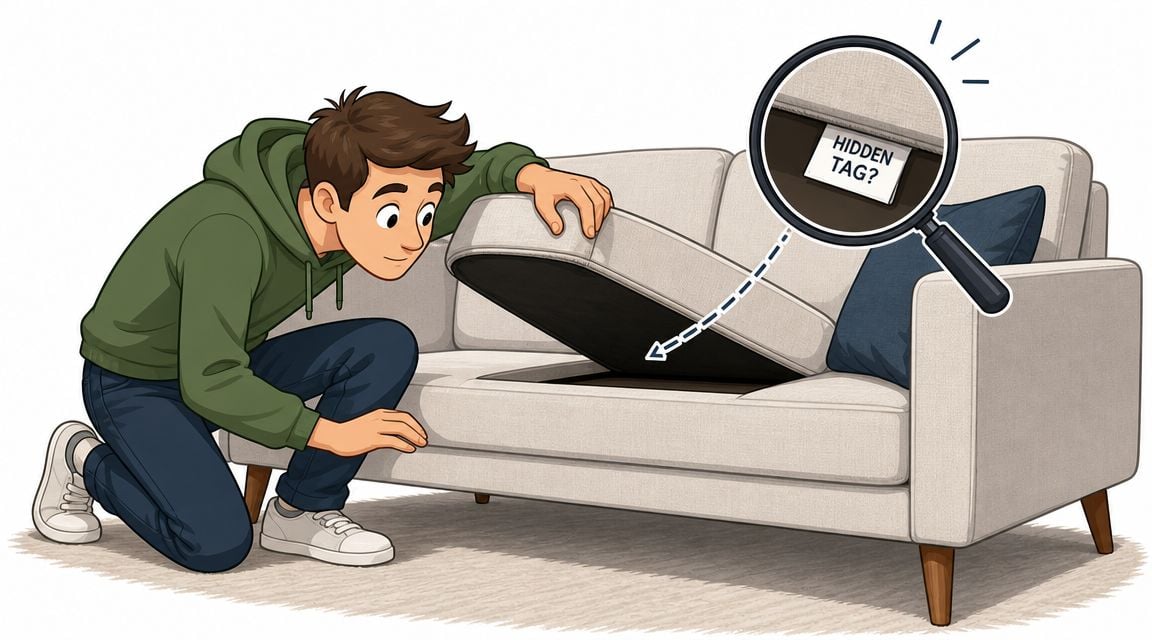
Industry guidance says the cleaning code is typically found on a sewn-in tag attached under a seat cushion, beneath all cushions on the furniture's deck, or on the frame, and that tag is the primary source consumers should check before applying moisture or solvent, as explained in this upholstery fabric cleaning code guide.
Start with the seat cushions
The most common mistake is checking only one cushion. Every seat cushion should come off.
Look under each cushion first. Then look at the upholstered platform beneath them, often called the deck. On many sofas, the tag is sewn into the edge where the cushions sit, and it can lie flat enough to blend into the fabric or lining.
A good search sequence is simple:
- Lift all seat cushions: Not just the one nearest the stain.
- Run a hand along seams: Tags often fold under and don't show immediately.
- Check the back corners of the deck: Sewn-in labels like to hide where the eye doesn't naturally go.
Move to the deck and frame
If nothing appears under the cushions, the next places are lower and less convenient. Tilt attention to the front rail, side rails, and the underside of the sofa frame. On some pieces, the label is attached near the base rather than near the seating area.
Many owners assume the tag should be visible from the outside. It often isn't. Hidden placement is normal.
Other hiding spots can include the area under a sofa skirt, along a back or seat seam, or attached near internal support areas on the frame. Older or custom-upholstered pieces can make the hunt even less obvious, so patience matters.
Check every section on modular pieces
Sectionals and modular sofas deserve extra caution. One piece may carry a tag while another section has its own label. That's especially important when accent panels, chaise sections, or armless units use different fabrics.
- Inspect each component separately: Don't assume the chaise matches the corner seat.
- Look at removable pieces individually: Ottomans and detached cushions may have their own care information.
- Compare fabric feel and weave: If one panel looks or feels different, it may clean differently too.
A homeowner trying to solve where to find cleaning code on a couch should think like an inspector, not a hurried cleaner. The search should be methodical, quiet, and complete. One minute spent finding the label can save a sofa from rings, texture changes, or avoidable discoloration.
Decoding Upholstery Cleaning Codes
Once the tag turns up, the letters are brief but decisive. They aren't suggestions. They're care limits for that specific upholstery.
Ashley Furniture's published guidance identifies the four main codes as W, S, W/S, and X, with W for water-based cleaners, S for solvent-only cleaning, W/S for either method, and X for vacuuming or brushing only. That same guidance warns that ignoring the code can cause irreversible damage, which is why the label should lead the decision, as shown in this cleaning code chart.
Upholstery Cleaning Code Reference
| Code | What It Means and How to Clean |
|---|---|
| W | Use water-based cleaner only. |
| S | Use solvent-based cleaner only. Water shouldn't be used. |
| W/S | Either water-based or solvent-based cleaner may be used. |
| X | No liquid cleaners. Vacuum or brush only. |
Why the code matters in real life
A homeowner usually focuses on the stain. The fabric is focused on chemistry and moisture. That's where mistakes happen.
A W code tends to feel more forgiving for day-to-day life because approved water-based upholstery products are generally easier for homeowners to manage. A fabric with S asks for more care. Solvent products can be effective, but they require precision, ventilation, and a lighter hand. X is where many DIY attempts go wrong, because the urge to "just dab a little water" can leave a bigger problem than the original spot.
A stain can be temporary. Texture damage and water rings can stay for the life of the sofa.
This is also where smarter buying begins. Households with children, pets, or frequent guests often benefit from discussing fabric practicality before purchase, not after a spill. When reviewing types of fabric for upholstery, the cleaning code should sit beside color, texture, and style in the decision process. A beautiful sofa isn't fully suited to a room if normal life makes the care routine stressful.
What to Do When the Cleaning Code is Missing
Missing tags are common enough to frustrate careful homeowners. Older sofas, secondhand finds, custom pieces, and reupholstered furniture don't always carry a readable label. Sometimes the tag was cut off. Sometimes it's faded beyond use.
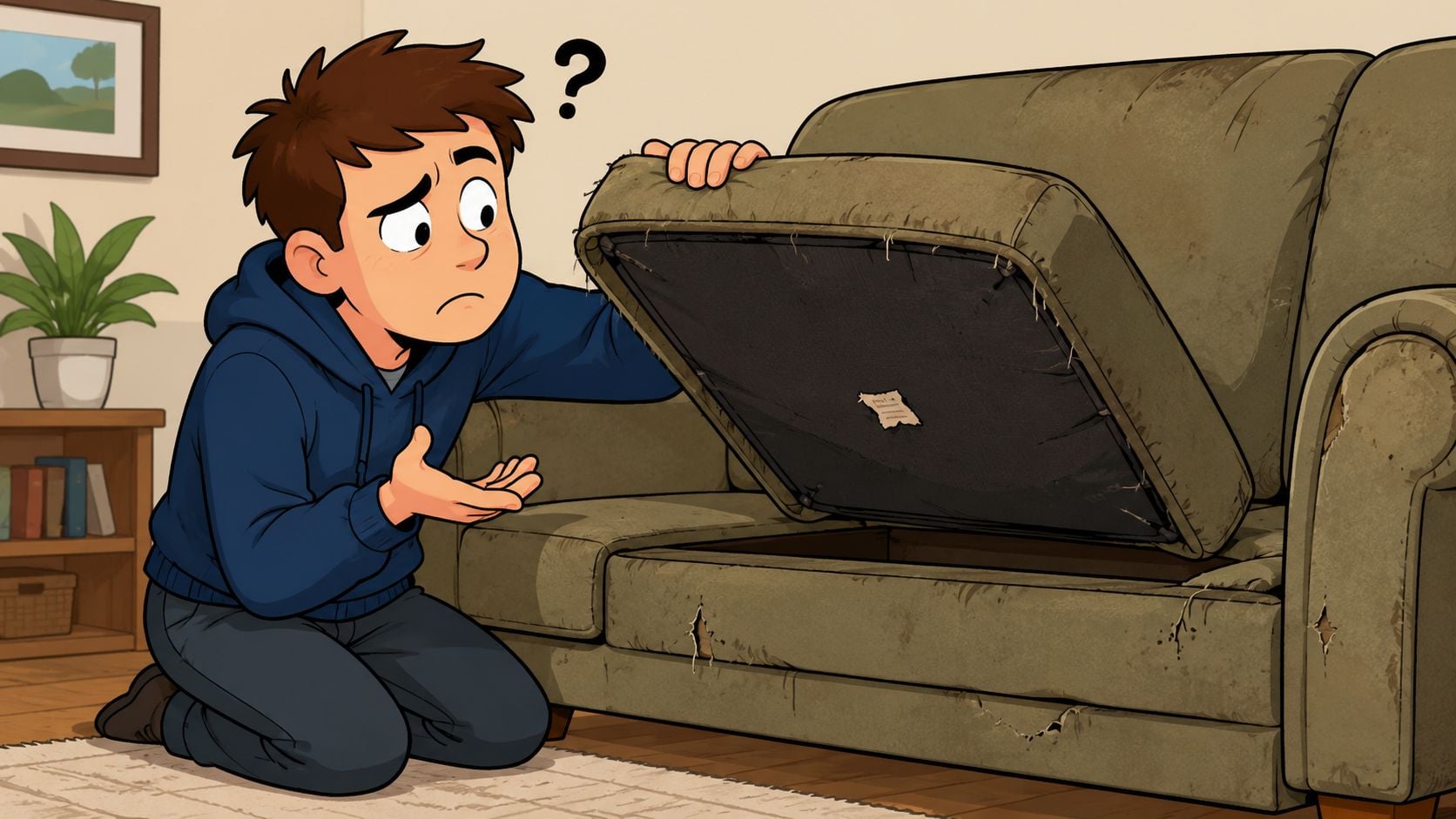
When there's no code, expert guidance points to an escalation path that starts with a spot test in a hidden area before treating any visible stain, as noted in this video guidance on missing upholstery codes.
A safe escalation path
The safest response is slow and deliberate.
- Check paperwork first: Sales receipts, product descriptions, or order details may include fabric information. Shoppers trying to decode those details can use guidance on how to read furniture product descriptions and buy with confidence.
- Choose a hidden test area: The underside of a skirt, the back lower edge, or an unseen portion beneath a cushion works better than a barely hidden arm panel.
- Test a tiny amount: Apply only a small amount of the intended cleaner.
- Let it dry fully: Wet fabric can look fine at first and change after drying.
- Check for change: Look for color transfer, roughness, stiffness, shrinkage, or rings.
When to pause the DIY approach
Not every mystery fabric should be experimented on. If the upholstery has a delicate weave, a nap finish, unusual texture, or sentimental value, the better decision may be to stop before making the stain larger.
Hidden testing isn't a formality. It's the only responsible substitute when the manufacturer's instructions are gone.
If you're looking where to find cleaning code on a couch and coming up empty, the answer isn't "guess." It's "verify what can be verified, then test before treating." That approach feels slower in the moment, but it's usually what preserves the furniture.
Protect Your Investment with Smart Fabric Choices
A stressful spill often changes the way a homeowner shops for the next sofa. Style still matters, but easy living starts to matter just as much.

The strongest upholstery decisions happen before the furniture enters the home. A buyer who understands the likely messes, the room's traffic, and the household's habits makes fewer compromises later.
Choose for the life the sofa will actually live
A formal sitting room and a family den don't ask the same things from fabric. Light texture may look refined, but if snacks, pets, and everyday use define the room, maintenance needs to be part of the design conversation.
That is where a design center earns its place. Custom upholstery isn't just about selecting a prettier fabric. It's about matching appearance, feel, and practical care to real use. When clients are evaluating what to look for when buying a sofa, the cleaning code should be treated as part of the specification, not an afterthought hidden under a cushion.
Use the buying moment wisely
A premium sofa is a significant purchase. The right fabric choice can reduce the panic attached to normal spills and make regular care more realistic. That's especially helpful when a household wants custom scale, a certain silhouette, or a specific color story but still needs a practical upholstery path.
Willis Furniture & Mattress offers a Design Center for customizing upholstery selections and financing options that can help spread out the cost of a higher-quality piece. That combination matters because homeowners shouldn't have to choose between long-term durability and a room that feels personal.
A good consultant doesn't just ask what looks good under showroom lighting. The better question is what the sofa will face on an ordinary Tuesday night. That's how a furniture purchase starts behaving like a long-term investment instead of a short-term compromise.
Knowing When to Call a Professional for Help
Some stains move beyond household first-aid. Large spills, older set-in marks, delicate fibers, and uncertain fabric content all raise the risk of DIY damage.
Professional help is often the wiser choice when the sofa has an S or X code, when the stain has spread into the cushion interior, or when the fabric's texture could change with moisture or friction. In those situations, consumer products can do more harm than the original spill.
For solvent-sensitive situations, homeowners often recognize the term dry cleaning, but upholstery needs fabric-specific handling rather than garment assumptions. If the piece is valuable or difficult to identify, a design professional can also help a homeowner think through whether cleaning, reupholstery, or replacement makes the most sense. That kind of guidance is available through interior design consultation services.
A professional cleaning call shouldn't feel like giving up. It should feel like protecting a piece that still deserves a long life.
If a sofa stain has raised bigger questions about fabric durability, maintenance, or replacement, Willis Furniture & Mattress can help evaluate the next practical step, whether that's choosing a more manageable upholstery option, exploring custom solutions through the Design Center, or finding a budget-conscious alternative through the Outlet.


