
Cottage Living Room Furniture Ideas: Design Your Cozy Space

Some Virginia Beach living rooms look charming in photos but fall apart in daily life. Salt air settles into fabrics, kids claim the sofa as a landing pad, pets treat every slipcover like a favorite spot, and a room that felt “cozy” on a mood board can start feeling cramped, fussy, or hard to maintain once real life moves in.
That's why the best cottage living room furniture ideas start with how the room needs to live. Cottage style works so well right now because it isn't about perfection. It's about comfort, warmth, character, and pieces that feel collected over time instead of bought all at once.
Table of Contents
- Creating Your Cozy Cottage-Style Retreat
- Defining Your Cottage Vibe From Coastal to Modern
- The Foundation Sofas and Chairs for Cottage Comfort
- Layering in Function Tables Storage and Layout
- The Finishing Touches Fabrics Rugs and Lighting
- Achieving the Cottage Look on Any Budget
- Your Timeless Cottage Living Room Awaits
Creating Your Cozy Cottage-Style Retreat
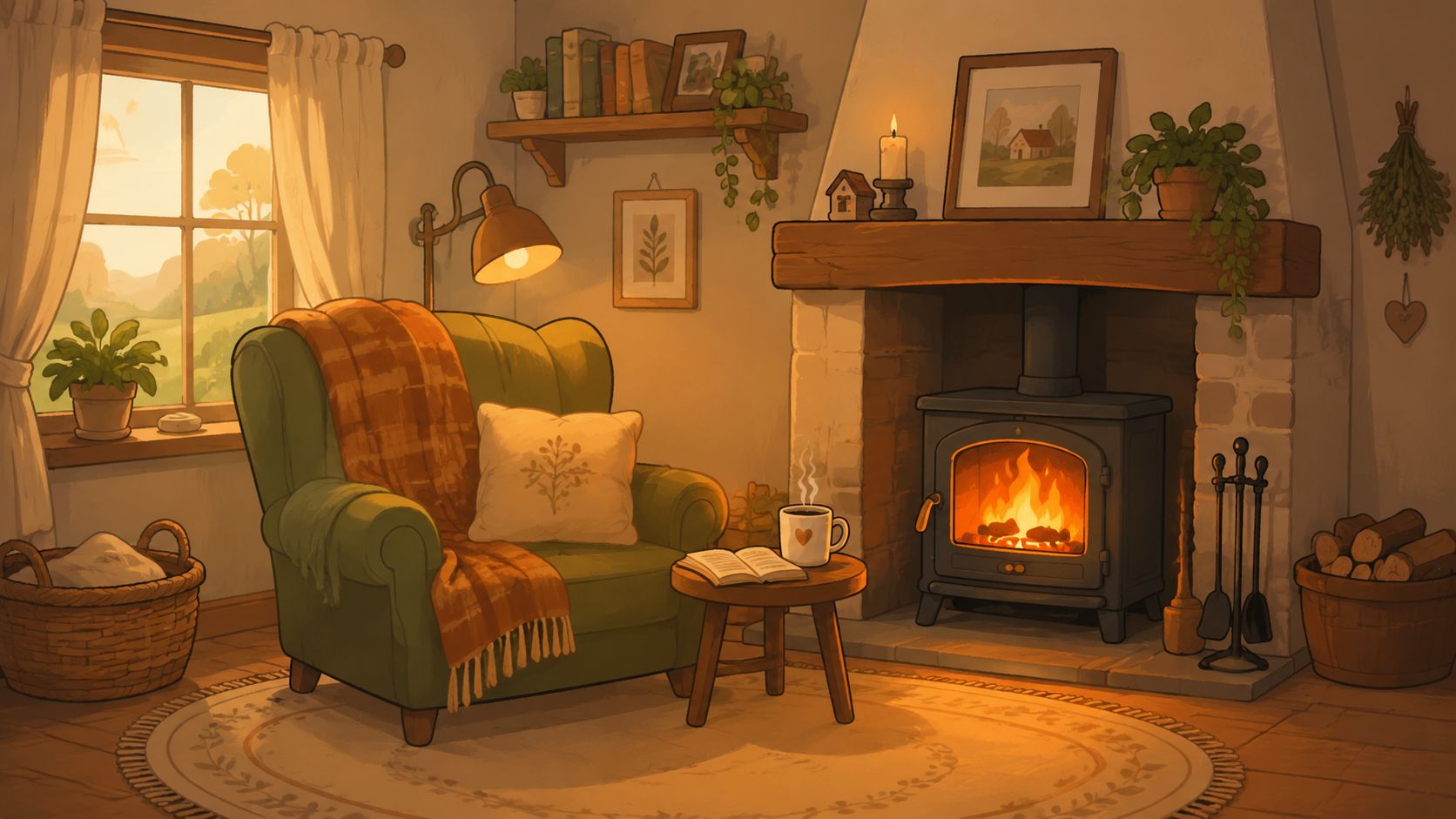
A cottage living room should feel like the room everyone wants to sit in longest. It isn't stiff. It isn't overly coordinated. It feels settled, personal, and easy to use on an ordinary Tuesday night.
That shift in taste is bigger than one style cycle. The global furniture market was valued at $597.71 billion in 2025, and the same market is projected to grow from $629.15 billion in 2026 to $996.38 billion by 2034. Europe held 20.89% of the global share, equal to $124.87 billion, in 2025. Within home decor, the United States generated $133.60 billion in revenue in 2024, with a projection of $139.05 billion in 2025 and $161.68 billion by 2029, growing at a 3.89% annual rate between 2024 and 2029. That broader movement is tied to a consumer shift away from fast furniture and toward meaningful, timeless pieces, which has helped make Modern Cottage the defining interior design style of 2026 according to Fortune Business Insights on furniture market growth and style direction.
Start with the feeling, then choose the furniture
One typically gets better results by deciding on three room goals before shopping:
- Comfort first: Pick seating that invites long use, not formal posture.
- Collected character: Mix pieces that look layered over time instead of buying a matching suite.
- Real-life durability: Choose finishes and fabrics that can handle coastal moisture, traffic, and daily wear.
Practical rule: If a room looks beautiful but makes everyone nervous to sit down, it missed the point of cottage style.
That's also why resources on designing with timeless pieces can be useful early in the process. They help clarify what gives a room staying power before a single sofa or rug gets ordered.
Give the room a plan before buying
Cottage rooms feel relaxed, but they aren't accidental. The strongest ones usually have a clear anchor sofa, one or two companion chairs, a warm wood tone, at least one painted or time-worn surface, and enough texture to keep the room from feeling flat.
For homeowners who want help shaping that mix before making purchases, a professional design services consultation can turn a loose idea into a room plan with scale, fabric direction, and a more confident sequence of decisions.
Defining Your Cottage Vibe From Coastal to Modern
Not every cottage room should look the same. In Hampton Roads, the word “cottage” often covers several different moods, and choosing the right one early prevents a room from drifting into a confused mix of beach house, farmhouse, and formal traditional.
How cottage style actually reads in a room
Cottage style leans on distressed wood, painted or two-toned finishes, light sandy tones, warm whites, peaceful blues, and a mix of old and new eras built around comfort, warmth, and authenticity, as described in this 2026 look at modern cottage interiors. That gives the style a recognizable foundation, but the expression can still vary.
A coastal cottage room usually feels brightest. It favors breezy upholstery, lighter woods, woven texture, and art that reflects shoreline life. For homeowners trying to finish walls without making the room feel theme-driven, a restrained collection of gallery-quality coastal prints can help keep the look polished instead of overly literal.
A classic English cottage room turns warmer and more enveloping. It leans into rolled arms, florals, deeper wood tones, and a little more pattern. Modern cottage sits between the two. It keeps the softness and soul of cottage style, but with a cleaner edit and less ornament.
Cottage substyle comparison
| Style | Color Palette | Key Materials | Overall Feel |
|---|---|---|---|
| Coastal Cottage | Sandy neutrals, warm white, peaceful blues | Painted wood, woven accents, relaxed upholstery | Airy, easy, sunwashed |
| English Cottage | Creams, muted florals, softened greens and blues | Distressed wood, slipcovers, antique-inspired finishes | Layered, romantic, storied |
| Modern Cottage | Warm whites, pale neutrals, washed color accents | Reclaimed wood, simplified upholstery, natural textures | Fresh, calm, lived-in |
One useful shortcut is to identify which element matters most in the home:
- Light: Coastal cottage often suits bright rooms and open views.
- Warmth: English cottage supports rooms that need softness and depth.
- Balance: Modern cottage works well when the home already has cleaner lines.
A well-designed cottage room doesn't depend on matching furniture. It depends on shared tone, texture, and scale.
Furniture choices should reinforce that tone. A painted console with a gently weathered finish can push a room coastal or classic depending on what surrounds it. A piece such as this dockside console table shows how one anchor can establish the room's direction without forcing a complete style commitment.
The Foundation Sofas and Chairs for Cottage Comfort
Seating does most of the visual work in a cottage living room. It sets the mood, determines how the room functions, and usually reveals whether the space was designed for photos or for actual family life.
Choose silhouettes that soften the room
The best-performing cottage sofas tend to have one thing in common. Their lines are relaxed. That's why slipcovered forms and English roll arm silhouettes stay so relevant. They give a room softness without looking shapeless, and they support the unforced look cottage style needs.
Design trends in 2026 also moved firmly away from stripped-down minimal lines and toward skirted furniture and passementerie such as cords, buttons, fringe, and other decorative trim, according to House Beautiful's 2026 living room trend report. That matters because cottage rooms benefit from those details when they're used with restraint. A skirt can hide legs that feel too stark. Contrast welt can define a silhouette. A soft fringe or trim on the right chair can make the room feel finished rather than plain.

What works in family rooms and what doesn't
Some seating choices look cottage-appropriate but age poorly in a busy home. Others improve with use.
- What works well: Slipcovered sofas, tightly fitted seat cushions, durable woven upholstery, and chairs with visible shape and supportive backs.
- What often disappoints: Overstuffed seat decks that collapse quickly, very delicate pale fabrics without protection, and extra-deep lounge seating in rooms that need traffic flow.
- What earns its keep: Upholstery that can handle pets, moisture, and routine cleaning without turning the room precious.
A practical starting point is a classic slipcovered sofa for a relaxed cottage silhouette. It captures the look people usually want from cottage interiors while staying adaptable enough for a family room, a second home, or a mixed-use living area.
A cottage room should invite use. If every seat wrinkles badly, stains easily, or blocks circulation, the room will feel less comfortable over time, not more.
Where customization changes the result
Trend and practicality finally meet. Decorative cottage details are appealing, but they only work if the piece is right for the household. Custom upholstery solves that tension better than off-the-floor guessing. It allows a homeowner to keep the gentle, refined feeling of skirted furniture or the softness of a Hollywood Cottage look while choosing a fabric that's easier to live with in a coastal climate.
That kind of customization matters even more in a family home. Cottage style naturally includes texture, softness, and visible wear character. Without smart fabric choices, that same charm can become maintenance. With custom options, the room can hold onto the look while solving for cleanup, moisture, and repeated use.
Layering in Function Tables Storage and Layout
A cottage room feels collected, but it still has to work. Tables need to land where hands naturally reach. Storage has to hide the clutter that breaks the mood. And layout decisions matter more in smaller living rooms than most homeowners expect.
Start with tables that look collected, not matched
Cottage furniture works best when the room doesn't read like a showroom set. A coffee table can be painted or lightly weathered, while side tables can shift tone slightly and still feel cohesive. The common thread should be warmth and character, not perfect sameness.
Good functional pieces in this style usually do at least one of these jobs:
- Hold daily essentials: A sturdy coffee table with enough surface area for trays, books, and casual use.
- Add tucked-away storage: A console, chest, or cabinet that keeps throws, games, or charging clutter out of sight.
- Create visual layering: A side table or bench that looks like it arrived at a different time than the sofa, which keeps the room from feeling flat.
For many rooms, a piece like this rectangle frame coffee table in white and ivory gives the space a cottage-friendly anchor without making it feel overly rustic.
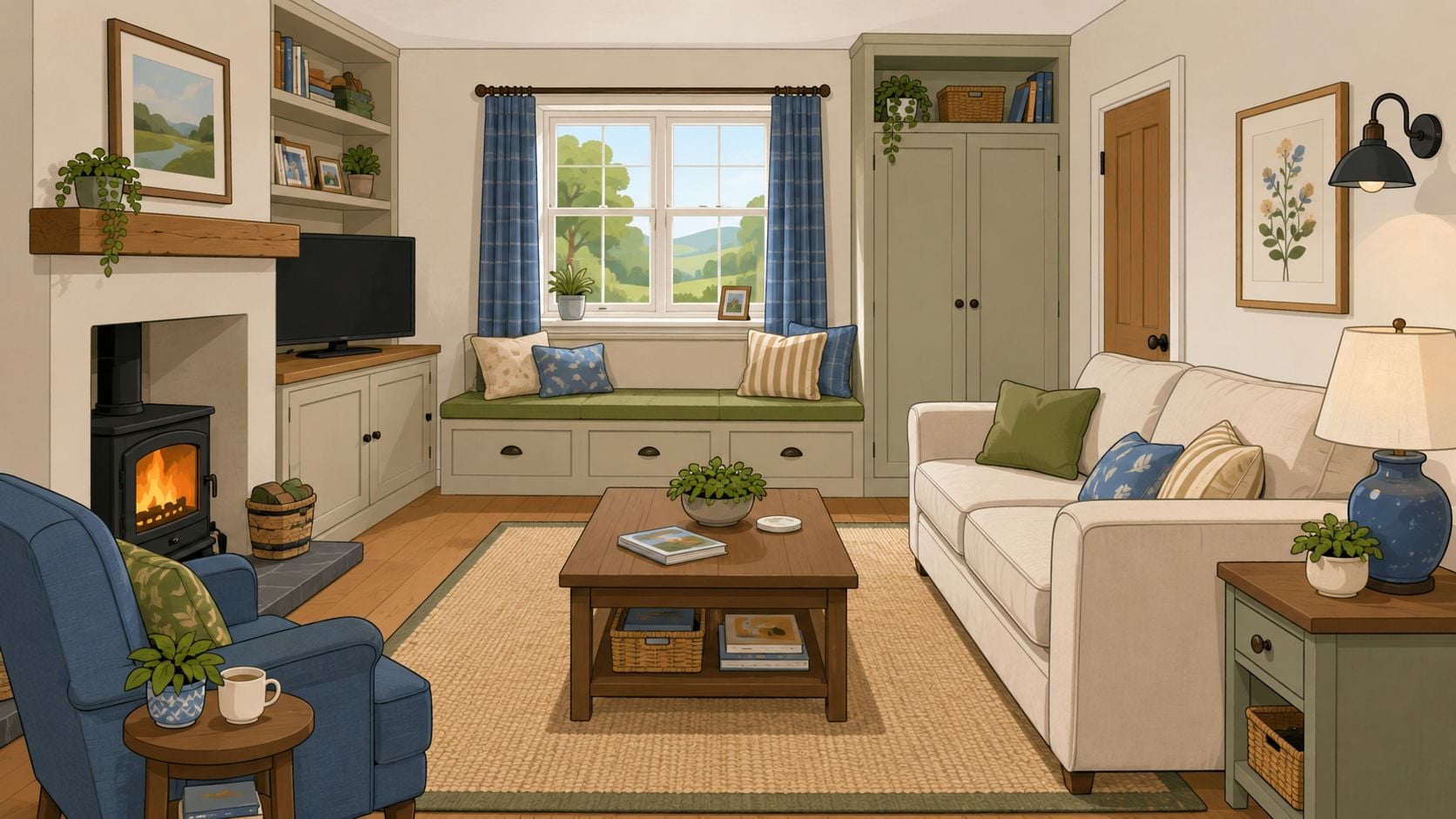
Make awkward rooms feel easier to use
This matters a lot in older homes, beach cottages, and living rooms with fireplaces, bump-outs, or narrow walk paths. Scale solves more problems than decoration does.
For a living room width of 3.5 meters, choosing a sofa with a reduced depth of 90 to 95 cm instead of 100 to 105 cm improves sightlines and creates a 12 to 15% perceptual width increase, which directly helps flow and conversation access in tighter cottage layouts, based on layout findings shared here.
That's a clear trade-off. A shallower sofa may look less “loungy” at first glance, but in a narrow room it usually performs better. It gives the eye more breathing room and keeps circulation from feeling pinched.
A few layout rules help cottage rooms feel calm instead of crowded:
- Leave visible floor around major pieces. Even a small reveal makes furniture feel lighter.
- Use round or softened-edge occasional tables in tricky paths. They help movement feel more natural.
- Don't force oversized sectionals into cottage rooms. They often erase the very openness the style relies on.
- Let storage hug the perimeter. Bookcases, consoles, and low cabinets tend to work best against walls, not floating mid-room.
Smaller cottage rooms need restraint, not underscaled furniture. The right depth, height, and table shape do more than simply choosing fewer pieces.
The Finishing Touches Fabrics Rugs and Lighting
Cottage rooms gain their memorable quality. Furniture handles the structure, but textiles, rugs, and lighting create the warmth that makes the room feel finished at night, in winter, and on gray coastal days.
Build warmth through layered texture
Texture does more than add visual interest. It changes how a room feels physically. In cottage-style living rooms, the combination of soft linen at 120 to 150 gsm, rough jute at 200 to 250 gsm, and wool at 180 to 220 gsm creates a 22% increase in perceived warmth and reduces cold-surface reflection by 30%, according to thermal comfort benchmarks for modern cottage interiors.
That's one of the most useful technical guidelines for cottage decorating because it translates directly into product choices.
- Linen: Best for softness, breathability, and light-filtering drapery or accent pillows.
- Jute: Best for grounding the room through woven rugs, baskets, or layered natural texture.
- Wool: Best for comfort underfoot, cozy throws, and softening the room acoustically.
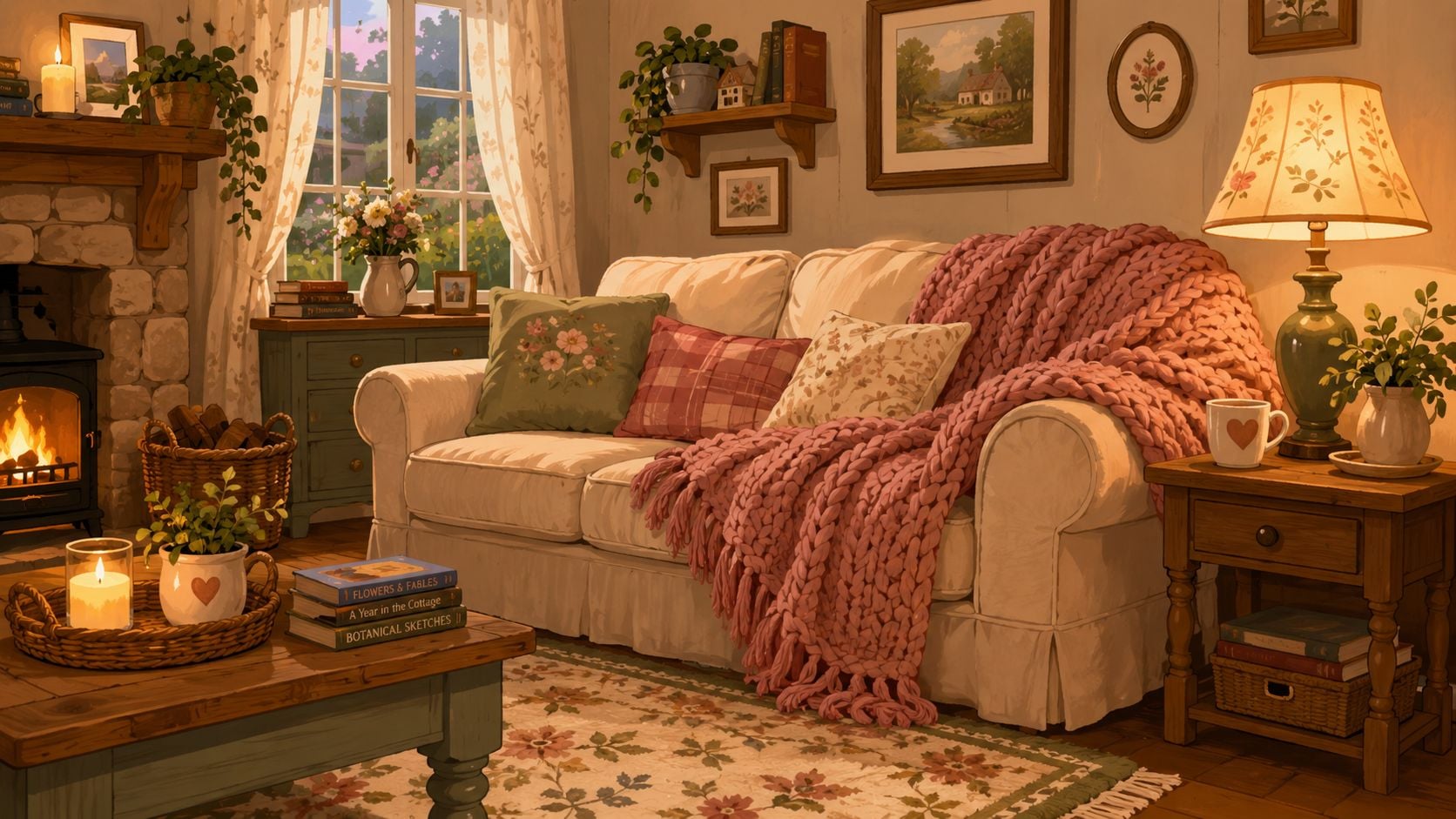
A strong rug usually does the heaviest lifting. It quiets the room visually, warms hard flooring, and helps furniture feel intentionally grouped. For homeowners who want more than a standard rack option, The Rug Market is a practical place to compare texture, scale, and pattern in person.
Use lighting and art to soften the edges
Cottage lighting works best when it layers rather than floods. A room with one harsh overhead source rarely feels settled. Table lamps, floor lamps, and warmer pools of light near seating give the room depth and make evening use feel more inviting.
Pattern should follow the same principle. A floral pillow, a stripe on a chair, and a quiet block print can all coexist if at least one element stays grounded in a shared color story. The same goes for wall art. Homeowners who need help choosing pieces that fill space without overpowering the room can review ideas that solve living room wall art problems before committing to a gallery wall or oversized canvas.
Soft light, one grounded rug, and three honest textures will usually do more for a cottage room than adding more accessories.
Achieving the Cottage Look on Any Budget
A cottage room doesn't have to come together all at once, and it doesn't have to come from a single price tier. In fact, the style often looks better when investment pieces and budget finds are mixed carefully.
Where to spend and where to save
The smartest place to invest is usually the seat you use every day. Sofa comfort, chair construction, and fabric durability affect the room long after decorative accessories stop feeling exciting. Storage pieces and occasional tables can often be more flexible, especially if the finish adds the aged, collected character cottage rooms welcome.
A simple budget framework helps:
- Investment tier: Put more of the budget into upholstered seating, a durable rug, and lighting that improves daily use.
- Balanced tier: Choose one statement piece, then support it with simpler tables, baskets, and layered textiles.
- Value tier: Hunt for pieces that already have character through finish, shape, or subtle distressing instead of trying to buy an entire matching set.
For a budget-conscious approach to the 2026 return of country style and antique-driven interiors, the Willis Outlet offers deep discounts on quality pieces, floor samples, and overstock furniture, making that collected, lived-in feeling more accessible, as noted in this country style trend reference.
Premium looks can also be approached in stages. Financing can make sense when the goal is to secure the right sofa or chair first, then finish the room gradually rather than settling for a full room of shortcuts.
Your Timeless Cottage Living Room Awaits
The best cottage living room furniture ideas share a few traits. They make the room feel easy. They respect how the home functions. And they leave enough room for personality that the space feels gathered over time, not installed in a weekend.
That's especially important in coastal Virginia homes. Materials have to live well with moisture. Upholstery has to stand up to family traffic. Layouts have to solve for real rooms, not idealized rectangles. When those practical choices are handled well, cottage style stops being a trend and starts becoming a room people use, remember, and keep.
For homeowners who want the higher-end side of cottage style without paying all at once, promotional financing can make that step more manageable. Willis Furniture offers 6 months of deferred interest on purchases of $299 or more for qualified buyers through Synchrony HOME™, which supports a buy-now, pay-later approach for premium pieces, as outlined in this financing reference.
The goal isn't a perfect cottage room. It's a room with softness, usefulness, and staying power. When the sofa fits, the tables work, the rug warms the floor, and the textures feel natural together, the room starts doing what cottage style does best. It makes home feel easier.
A visit to Willis Furniture & Mattress gives Virginia Beach homeowners a practical way to turn cottage inspiration into a room that works. The showroom, Design Center, Rug Market, financing options, and white-glove support make it easier to choose durable furniture, customize key pieces, and create a living room that feels warm, personal, and built to last.


