
The Dark Gray Leather Sofa: A Definitive Buyer’s Guide

A lot of homeowners reach the same point at once. The paint color is chosen, the flooring is in, the old hand-me-down seating has finally worn out, and the room still doesn't feel finished because the main piece hasn't been decided. For many living rooms in Virginia Beach, that missing anchor turns out to be a dark gray leather sofa.
It solves more problems than one might expect. It gives the room structure without forcing a loud color story. It feels polished but still livable. It also holds up better as tastes change, which matters when a first major furniture purchase needs to work through several redesigns, not just one.
Table of Contents
- Why the Dark Gray Leather Sofa is a Timeless Choice
- Decoding Leather Quality for Lasting Comfort
- Choosing Your Sofa's Function Before Its Form
- Perfect Placement Sizing and Layout Guidance
- Styling Your Sofa for Coastal and Traditional Homes
- The Willis Standard From Showroom to Living Room
Why the Dark Gray Leather Sofa is a Timeless Choice
A homeowner might start by looking for something safe and end up worrying that safe will feel bland. That's usually where the dark gray leather sofa changes the conversation. Gray doesn't demand attention the way a bright color does, but it gives the room a confident center. Leather adds texture, shape, and permanence, so the result feels intentional rather than cautious.
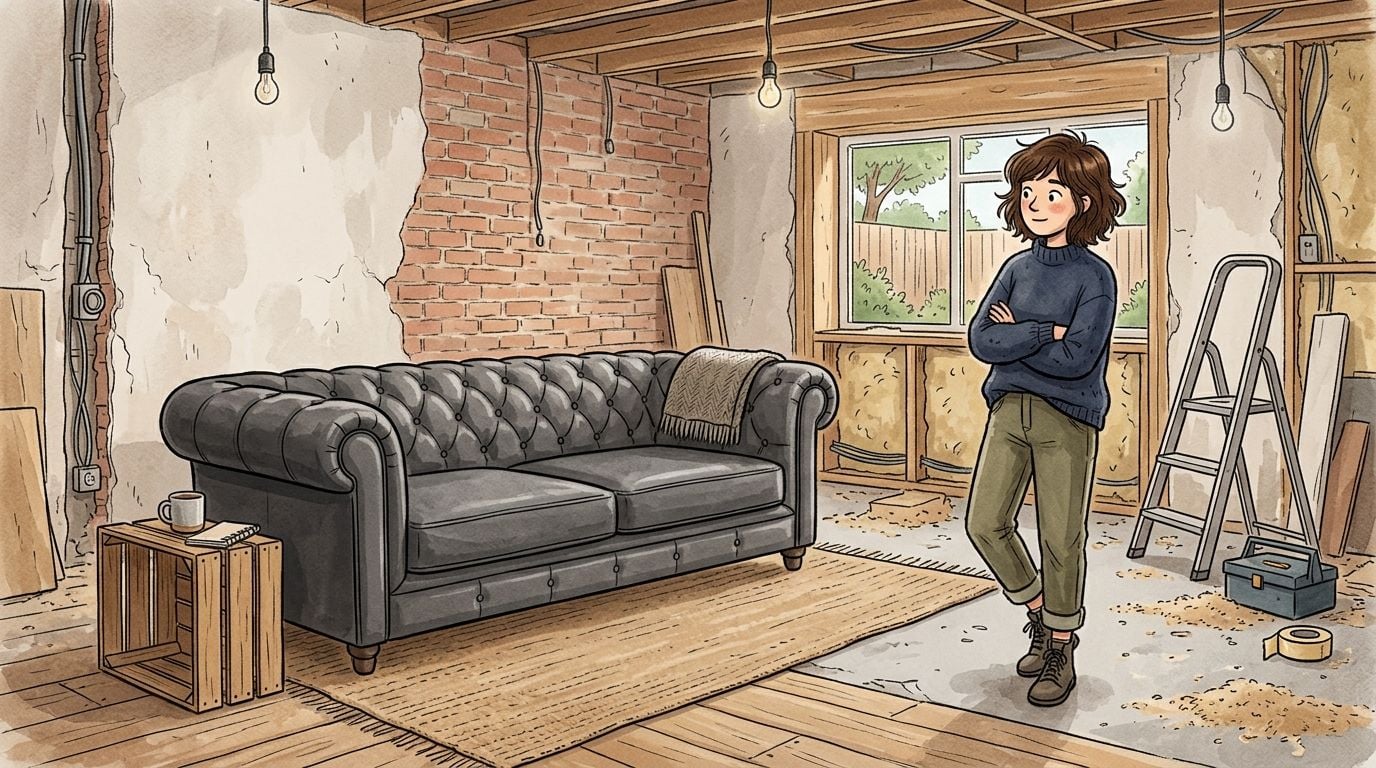
Interior design guidance describes dark neutrals like gray as relaxed, timeless, and easy to use across many rooms without dominating the palette, which helps explain why this category has become such a dependable design anchor in furniture buying. That matters in real homes. A family room may need to work with coastal blues today, warmer wood tones later, and holiday decorating every year in between.
Why it keeps working through style changes
The strongest furniture investments don't lock a room into one look. A dark gray leather sofa can lean modern with a slim metal lamp and a low-profile rug, or it can soften into a more classic setting with wood tables, patterned pillows, and layered lighting.
A good anchor piece doesn't finish the room by itself. It gives the room enough discipline that everything added later feels more considered.
That flexibility becomes even more useful when windows, light levels, and wall color are still in motion. For homeowners refining the rest of the space, an expert guide to window treatments can help align drapery choices with the sofa's tone so the room feels balanced rather than pieced together.
What makes it feel current instead of heavy
Dark gray leather isn't popular because it's trendy. It's popular because it sits in the rare middle ground between polished and forgiving. It has enough weight to ground an open living room, but it doesn't create the visual heaviness that some darker brown or black leather pieces can bring.
Retail examples in this category often pair the look with contemporary profiles and well-defined details like grid-tufted backs and seats, which is one reason the style reads current even when the color itself stays quiet. For a first serious furniture purchase, that's often exactly the right move. It gives the room a strong base without making the homeowner start over every time the decor changes.
Decoding Leather Quality for Lasting Comfort
A dark gray leather sofa can look impressive on a sales floor and still disappoint at home if the leather grade isn't right. The most useful question isn't whether the color looks rich under showroom lights. It's what part of the hide is being used, how it's finished, and how the frame supports it over time.
Why leather grade matters more than the showroom shine
The easiest way to think about leather grades is to compare them to wood. Some wood products preserve more of the original material's structure. Others are more processed and rely on surface treatment to create a finished look. Leather works much the same way.
For dark gray upholstery, top-grain or full-grain leather is generally the strongest performance choice because it keeps the hide's tightest fiber structure, which improves abrasion resistance and long-term appearance retention. Premium models in this category often specify features such as top-grain Italian leather, solid-wood frames, and foam cushioning, all of which point to a durability-first build approach.
In a coastal area, that distinction matters. Sunlight, humidity, and salt air put pressure on materials over time, so buyers are usually better served by asking about leather grade first and color second.
Leather Grade Comparison
| Leather Type | Description | Best For |
|---|---|---|
| Full-grain leather | Retains the outermost layer of the hide, including natural markings and variation | Buyers who want durability, character, and a sofa that ages with visible authenticity |
| Top-grain leather | Uses the strongest upper portion of the hide with a more refined, consistent finish | Homes that want strong performance with a cleaner, more tailored appearance |
| Corrected-grain or split leather | More processed surface or lower section of the hide | Buyers prioritizing initial appearance over long-term material performance |
Practical rule: If the conversation stays focused on color names and never gets to leather grade, the buyer still doesn't have the information needed to judge value.
What to inspect beyond the leather itself
Leather quality matters, but it doesn't work alone. A well-built sofa also needs a frame and seat construction that can support how people sit, lounge, and collapse into it daily.
A strong in-store checklist looks like this:
- Ask what covers the whole body: Some sofas use leather where the body touches and another material elsewhere. Buyers should ask where the leather is and isn't used.
- Check the frame material: Solid wood construction usually signals better dimensional stability than lighter-duty alternatives.
- Look at the seat support: Foam quality affects how the sofa feels on day one and how it holds shape later.
- Study the tailoring: Clean seams, even stitching, and crisp cushions often reveal how carefully the piece was built.
For anyone trying to sort through those differences in person, the most useful next step is to review a practical guide on how to choose leather furniture and then compare samples side by side. That's where texture, finish, and resilience become easier to read than they are from a tag alone.
Choosing Your Sofa's Function Before Its Form
Many disappointing sofa purchases follow the same pattern. The buyer falls for the silhouette, orders the piece, and only later realizes it doesn't match how the room is used. A dark gray leather sofa shouldn't be chosen as a color decision first. It should be chosen as a lifestyle decision.
Current market offerings make that clear. Gray leather sofas show up in sleek modern forms, but also in power-reclining and entertainment-oriented pieces with comfort features such as heat, massage, USB charging, and cupholders. That wide spread suggests something important. For many shoppers, satisfaction comes more from comfort geometry and function than from color alone.

The formal room question
Some living rooms ask for posture. They host guests, frame conversation, and benefit from a sofa with a more upright sit and a cleaner profile. In that setting, a dark gray leather sofa with a structured arm, defined back cushions, and disciplined proportions usually makes more sense than a deep lounge piece.
That type of sofa works well when the room already has strong architecture or when nearby dining and entry spaces call for a more composed look.
The everyday comfort question
Other homes need a landing zone. The sofa is where people watch movies, stretch out, charge a phone, and stay much longer than they planned. In those rooms, seat depth, head support, lumbar support, and recline matter far more than whether the arm is sharply sculpted.
A buyer sorting through those choices can use this framework:
- If the room is guest-facing: Favor cleaner lines, supportive seating, and a shape that stays neat throughout the day.
- If the room is family-centered: Look harder at reclining options, deeper seating, and how the cushions support longer use.
- If the household includes older adults or comfort-focused buyers: Prioritize ease of entry and exit, supportive backs, and control placement over trend-forward details.
The right sofa should match the longest use case, not the prettiest five minutes in the showroom.
Before narrowing down styles, it helps to review a buying checklist such as what to look for when buying a sofa. That kind of screening keeps a room from ending up with a handsome piece that nobody wants to sit on.
Perfect Placement Sizing and Layout Guidance
A dark gray leather sofa can be the right choice and still be the wrong size. Scale mistakes are expensive because they don't just affect appearance. They change how people move through the room, where side tables can go, and whether the space feels inviting or congested.
Current listings for this category commonly range from about 84 to 98 inches in width, with seat depths around 23 inches, and deeper-seat designs create a more lounge-oriented experience while placing different demands on cushion support and frame construction. Those dimensions give buyers a practical reference point before they ever step onto a showroom floor.
Measure the room the practical way
The best measuring process is simple and visual.
- Tape the footprint on the floor: Painter's tape helps show the full width and depth in real space.
- Mark the seated overhang: Include cushion depth, arm thickness, and any recline clearance if applicable.
- Walk the traffic path: Move through the room as if carrying laundry, serving drinks, or guiding guests to a seat.
That last step catches mistakes that paper measurements miss. A sofa can technically fit and still block the room's natural movement.
Look at the whole room, not just the sofa wall
Sizing isn't only about one piece against one wall. It also affects rugs, cocktail tables, lighting, and flooring visibility. In many coastal homes, the flooring tone does a lot of design work, so it's worth looking at discover flooring solutions at Flacks Flooring when coordinating a dark gray leather sofa with light oak, warmer wood, or painted finishes.
A few layout errors show up often:
- Choosing by width only: Buyers forget that deep seating changes how much open floor remains.
- Ignoring arm bulk: Wide track arms can make a sofa feel substantially larger than the raw width suggests.
- Forgetting delivery path: Room fit doesn't matter if the piece can't make the turn into the space.
A sofa should fit the room in three ways. On paper, on the floor, and through the front door.
For homeowners who want to pressure-test scale before they buy, a visual planning resource like this sofa size guide helps translate showroom dimensions into real-room decisions.
Styling Your Sofa for Coastal and Traditional Homes
The same dark gray leather sofa can head in two very different directions depending on what surrounds it. That's why this color works so well in Hampton Roads homes. It can support a breezy coastal room without looking washed out, and it can also sit comfortably inside a more traditional home with richer finishes and layered accessories.
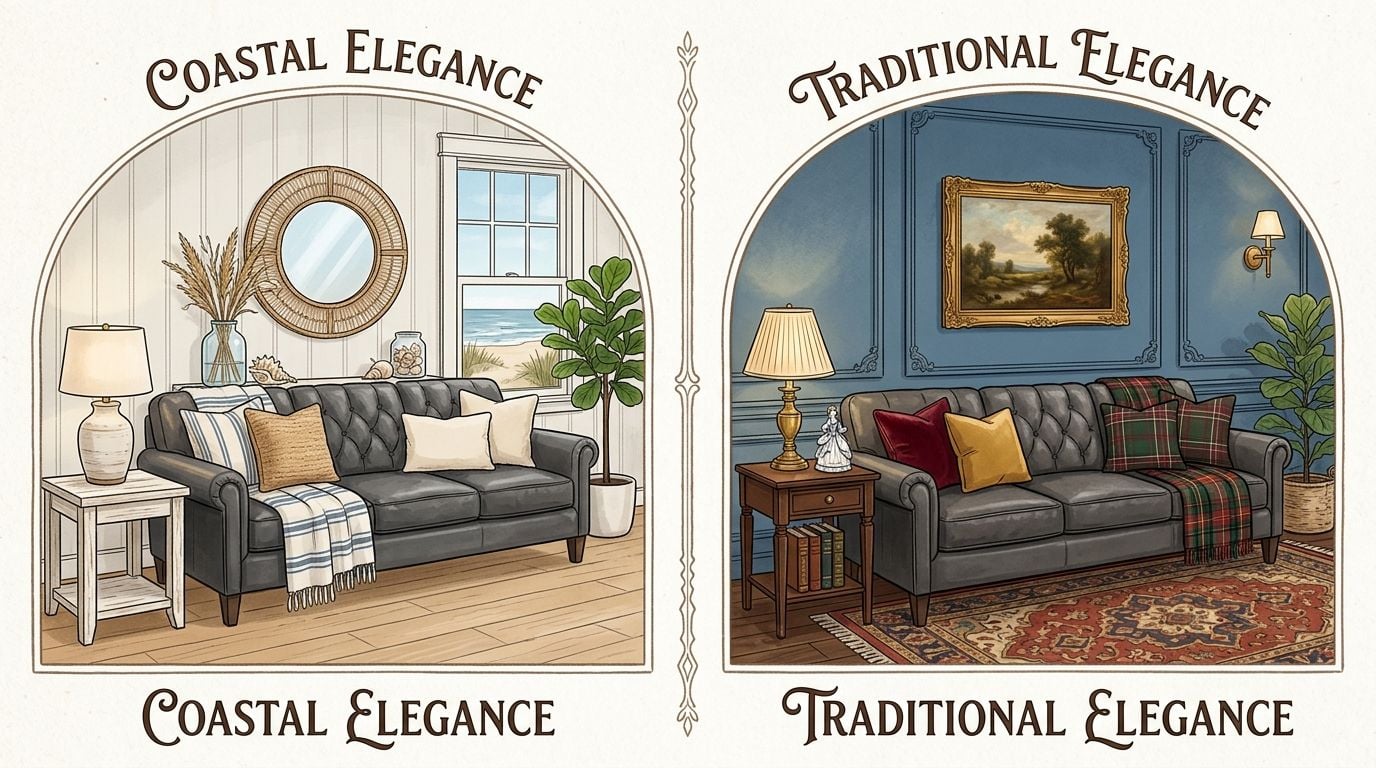
A coastal version that feels light, not cold
The coastal version works best when the sofa is treated as contrast, not as the dominant mood. The room stays airy because the surrounding materials carry the softness.
A strong combination often looks like this:
- Start with pale woods: Light oak, sand-toned finishes, and woven textures keep the room bright.
- Use washed color accents: Soft blue, sea-glass green, muted ivory, and linen tones pair naturally with dark gray.
- Add texture before pattern: Jute, nubby throws, ceramic lamps, and relaxed drapery soften the leather's cleaner surface.
For homeowners refining a palette, this article on what colors pair with grey sofas can help sort through pairings before pillows and rugs are chosen.
A dark gray leather sofa in a coastal room usually looks best when the metals stay restrained. Brushed finishes, weathered woods, and matte ceramics tend to feel more at home than anything too glossy.
A traditional version with depth and warmth
Traditional styling asks the sofa to do something different. Instead of acting as contrast inside a light room, it becomes a grounding piece among richer materials.
That setting often includes:
- Deeper wood tones: Walnut, cherry, and medium-to-dark stained occasional tables give the gray leather more warmth.
- Layered textiles: Patterned throws, structured pillows, and fuller window treatments keep the room from feeling too lean.
- Classic accent pieces: Brass lamps, framed artwork, and a substantial area rug help the sofa feel settled and established.
Dark gray leather works in traditional homes when the room answers it with warmth. Wood, brass, and pattern do that job well.
Homeowners looking for examples that lean toward the shoreline without becoming theme-driven can draw ideas from coastal home decorating inspiration. The key is restraint. A dark gray leather sofa doesn't need a room full of nautical cues. It needs supporting materials that balance its polish with comfort.
The Willis Standard From Showroom to Living Room
A dark gray leather sofa is one of those purchases that reveals its value slowly. The first day is about looks. The next few years are about comfort, resilience, and whether the piece still feels right as the household changes. In coastal Virginia, that long view matters more because sunlight, humidity, and salt air all test furniture differently than a climate-controlled showroom does.
A major concern for local buyers is how dark gray leather will behave over time in bright, humid homes. Higher-quality hides such as full-grain are more durable, which makes material grade more useful than color alone when the goal is a sofa that still looks good after years of use.
Protecting leather in a coastal climate
Leather doesn't need anxious maintenance, but it does need consistent care.
- Manage direct sun: If one side of the room gets stronger daylight, rotate accessories and watch for uneven exposure over time.
- Keep surfaces clean: Dust and fine grit should be removed gently so they don't sit on the leather.
- Condition thoughtfully: Use care products appropriate for the leather finish and avoid harsh household cleaners.
- Mind placement near windows and vents: Extreme heat and constant direct exposure can dry materials faster.
The most durable leather still benefits from sensible room planning. That's where a local design consultation can be useful, especially when the seating wall sits near tall windows or sliding doors.
Making a premium purchase workable
A higher-grade leather sofa often costs more up front, so the buying experience matters almost as much as the product itself. Some households need custom dimensions, a specific gray tone, or a seat feel that isn't on the floor. Others need the purchase structured in a way that fits the family budget.
Willis Furniture & Mattress addresses those variables through its Design Center and design services, where shoppers can work through custom upholstery, space planning, and room coordination in one place. That bridge between inspiration and execution is valuable because a sofa rarely lives alone. It usually needs a rug, lighting plan, tables, and a layout that makes the investment feel complete.
The financing side matters too, especially with premium brands and higher-grade leathers. Flexible financing can make a better-built piece more realistic without forcing a compromise down to a lower material grade. That matters because once a buyer has identified the right construction and comfort level, downgrading the leather just to hit a short-term number often leads to regret.
The smartest premium purchase isn't the one with the most features. It's the one that fits the home, the climate, and the budget well enough to keep for years.
White-glove delivery is another part of the equation that many first-time buyers underestimate. Leather sofas can be heavy, awkward to maneuver, and difficult to place precisely without scuffing floors or walls. Professional delivery and in-room setup reduce a lot of friction on day one, particularly in tighter layouts or upstairs spaces.
Finishing the room without overspending
Not every room needs every element to be top tier at once. That's where a balanced approach helps.
A homeowner might invest most heavily in the dark gray leather sofa, then complete the room in stages:
- Spend on the anchor: Put the budget into the seating, frame quality, and leather grade first.
- Layer in accessories later: Rugs, lamps, and accent tables can follow once the main piece is in place.
- Use outlet options strategically: Budget-conscious buyers can look to the Willis Outlet for savings on supporting pieces, especially when the primary goal is building a polished room around one strong sofa purchase.
That approach keeps the room moving forward without forcing every decision into a single weekend. It also supports better design decisions. Once the sofa is physically in the room, scale, undertone, and accessory choices become easier to judge.
A dark gray leather sofa works best when the buying process is as thoughtful as the piece itself. For homeowners ready to compare leather grades, test comfort, explore custom options, or build out the full room plan, Willis Furniture & Mattress offers a practical starting point in Virginia Beach, with design help, financing paths, and in-store options that make a long-term purchase easier to manage.


