SPECIAL HOURS: We will be closed on Saturday, July 4th | We will be OPEN on Sunday, July 5th from 1pm to 5:30pm

What Are Hand Knotted Rugs? A Guide to Timeless Craftsmanship

When you think about a hand-knotted rug, don't just picture a floor covering. Picture an heirloom in the making. These are true works of art, born from an ancient tradition where skilled artisans tie every single knot by hand.
The process is slow, deliberate, and steeped in skill. Unlike a quick machine-made piece, a hand-knotted rug can take months—or even years—to come to life. The result is something profoundly unique and built to last for generations.

A Story Woven in Knots
Think of the difference between a fine art painting and a poster print. One is a unique expression of the artist’s vision and skill, while the other is a simple reproduction. That’s the heart of what makes a hand-knotted rug so special—it's the original painting of the rug world.
Each one tells its own story through its design and the subtle imperfections that prove it was made by human hands. To give you an idea of the dedication involved, a standard 8×10 foot rug can be made up of over 2 million individual knots. Every single one is tied with precision, transforming raw wool or silk into a textile that is as durable as it is beautiful.
We see this same passion for heritage and quality in other timeless home accents, like beautifully crafted handmade cement tiles, where artistry and longevity are valued above all else.
What Makes a Hand-Knotted Rug an Investment?
Choosing a hand-knotted rug is more than a design choice; it’s an investment in your home and your family’s future. These pieces are renowned for their incredible durability and have a unique ability to become even more beautiful with age.
The immense time and skill poured into each piece set it apart from common, disposable home goods. It’s a commitment to quality and a piece of history you can walk on.
This is exactly the kind of lasting value we champion at Willis. We believe that bringing high-end, legacy pieces into your home should feel attainable. If you're inspired by the artistry and timeless designs of hand-knotted rugs, our in-house Design Center can help you find a unique piece or even create a custom design to perfectly match your vision.
Understanding the Anatomy of Quality
To really get what makes a hand-knotted rug special, you have to look past the beautiful pattern on the surface and peek under the hood. The real quality comes down to a few core things: the type of knot, the materials used, and how tightly those knots are packed together.
Think of it like a master tailor sewing a custom suit. The specific stitch they use affects everything, from the way the fabric drapes to how sharp the final details look. The same goes for rugs.
The Two Foundational Knot Types
In the world of hand-knotted rugs, two main knotting techniques have been the gold standard for centuries. While both create incredibly tough and long-lasting textiles, they each have their own personality.
The Persian (Senneh) Knot: This is an asymmetrical knot, where the yarn is wrapped around one warp thread and then passed under the next. This clever technique allows weavers to pack more knots into a smaller space, making it perfect for those stunning, flowing floral patterns and intricate, curvy designs. Rugs made with Persian knots tend to feel finer and a bit more flexible underfoot.
The Turkish (Ghiordes) Knot: This is a symmetrical knot, wrapped around two neighboring warp threads and pulled tight right from the middle. This creates a wonderfully sturdy, slightly thicker, and exceptionally strong pile. It’s the go-to knot for the bold, geometric designs you often see in tribal and village rugs.
The choice of knot isn’t about one being “better” than the other; it’s a signature of artistry passed down through generations in different weaving regions. Just like knowing how to read product descriptions for furniture, understanding these details helps you buy with confidence and truly appreciate the craftsmanship.
Materials and Knot Density
If the knots are the technique, the materials are the soul of the rug. Weavers almost always turn to natural fibers like wool and silk, and for good reason. Wool is cherished for its incredible resilience, its natural lanolin that helps it shrug off stains, and its amazing ability to soak up dye for deep, rich color. Silk, often used for delicate accents or in the finest luxury rugs, adds a beautiful shimmer and allows for detail that is simply second to none.
This brings us to a term you'll hear a lot: knot density, or Knots Per Square Inch (KPSI). The easiest way to think about KPSI is to compare it to the resolution of a digital photo.
A higher KPSI means more knots are packed into a smaller area, just like more pixels create a sharper, more detailed image. A rug with 300 KPSI will have a much crisper and more intricate pattern than one with 80 KPSI.
But here’s a pro tip: KPSI isn’t the only measure of quality. A beautifully made tribal rug might have a lower knot count on purpose, which is part of its rustic charm. On the other hand, a formal city rug often relies on a very high KPSI to achieve its sophisticated and complex patterns.
At Willis, we believe that true luxury is about blending timeless artistry with real-world accessibility. That's why we offer flexible financing options, making it easier to bring a hand-knotted masterpiece into your home. Whether you fall for a rustic, lower-KPSI design or a fine, high-KPSI creation, our team is here to help you invest in quality that lasts a lifetime.
How to Spot a True Hand-Knotted Rug
Once you know the tell-tale signs, telling a true hand-knotted rug from a look-alike is surprisingly simple. Think of it like this: you can have a solid oak table or one with a thin wood veneer. Both might look good at first glance, but their construction, durability, and value are in completely different leagues.
The secret to telling them apart isn't on the plush, colorful top—it's on the back. Once you learn to "read" the back of a rug, you'll be able to spot true craftsmanship in an instant.
The Back Tells the Story
Go ahead and flip a corner of the rug. A genuine hand-knotted rug will show you a near-perfect mirror image of the design on the front. It won’t be soft like the pile, but you'll see every detail of the pattern laid out.
Each of those tiny squares of color on the back represents a single knot, meticulously tied by hand. Because they're made by a person, not a machine, you’ll notice slight variations and charming inconsistencies. These “perfect imperfections” are the very signature of human artistry and a dead giveaway of authenticity.
Hand-tufted and machine-made rugs, on the other hand, have very different stories to tell.
Hand-Tufted Rugs: These almost always have a canvas or burlap-like material glued to the back. This backing is necessary to hold the tufts of yarn in place, completely hiding the rug’s pattern from the reverse side.
Machine-Made Rugs: The back of a machine-made rug is rigid and almost too perfect. While you can see the pattern, the weave is a flawless grid, often with a tell-tale white stitching pattern running through it. This is the mark of a mechanical loom.
To truly appreciate the artistry, you can even look at the knot styles themselves. This chart shows the two primary types—Persian and Turkish—that weavers use to create the intricate designs we love.
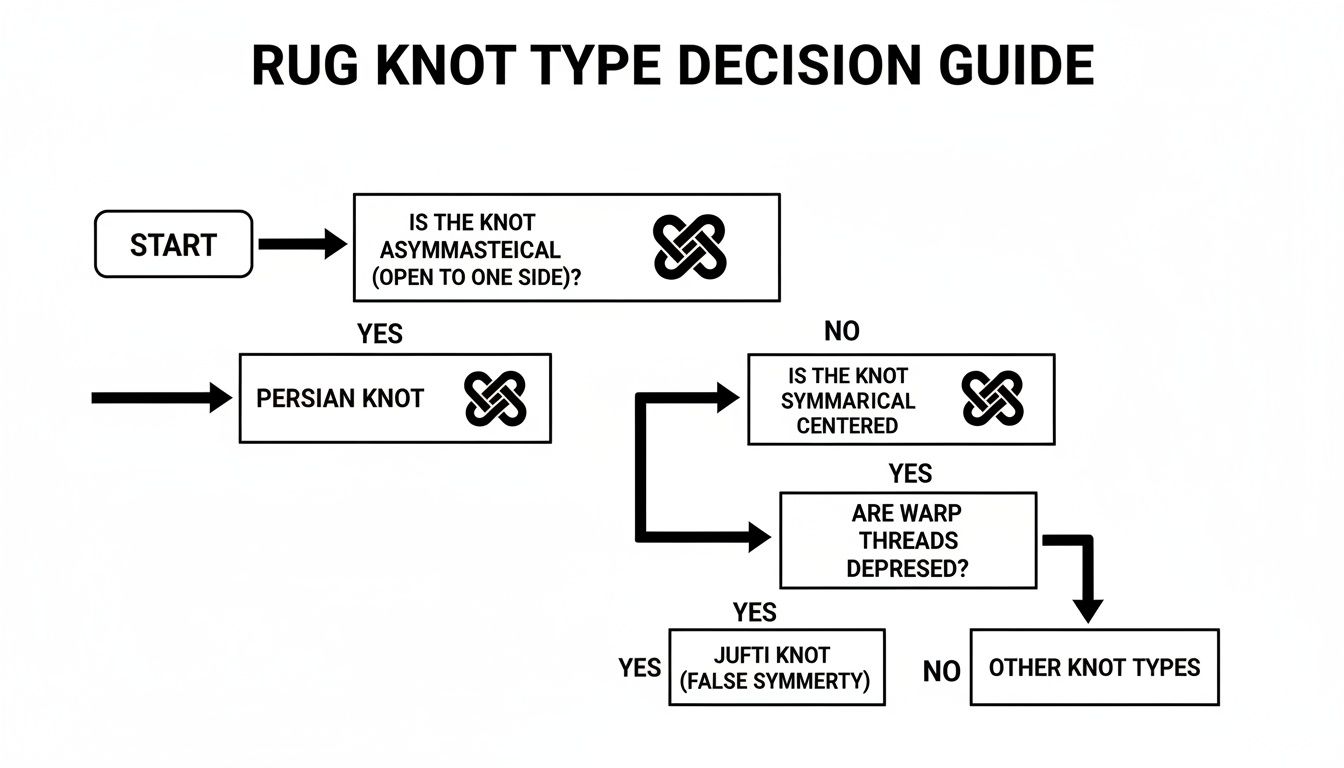
Knowing the difference helps you understand why some rugs have such crisp, detailed patterns while others have a slightly different texture.
Inspecting the Fringes and Feel
The fringe is another huge clue. On a real hand-knotted rug, the fringes are an integral part of the rug's foundation. They are the ends of the warp threads that run vertically through the rug, which the knots are tied onto.
Fringe is never just sewn or glued on as a decorative afterthought. If you see that, you're not looking at a hand-knotted rug.
Finally, just feel it. Hand-knotted rugs are typically made from natural fibers like wool and silk, making them soft and pliable enough to be folded easily. Machine-made rugs, often made with synthetic materials and stiff backings, feel rigid and much less flexible. This natural resilience is a big reason why authentic pieces are some of the best area rugs for high traffic areas.
To help clear things up, here’s a quick comparison of the three main types of rugs you'll encounter.
Rug Construction Compared: Knotted vs. Tufted vs. Machine-Made
| Feature | Hand-Knotted Rug | Hand-Tufted Rug | Machine-Made Rug |
|---|---|---|---|
| Construction | Knots are tied by hand directly onto the foundation. | Yarn is punched through a backing with a tufting gun. | Woven by a computer-controlled power loom. |
| Backside | Design is mirrored on the back; individual knots visible. | Covered with a glued-on fabric (canvas or latex). | A rigid, uniform pattern; often with over-stitching. |
| Fringe | Part of the rug's core structure; not sewn on. | Glued or sewn on as a decorative element, if present. | Sewn on by the machine after the rug is made. |
| Durability | 20-100+ years. Can last generations. | 3-7 years. Backing glue degrades over time. | 3-10 years. Depends on fiber and foot traffic. |
| Value | An investment. Can appreciate in value over time. | Decorative. Depreciates with use. | Budget-friendly. Depreciates quickly. |
As you can see, while they may look similar on the surface, the way these rugs are made creates a world of difference in their longevity, feel, and long-term value.
A hand-knotted rug is a textile woven from the ground up, knot by individual knot. Its look-alikes are assembled or constructed, a fundamental difference that defines their quality and lifespan.
At Willis' Rug Market, we believe in connecting our clients with authentic pieces that bring both beauty and quality into their homes. If you're looking for a budget-friendly way to bring this level of style home, be sure to visit the Willis Outlet, where you can often find incredible deals on high-quality rugs and home decor.
An Investment in Your Home's Future
When you bring a hand-knotted rug into your home, it’s helpful to think beyond just covering a floor. You're not just making a purchase; you're making a long-term investment. That price tag reflects countless hours of an artisan's skill and the finest natural materials—turning a simple expense into something much more valuable.
Think of it as welcoming a piece of functional art into your family. Much like a classic solid wood table or a painting you love, a genuine hand-knotted rug is built to last for generations. It’s an heirloom in the making, ready to gather stories and character with every passing year.
More Than Decor, It's an Asset
These rugs often grow in more than just sentimental value. Well-made pieces from respected weaving centers can actually hold—and even increase—their financial worth over time. As they age, their colors mellow into a beautiful, soft patina that designers and collectors actively seek out.
This incredible blend of artistry and durability is why the hand-knotted rug market, while small, is so significant. The limited supply of true artisan skill contributes to an oriental rug market valued at USD 1.2 billion in 2025. You can see more on this trend and why people view these rugs as heirloom investments in this insightful report.
A hand-knotted rug is one of the few things you can buy for your home that you'll live with, love, and one day pass on—potentially for more than you paid. It’s a true testament to enduring quality.
Of course, protecting such a special piece is key. To make sure your investment is safe from life's little spills and accidents, it's worth exploring the benefits of a comprehensive furniture protection plan.
Making Timeless Artistry Attainable
Here at Willis Furniture, we're guided by "The Willis Standard"—our belief that this level of quality and artistry should be within every family's reach. Owning a piece of history that will enrich your home for a lifetime shouldn't feel like a distant dream.
That’s exactly why we offer flexible financing options. Through our partnership with trusted providers like Synchrony, we make it simple to bring home that perfect hand-knotted rug today. Our programs allow you to "Buy Now, Pay Later," so you can invest in a masterpiece for your home without the wait.
Caring for Your Hand Knotted Masterpiece
It’s one of the biggest misconceptions we hear: that a beautiful hand-knotted rug is too precious for a busy home. The truth is, these incredible pieces are built for life. They’re meant to be walked on, lived with, and enjoyed every single day.
With just a few simple habits, you can keep your rug looking as stunning as the day you brought it home. It’s all about straightforward, consistent care—no complicated routines required.
Everyday Care for Lasting Beauty
Your vacuum is your rug's best friend, as long as you use it correctly. Stick to a suction-only setting or a canister vacuum, and always turn off the beater bar. That spinning brush is far too aggressive for hand-tied knots and can cause fraying and damage over time.
Also, get into the habit of rotating your rug 180 degrees once a year. It’s a simple trick that ensures foot traffic and sunlight are distributed evenly, preventing any one spot from fading or wearing down faster than the rest.
Handling Spills and Stains
Life happens, but when a spill occurs, quick thinking is your best defense. The natural lanolin present in high-quality wool gives you a brief window to act before a liquid soaks in and becomes a stain.
- Blot, Don't Rub: Grab a clean, dry white cloth and immediately blot the spill. Work from the outside of the spill inward to keep it from spreading. Rubbing only grinds the mess deeper into the rug's fibers.
- Use Water Sparingly: For most spills, a cloth lightly dampened with plain water is all you need. Continue blotting the area, but steer clear of harsh chemical cleaners that can strip the natural fibers and dyes.
- Dry Thoroughly: Once the spot is gone, prop up the damp area of the rug so air can circulate underneath. Let it dry completely.
While these rugs are impressively resilient, they aren't invincible. The key is to treat spills the moment they happen to stop them from setting in.
The Importance of Professional Cleaning
While your day-to-day care is essential, nothing replaces a true deep clean. We recommend having your hand-knotted rug professionally cleaned every three to five years, or more often if it's in a high-traffic area. A rug specialist knows exactly how to handle natural fibers and dyes, safely washing away the deep-down dirt and grit that a home vacuum just can't reach.
At Willis Furniture, our in-house Design Center team is here to help you with more than just finding the perfect rug; we're also a resource for preserving its beauty. It’s all part of "The Willis Standard"—making high-end living both accessible and easy to maintain, from the day you choose your piece to its long-term care.
Bringing Timeless Design Home with Willis Furniture
Understanding what makes a hand-knotted rug special is the first step. The next is bringing that timeless beauty into your own home, turning inspiration into reality. This is where "The Willis Standard" really comes to life. We don't just sell floor coverings; we help you bring a piece of history into your home in a way that feels seamless and personal.
Our dedicated Rug Market in Virginia Beach is filled with authentic, one-of-a-kind hand-knotted rugs. But we know that finding the perfect one can feel overwhelming. That’s why our in-house Design Center consultants are here to guide you, taking the guesswork out of the process.
From Our Showroom to Your Living Room
Our design team does more than just find you a rug—they help you create a room that feels complete. They’ll work with the furniture you already love and get to know your personal style, whether it’s a modern design trend or classic traditional. The goal is always to find a piece that elevates the entire space. It’s this hands-on, personal approach that truly sets us apart.
For families here in Virginia Beach, we love pairing our Rug Market’s unique selections with our high-quality, American-made upholstery. Our designers can use their skills to create a custom rug that perfectly fits your style and space, turning your unique design inspiration into a tangible heirloom.
This whole experience is backed by our white-glove delivery and flexible Synchrony financing options, including 6 months of deferred interest on purchases of $299 or more.
At Willis, we bridge the gap between inspiration and action. We make high-end living accessible through personalized service and practical solutions.
If you’re hunting for an exceptional value, our Willis Outlet often features incredible finds on high-quality rugs, making this level of style more attainable than ever. To see how our team helps clients create stunning spaces, you can learn more about our full-service furniture store with design services. And for more inspiration on creating a timeless look, check out these great mid-century modern home decor ideas.
Your Hand-Knotted Rug Questions Answered
Even with a full appreciation for the artistry and quality of hand-knotted rugs, a few practical questions often come up. We get it. Investing in a piece like this is a big decision, and you want to feel completely confident. Let's walk through some of the most common questions we hear in the showroom.
How Long Does It Take to Make One?
This is where the true artistry becomes clear. The time it takes to weave a hand-knotted rug can vary wildly depending on its size, the intricacy of the pattern, and its knot density. A small, simple accent rug might take a few months, but a large, detailed 9×12 room-sized rug could easily take a team of skilled weavers over a year to finish.
That incredible investment of time and human skill is exactly why these rugs become heirlooms.
Are They Good for Homes with Kids and Pets?
Absolutely. In fact, they’re one of the best choices for a busy, lived-in home. High-quality wool rugs are naturally durable thanks to lanolin, an oil inherent in the fibers that provides a built-in layer of stain resistance.
More importantly, each knot is individually tied and secured to the foundation. This construction is far more resilient to daily foot traffic, running pets, and playing kids than a hand-tufted rug, where the fibers are just glued to a backing.
One of the biggest myths we hear is that these rugs are too "precious" for real life. The opposite is true. They were created for longevity and are meant to be the beautiful foundation of a home that’s truly loved and lived in.
Can I Layer a Hand-Knotted Rug on Carpet?
Yes, and we love this look. Layering a rug over wall-to-wall carpet is a fantastic design strategy to add a pop of color, introduce rich texture, and define a specific area, like a seating arrangement.
The trick is to use a high-quality rug pad designed specifically for layering on carpet. This will give the rug something to grip, preventing it from wrinkling, shifting, or bunching up. It keeps everything looking flat, stable, and intentional.
Does a Higher Knot Count Always Mean Better Quality?
Not always. While a higher Knots Per Square Inch (KPSI) often allows for a more detailed, intricate design—and can contribute to its value—it's not the only factor that defines a great rug. Think of it like a painting: a photorealistic portrait isn't inherently "better" than a beautiful abstract.
The quality of the wool, the harmony of the dyes, and the skill of the weaver are just as crucial. For example, many authentic, high-quality tribal rugs have a lower knot count by design; it's part of their traditional aesthetic and rustic charm. Quality is about the entire piece, not just a single number.
At Willis Furniture & Mattress, "The Willis Standard" means guiding you through every step, from inspiration to practical application. If you're ready to explore these unique masterpieces, our financing options make it easy to invest in timeless quality for your home. Learn more at www.willisfurniture.com.

