
Best Chair for Hip Replacement Recovery: A Willis Guide

A few weeks before hip replacement surgery, many families start noticing the same thing. The house suddenly looks different.
That favorite deep chair by the window no longer looks relaxing. The soft recliner that always felt cozy now looks hard to get out of. Even the route from the kitchen to the living room starts to matter. The question is no longer just what looks good in the room. It is what will make daily recovery safer, calmer, and less exhausting.
The best chair for hip replacement recovery becomes the center of the day very quickly. It is where someone will rest, eat a light meal, read, watch television, answer messages, and stand up for short walks around the house. When that chair is wrong, every transfer feels harder. When it is right, the whole room works better.
Preparing Your Home for a Smooth Hip Recovery
In Virginia Beach, this usually starts with a practical conversation at home. A son or daughter looks around the living room with a parent. A spouse tests the height of existing seating. Someone asks whether they really need a different chair or if they can make do with what they already have.
Many individuals are not shopping for a medical-looking piece. They want a chair that supports healing without making the home feel temporary or clinical.

That is where the planning matters. The chair should live in a room that is easy to reach, has good lighting, and leaves enough space for a walker or careful movement. If the recovery space is a smaller den or condo living room, smart layout changes make a real difference. This kind of rearranging is often more useful than buying more furniture, and ideas for improving traffic flow can be found in this guide on arranging furniture in a small living room.
What families often overlook
The biggest mistake is treating the chair as a standalone purchase.
A recovery chair works best when it is part of a setup that supports daily habits. Keep a side table within easy reach. Make room for water, medications, a phone charger, glasses, and a reading lamp. Avoid placing the chair so close to other furniture that the person has to twist to sit down or stand up.
Pain can also show up in ways families do not expect. If discomfort continues after surgery, especially around the pelvis or surrounding muscles, this article on pelvic pain after total hip replacement gives helpful context on why that can happen and what to discuss with a care team.
A good recovery chair is not just a seat. It becomes a dependable base for the routines that help someone feel independent again.
A chair can support healing without disrupting the room
Families often assume they must choose between function and appearance. In practice, the better choice is usually a chair that meets recovery needs first, then fits the home well enough to stay useful after healing is underway.
That might mean moving one existing accent chair out of the room temporarily. It might mean choosing upholstery that blends with the rest of the space instead of buying something that looks borrowed from a clinic. It might mean placing the recovery chair near a window because the person recovering will spend many hours there.
The right setup makes recovery feel more manageable. It also helps the home feel like home.
Decoding Chair Features for Safety and Comfort
A good recovery chair supports safe sitting, easier standing, steady posture, and daily use that does not wear the person out. The label matters less than the fit.
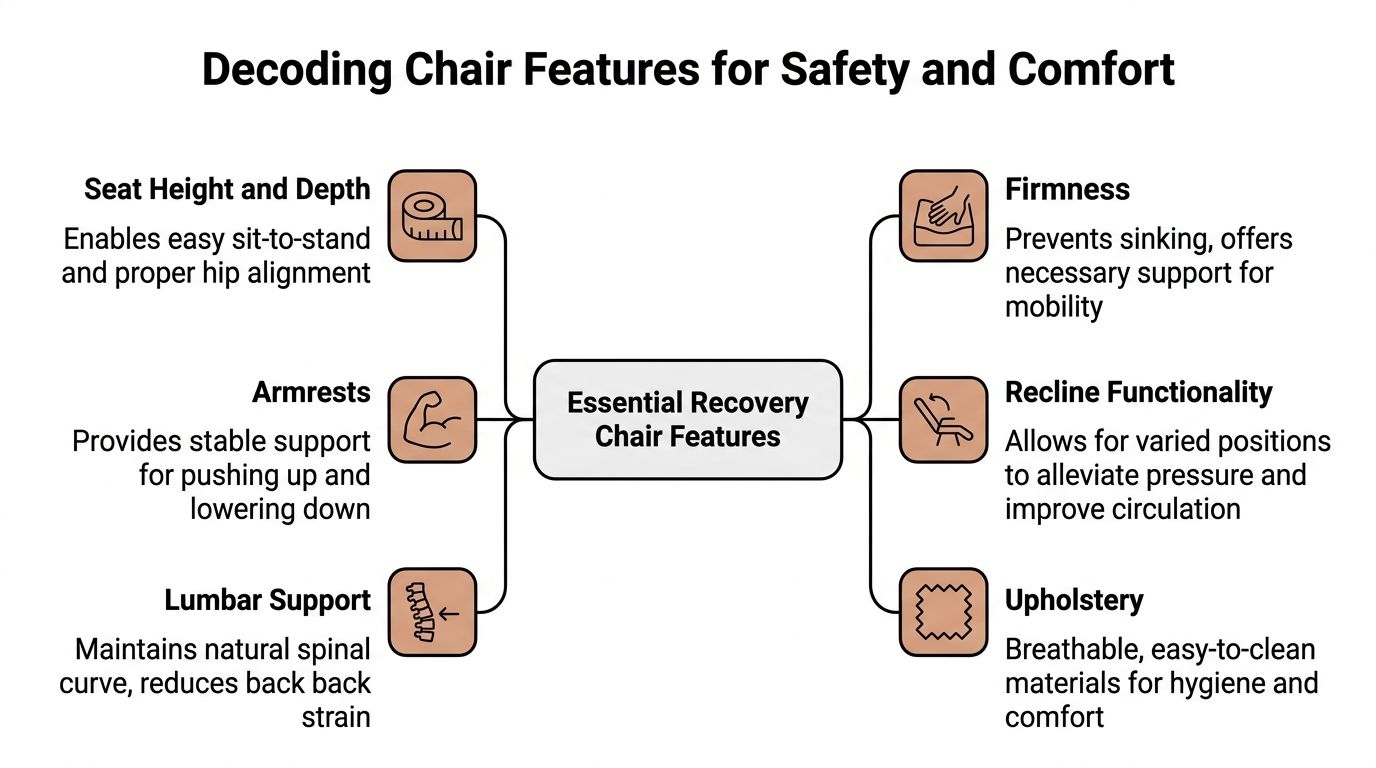
Families often focus on whether a chair reclines. I usually start somewhere else in our Virginia Beach showroom. I watch how easily the person sits down, where their knees land, whether their hands find the arms naturally, and how much effort it takes to stand back up. Those details shape day-to-day recovery far more than a product name.
Seat height and depth
Seat height comes first because it affects transfers every single time the chair is used.
For hip replacement recovery, the seated position should usually keep the hips from dropping too low relative to the knees. A chair that sits too low asks the user to bend more, push harder, and often rock forward to get out. That is tiring, and early in recovery it can feel unsafe.
Seat depth matters just as much. A deep seat may look comfortable on the floor, but in recovery it often forces the person to slide backward and then struggle forward again before standing. A shallower, better-proportioned seat keeps the body upright and the feet planted. In the Design Center at Willis, this is often where families realize a beautiful chair can still be the wrong chair if the proportions fight the body.
Armrests that help
Armrests need to do real work.
They should be firm enough to push from, long enough to find easily, and positioned so the shoulders stay fairly relaxed instead of hunching upward. Thin, low-profile arms can look refined in a living room, but many are poor tools for recovery seating.
If someone has to grab the cushion edge, side panel, or front rail to stand, the chair is asking too much of them.
This is one of the clearest trade-offs I see in store. Some of the most elegant silhouettes have arms that disappear visually. That can be perfect in a formal room and frustrating after surgery. The better choice is often a chair with fuller, supportive arms and upholstery that still blends with the space.
Cushion firmness
Soft does not mean easy.
A seat that compresses too far makes the user sink, which increases the effort needed to stand and can leave the hips in a poor position. Recovery usually goes better with a cushion that feels supportive on contact and holds its shape after a few minutes of sitting.
The easiest showroom test is practical. Sit normally. Let your body settle. Then stand without a big rocking motion. If the chair feels pleasant at first but difficult to exit, the cushion is probably too soft for recovery use.
Back support and posture
Good back support reduces the small compensations that add up over the course of a day.
Look for a chair that keeps the pelvis and lower back reasonably supported, encourages an upright sitting position for reading or meals, and gives the head and shoulders a place to rest if fatigue sets in. A higher back often helps during the first stretch of recovery, especially for someone who will spend long periods in one seat.
What families want, reasonably, is a chair that supports healing without making the room feel clinical. That is why we often compare several silhouettes side by side at Willis Furniture. The right chair should help the body stay aligned and still make sense with the rest of the home.
Recline and movement
Recline can be helpful if the motion is controlled and the return to standing is manageable.
Some manual recliners are smooth and supportive. Others drop the user backward too abruptly or require more leg drive than the person has right after surgery. Powered movement gives finer control, which can make position changes less stressful for both the recovering person and the caregiver. Families who are considering that option can compare features in these power lift chairs for elderly users.
For broader style ideas on reclining seating, this guide to buying the perfect reclining sofa is also useful, especially for understanding how scale and function affect the room.
Upholstery and cleanup
Recovery seating gets used hard. Fabric choice should reflect that.
Spills, friction from frequent transfers, and long hours in the chair all put pressure on upholstery. Performance fabrics, leather, and other easy-care surfaces can work well if they do not feel slick and if the seat underneath remains supportive. The goal is a surface that cleans up without making the user slide forward.
Long-term value matters here too. A chair chosen for hip recovery may stay in the living room for years, so it should earn its place after the recovery period ends. At our Virginia Beach showroom, families often narrow the function first, then use finish options, fabric selections, delivery support, and financing to make the practical choice feel right for the home as a whole.
Lift Chairs vs Recliners vs Firm Accent Chairs
A daughter walks into our Virginia Beach showroom with one question: “What will help Mom get up safely without making the living room look like a rehab room?” That is usually the primary decision. Families are balancing transfer safety, comfort during long hours of sitting, room layout, and whether this chair should still make sense a year from now.
Chair choice matters because the wrong seat can make recovery harder. Low, sink-in seating increases the chance of awkward bending and unstable transfers. Dislocation after total hip arthroplasty is uncommon, but it does happen in about 1 to 3% of patients, as noted by Vitality Medical’s overview of hip chairs. A chair that keeps the hips in a safer, more upright position can reduce the everyday movements that families worry about most.
Recovery Chair Comparison
| Chair Type | Best For | Main Advantage | Main Trade-Off | Long-Term Fit in the Home |
|---|---|---|---|---|
| Lift chair | Early recovery, weak leg drive, caregiver-assisted transfers | Powered help with sitting and standing | Higher cost, needs power access, style varies by model | Good if you choose a residential-looking frame and upholstery |
| Recliner | Daily lounging, longer sitting sessions, homeowners who want comfort after recovery | Relaxation and support in one chair | Some recliners sit too low or tip back too abruptly | Often the strongest long-term value |
| Firm accent chair | Stronger, more independent recovery with a cleaner furniture look | Upright posture and easier room integration | Less forgiveness if the dimensions are wrong | Easiest to blend into living room, office, or bedroom settings |
Lift chairs
Lift chairs usually make the most sense in the first stage of recovery.
The powered rise changes the transfer itself. Instead of pushing hard through sore legs or asking a spouse to pull from the arms, the user can let the chair do part of the work and finish the stand with better control. That is a practical safety benefit, not just a convenience feature.
The trade-off is real. Some lift chairs still look overtly medical, and some take up more visual space than families expect. In our showroom, we usually steer people toward models with cleaner lines, better proportions, and fabrics that suit the rest of the room so the chair does not feel out of place after recovery ends. Delivery also matters here because the chair has to be placed correctly, tested in the room, and set near a power source without creating a tripping hazard.
Cost can be the sticking point. Financing often helps families choose the safer chair now instead of settling for a cheaper option that is harder to use.
Recliners
A good recliner is often the best middle ground between recovery function and everyday living.
This option appeals to homeowners who do not want a temporary-looking purchase. A well-built recliner can support naps, reading, television, and the long sitting sessions that are common in early recovery, then stay in the room as a favorite seat for years. Before choosing one, it helps to review this guide to buying the perfect reclining sofa, especially for the way mechanism quality and room scale affect daily use.
Fit decides whether a recliner helps or frustrates. Some models are too pillowy through the seat. Some put the knees too high. Some require a hard push through the footrest or swing the user backward in a way that feels unsettling after surgery. Families comparing supportive options often benefit from seeing how different designs handle seat height, arm support, and motion in these recliners for seniors with easier everyday usability.
I often tell clients that the recliner category has the widest spread between “comfortable in the store” and “helpful at home.” That is why the sit, stand, and recline test matters so much.
Firm accent chairs
Firm accent chairs can be a smart answer for someone who is recovering well, has reliable arm strength, and wants a chair that looks fully residential from day one.
The upside is aesthetic clarity. A well-fitted accent chair can keep the room looking like home, not a recovery suite. It also tends to transition easily to a bedroom, study, or reading corner once the hip precautions are behind you.
The downside is tolerance. A small sizing mistake shows up quickly. If the seat is too deep, the recovering person slides back and struggles to get forward again. If the arms are low or decorative instead of supportive, standing becomes awkward. This category works best when the proportions are checked carefully rather than chosen by appearance alone.
Which option fits which household
The best choice usually follows the person’s transfer ability, the caregiver’s role, and how permanent the purchase should feel.
- Choose a lift chair for early recovery with weak push-off strength, high fatigue, or a spouse who needs transfers to be easier and safer.
- Choose a recliner for a chair that supports recovery now and still earns its place as a comfort seat later.
- Choose a firm accent chair for a more independent recovery, a room with tighter style standards, or a household that wants a cleaner furniture look.
Families in our Virginia Beach showroom often end up talking about more than the chair itself. They want to know if the scale works with their room, whether the fabric will hold up, how quickly delivery can happen before surgery, and whether they can spread out the purchase. That is where Willis Furniture & Mattress is a useful resource. The Design Center helps match recovery needs to the home’s style, and options like the Tailor Fit Chair give households a way to get supportive proportions in a more residential form.
The Willis In-Store Experience for Recovery Seating
Buying recovery seating from a photo is risky. Two chairs can look almost identical online and feel completely different once someone sits down and tries to stand.
That is why an in-person test matters. A family can check whether the cushion keeps its shape, whether the armrests provide real support, and whether the user’s feet plant comfortably on the floor.

What to test in the showroom
When I guide someone through recovery seating, I do not start with color. I start with movement.
I want to see how they lower into the chair, where they place their hands, whether they slide backward, and whether they can stand without twisting. Those details reveal more than product descriptions ever will.
A useful showroom checklist:
- Sit at a normal pace instead of lowering yourself carefully. The chair should still feel secure.
- Pause in the seated position and notice whether the pelvis rolls backward or the knees lift too high.
- Stand using the armrests without momentum. If that feels awkward, the chair is usually not the right fit.
- Try the chair twice. Many people adjust the first time and reveal the actual fit on the second attempt.
Fabrics matter during recovery
Beyond ergonomics, hygiene is also important. Advanced recovery chairs often use antimicrobial, wipeable fabrics to support infection prevention during the 6 to 12 week recovery period when patients spend a lot of time seated, according to Empliving."
That is one reason design support matters here. Families often come in focused only on seat height, then realize fabric choice is just as important for daily living. Performance fabrics, wipeable surfaces, and practical leather choices can all make cleanup easier without making the room feel utilitarian.
If you want help balancing those choices, the in-store furniture store with design services page shows how design support can extend beyond floor planning into upholstery, scale, and room coordination.
The right recovery chair should be easy to clean, easy to enter, and easy to keep in the room after recovery is over.
Why store services reduce stress
Recovery purchases often happen on a deadline.
That is where practical services help. Financing can make a premium lift chair or better-upholstered recliner more manageable when surgery planning already includes other expenses. White-glove delivery matters too, because a recovery chair is not a front-door box purchase. Placement in the correct room, with safe clearance around it, saves the family one more logistical problem.
This is also the stage where custom upholstery becomes more than a style perk. It lets a family choose a fabric that feels appropriate for recovery now and still suits the room later. That is the difference between buying a stopgap chair and choosing one with a longer useful life.
Choosing a Chair You’ll Love Long After Recovery
The best chair for hip replacement recovery should not become a regret purchase six months later.
Many individuals want the chair to keep earning its place in the room. They want it to work during healing, then remain a reading chair, a favorite recliner, or the comfortable seat everyone reaches for in the evening.

Recovery needs change
Early recovery is about protection and controlled movement. Later, comfort becomes a bigger part of the conversation.
Research on alternative seating shows that saddle seats, which open the hip angle to 135 degrees, can reduce hip joint pressures by up to 50% compared with conventional chairs for longer-term comfort after the initial recovery phase, according to Healthy Design. That does not mean everyone needs a saddle-style chair in the living room. It does mean that seating needs can evolve after the strictest precautions ease.
The practical takeaway is simple. Do not choose a chair that only solves the first few weeks if you can choose one that still supports comfort later.
The room should still feel like yours
The room should still feel like yours. Here, aesthetics and ergonomics can finally work together.
A refined recliner, a custom-fit high-seat accent chair, or a custom-upholstered support chair can all feel at home in a well-designed space. Collections such as Stressless or Barclay Butera appeal to families who want comfort without giving up visual polish. In many homes, the strongest choice is the one that reads as good furniture first and recovery support second.
For readers leaning toward a stationary option, this guide to an accent chair for the living room is a good starting point for thinking about proportions, silhouette, and placement.
If the chair still makes sense after recovery, it usually means you chose with both safety and real-life living in mind.
A chair that looks right, feels supportive, and fits the room well is easier to keep using. That is better for comfort, and better for value.
Your Hip Replacement Recovery Questions Answered
Can I use my current recliner after surgery
Maybe, but test it thoroughly.
If it is low, soft, hard to exit, or forces you to lean and twist to stand, it is probably not the right choice for early recovery. A safe chair should feel stable on the way down and predictable on the way up.
Is a firm chair better than a soft one
For recovery, usually yes.
A firmer seat keeps you from sinking into a low position that is harder to stand from. Soft seating may feel pleasant for a few minutes and become frustrating every time you need to get up.
Do I need a chair that looks medical
No.
Many families do well with residential seating that has the right proportions, supportive arms, practical upholstery, and an easy transfer position. The goal is function first, not a clinical appearance.
How long will I need a recovery-friendly chair
That depends on your surgeon’s guidance, your mobility, and how quickly transfers become comfortable. Many households find that once they have a supportive, well-proportioned chair in place, they keep using it because it is more comfortable and easier to live with.
What is the biggest shopping mistake
Choosing based on appearance alone.
The better approach is to test how the chair performs during real movement. Sit. Pause. Stand. Repeat. If the motion is awkward in the showroom, it will feel worse at home when the body is tired.
If you are preparing for surgery or helping a family member create a safer recovery space, Willis Furniture & Mattress offers a practical next step. Visit the Virginia Beach showroom to test supportive seating in person, compare recliners, lift chairs, and custom-fit accent chairs, explore Design Center fabric options that fit your home, and ask about financing and white-glove delivery so the room is ready before recovery begins.


