
How to Know What Size Rug to Buy: Expert 2026 Guide


You’ve found the sofa. The wood tones are right. The lamps work. The room still feels unfinished.
Most of the time, the missing piece isn’t another chair or a different coffee table. It’s the rug, or more specifically, the wrong rug size. I see this often in Hampton Roads homes. A client picks a rug that looks beautiful on its own, but once it lands in the room, the furniture feels disconnected, the traffic path gets awkward, and the space loses that settled, designed feeling people want.
Knowing how to know what size rug to buy starts with one shift in thinking. A rug is not a floor accessory. It is part of the floor plan. It tells the eye where the room begins, where the seating group belongs, and how the whole space should function day to day.
Why the Right Rug Size Is a Room's Secret Weapon
A room can have excellent furniture and still feel off-balance. The fastest way to create that problem is with a rug that’s too small, too isolated, or floating in the middle of the floor with no relationship to the furniture around it.
The rug is what makes the room feel intentional
A well-sized rug does three jobs at once. It anchors furniture, it defines the usable zone, and it adds comfort underfoot. In an open-plan home, that matters even more. Without that anchor, a sofa and two chairs can look like separate pieces instead of one conversation area.
That’s why I treat rug selection as a design decision, not an afterthought. If you’ve ever walked into your living room and thought, “Why doesn’t this feel finished?” the answer is often below eye level.
Some homeowners already have a style direction in mind and just need help translating it to scale. If you love the relaxed polish seen in Long Island decor, the same principle applies here: airy interiors still need structure, and the rug often provides it.
Size changes how the whole room reads
A rug affects proportion more than many people realize. When it’s sized correctly, the room feels calm and cohesive. When it’s undersized, everything around it starts to look slightly misplaced.
A good rug doesn’t just fill a patch of floor. It connects the furniture so the room reads as one complete composition.
Homeowners often get stuck here. They shop by color first, pattern second, and dimensions last. The order should usually be reversed. Start with the footprint, then refine the style.
If you’re refreshing a seating area, Willis has some useful guidance in these living room decor tips that pairs well with rug planning because scale, balance, and layout all work together.
Beautiful matters, but function matters too
The right rug size also changes how a room works. Chairs pull out more cleanly. Pathways feel less cramped. Beds have a softer landing. Doors and recliners move the way they should. That functional layer is what separates a room that photographs well from a room that lives well.
That’s the standard I care about most. A rug should support your furniture, your floor plan, and your daily routine, all at the same time.
The Foundational Rules of Rug Sizing and Placement
A client in Hampton Roads will often bring in a beautiful rug photo and ask why the same look feels off at home. In many cases, the problem is not color or pattern. It is placement.
Three placement approaches, and the one to avoid in most main rooms
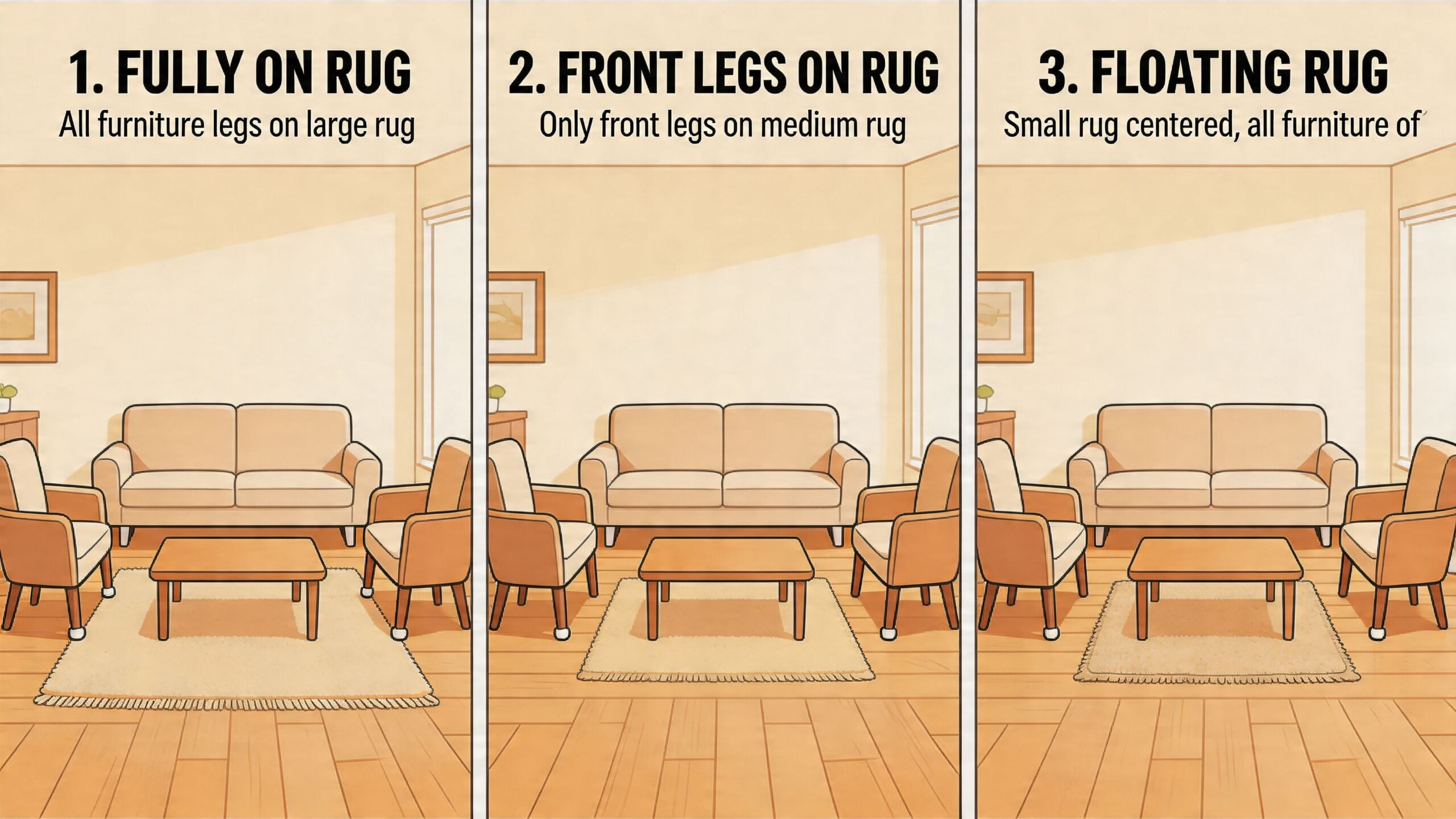
There are three standard ways to place a rug with furniture. Two create a grounded, designer-finished room. One usually leaves the seating area feeling unfinished.
All legs on the rug
This placement gives the room a broad, settled footprint. It works best in larger living rooms where the rug can extend beyond the seating group without crowding the perimeter. I use it when the goal is a generous, polished look and the room has enough open floor left around the edges.Front legs on the rug
This is the most flexible option for many homes. The rug still ties the sofa and chairs together, but the size stays more manageable for the room and the budget. In practice, this is the placement that solves the most layouts well, especially in family rooms and open-concept spaces.All legs off the rug
This setup leaves the rug isolated under the coffee table instead of connecting the seating. It can work for a small accent arrangement, but in a primary living room it usually makes the furniture feel like it is drifting apart.
Practical rule: If the rug only reaches the coffee table, it is usually too small for the main seating area.
Start with a proven baseline, then adjust to the room
For many rooms, 8×10 is the first size worth testing. It often gives enough surface for front-leg placement in a standard seating group, and it can also suit a queen bedroom or a modest dining area. That does not make it universal. It makes it useful as a baseline when you need a clear starting point.
The right choice still depends on the furniture footprint, not the room dimensions alone. A deep sofa, wide track arms, or swivel chairs can push a layout into the next rug size faster than clients expect. If you want to compare your upholstery scale before you commit, a practical guide to dimensions for a couch can help clarify the proportions.
Tape the size on the floor before you buy
This is one of the simplest ways to avoid an expensive mistake, and it works. Use painter’s tape to mark the rug size directly on the floor, then live with that outline for a day or two if you can.
Check four things:
Furniture contact
The front legs of the main seating pieces should sit comfortably within the outline if that is the placement you want.Walking paths
People should be able to move through the room without catching a rug edge or narrowing a key passage.Clearance for movement
Recliners, gliders, and doors need room to operate without fighting the rug placement. This matters even more in homes designed for aging in place, where smooth movement and fewer trip points make the room safer and easier to use.Visual balance
The rug should relate to the seating group as a whole, not just fill open floor.
Accurate measurements make this process much easier. These furniture measuring tips from Willis Furniture are worth reviewing if you are working from a full room plan or replacing multiple pieces at once.
The trade-offs that matter most
A smaller rug lowers the upfront cost, but it often leaves the room looking pieced together. A larger rug can create a polished custom feel, but only if you still preserve a clean border of flooring around it. The best results come from choosing the rug as part of the room plan, with real attention to how your household lives in the space every day.
That is the difference between a rug that fits and one that helps the whole room feel finished, comfortable, and easy to use.
A Room-by-Room Guide to Perfect Proportions
A client in Hampton Roads will often bring in room photos and say the same thing in different ways: “The rug looked right in the store, but wrong the minute we got it home.” The problem usually is not color or pattern. It is proportion. A rug has to support how the room is used, how furniture sits, and how people move through it, especially in homes where easy circulation matters for children, guests, and older family members.
Living room sizing that keeps furniture from floating
In a living room, the rug should anchor the seating plan you use every day. That means the sofa, chairs, and table need to relate to one another as a group, not hover around a rug that is too small to do its job.
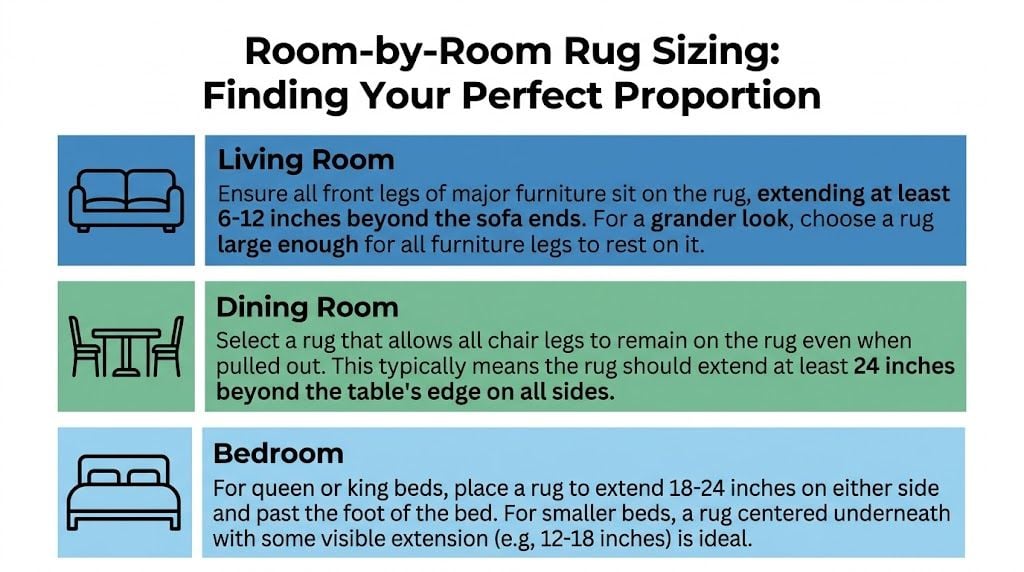
A helpful guideline from Loomy Home’s rug size guide is to place the furniture first, then measure beyond the seating area so the rug extends generously around it. The same guide recommends placing at least the front legs of the main upholstered pieces on the rug. That is the arrangement I specify most often because it gives the room a connected, finished look without requiring every piece to sit fully on the rug.
A larger rug can be the right call in an open-concept home or a spacious family room. In a tighter footprint, though, forcing an oversized rug can crowd the border and make the room feel less harmonious. Good design is usually about proportion, not just going bigger.
Living room decision points
Choose front-leg placement for many layouts
It creates visual connection and usually fits medium-size rooms well.Use all-legs-on placement when the room has the depth for it
This approach gives the seating area a stronger, more architectural footprint.Skip the coffee-table-only rug
If the rug touches only the table, the seating group often feels scattered.
For clients pairing a rug with specific seating, whether that is a refined Barclay Butera room or a comfort-focused Stressless setup, I always size from the actual furniture plan. The right rug supports the way that exact room will function, not a generic diagram.
Dining room sizing that protects chair movement
Dining rooms are less forgiving than living rooms. If the chair legs drop off the edge every time someone scoots back, the rug will feel inconvenient from day one.
The practical rule is simple. Add 24 to 30 inches beyond the table on every side. That usually gives the chairs enough room to stay on the rug when pulled out, which is the whole point. A six-seat rectangular table often needs an 8×10 or 9×12, depending on the table dimensions and how much open floor the room can spare.
In a dining room, chair movement decides the size before pattern or color does.
This matters even more in multigenerational homes and aging-in-place plans. Chairs should slide back cleanly, without catching an edge that creates friction or a tripping point.
Dining room checks before you order
Pull each chair back to its real use position
The back legs should still rest on the rug.Measure the table fully extended if leaves are part of regular use
Size for the version of the table your household lives with.Keep the shapes compatible
Rectangular tables usually sit best on rectangular rugs. Round tables often look more natural on round rugs.
A properly sized dining rug costs more than a smaller one, but it usually saves frustration. In my experience, clients notice a chair snagging on day one. They notice a beautiful border line a little later.
Bedroom sizing that gives you a soft landing
Bedrooms are about placement at the bed, not coverage for its own sake. The rug should catch your feet where you get in and out, and it should make the bed feel grounded within the room.
For many queen bedrooms, an 8×10 is the size that strikes the best balance. It usually gives enough extension at the sides and foot of the bed to feel intentional, while still leaving a clean border of visible flooring around the room. That is why I recommend it so often in primary bedrooms and guest rooms across Hampton Roads.
If the room is smaller or the layout is tight because of dressers, nightstands, or doorway swing, runners on each side of the bed can be the better answer. They do not create the same full-room effect, but they add comfort exactly where it is needed and can be a smart choice for households that want easier movement and less visual crowding.
Common bedroom layouts
| Rug Size | Living Room | Dining Room | Bedroom |
|---|---|---|---|
| 6×9 | Smaller seating groups where furniture scale is modest | Usually too small for a main dining setup | Can work under a full bed or at the foot of a bed |
| 8×10 | Strong fit for many medium living rooms with front legs on rug | Works for many six-seat dining arrangements | Strong fit under a queen bed |
| 9×12 | Better for larger seating areas or all-legs-on placement | Often right for longer rectangular dining tables | Useful for larger bedrooms or king setups |
| 2×8 runner | Not used as the main living room anchor | Useful in kitchens or transitional paths | Works beside a bed or in a hallway |
How to place the rug under the bed
The most successful bedroom placements usually put the rug under the lower portion of the bed, extending beyond both sides and the foot. That arrangement gives you softness where you step down, and it keeps the room from feeling top-heavy.
There is a trade-off here. A rug placed too far forward can disappear under the bed and leave little surface where it counts. A rug placed too far back can look disconnected from the bed itself. The best position gives you both comfort and visual balance.
Why room-by-room logic matters
A rug size that works beautifully in one room can fail in another because each room asks the rug to do a different job. Living rooms need connection. Dining rooms need clearance. Bedrooms need comfort in the right places.
If you want more visual examples for seating layouts, this guide to area rugs for the living room is a helpful next step.
That is where the designer look comes from. Not from chasing a standard size, but from matching the rug to the way your home is furnished and lived in. That is also why hands-on guidance matters. When we help clients at Willis Design Center compare room dimensions, furniture scale, and daily access needs together, the rug choice gets much clearer.
Sizing Solutions for Unique Spaces and Needs
A rug that works in a straightforward room can fail fast in an open floor plan, a narrow hall, or a home where clear footing matters every day. These are the spaces where sizing stops being a simple chart and becomes a design decision tied to comfort, safety, and how the room gets used.
Open-concept rooms need clear visual boundaries
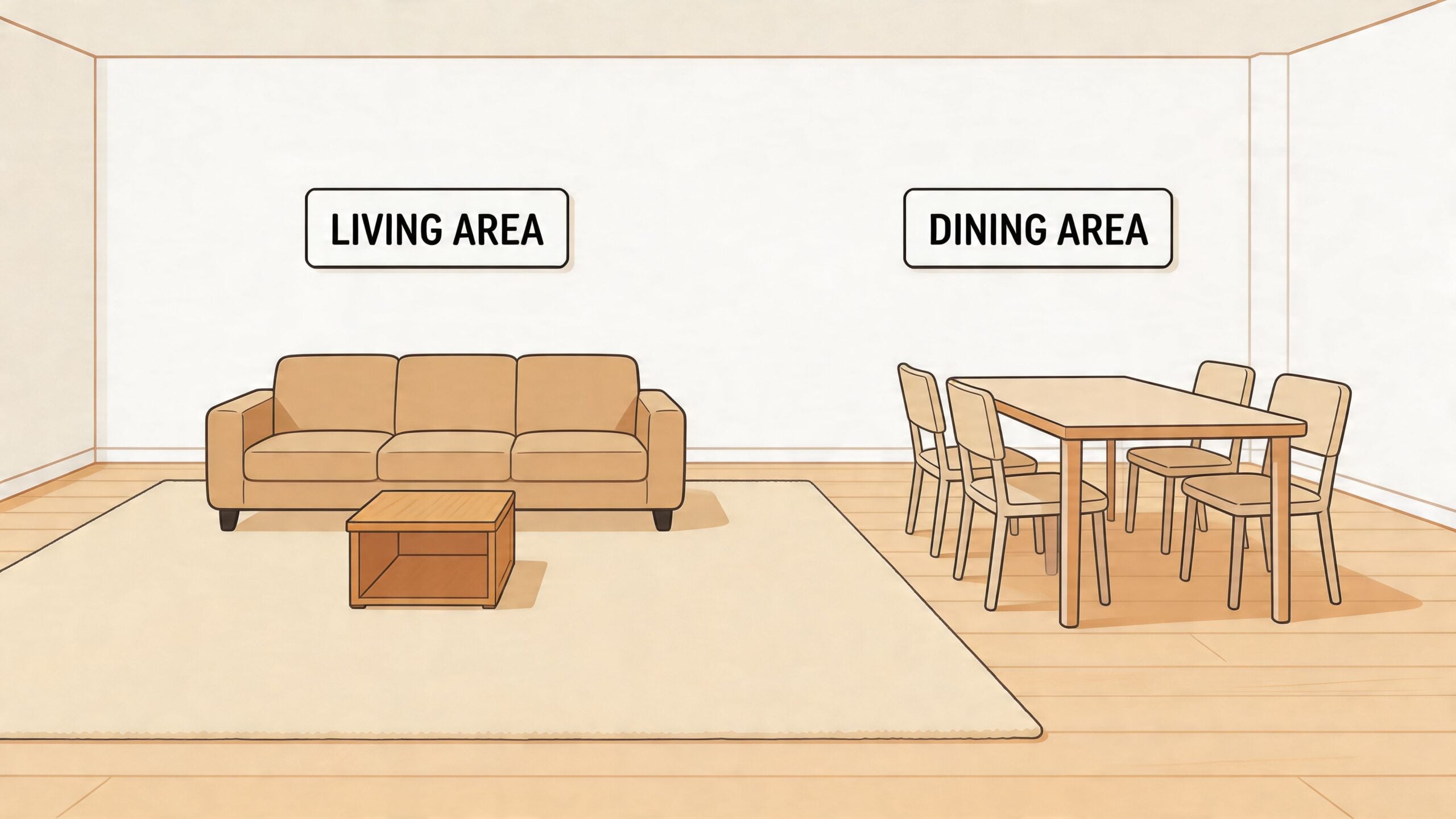
In an open layout, each rug should define one zone with intention. A living area rug needs to gather the seating into a single, readable arrangement. A dining rug needs to contain the table and chairs, even when chairs are pulled out.
The common mistake is undersizing both rugs. The room then feels scattered, and neither area looks finished.
Layering can help if a large statement rug is not the right move yet. A larger neutral base can establish the footprint, while a smaller patterned rug adds personality on top. That approach works well for clients who want a more collected, designer look without committing to one oversized pattern. If you want to compare sizes and constructions in person, the Willis Rug Market is a practical place to start.
Runners should support the way people move
A runner has a specific job. It should follow a natural walking path in an entry, hallway, kitchen, or along the side of a bed without crowding door swings or forcing awkward steps.
In homes with kids, older adults, or anyone using mobility support, I usually recommend treating runners with extra care. A well-placed runner can soften a route and add warmth. A poorly sized one can create unnecessary edges exactly where people need stable footing.
As noted earlier in the article's outside guidance, accessibility-focused rug advice often favors lower-profile options and thoughtful placement along clear paths.
Accessibility changes what “best size” means
Good rug sizing is not only about what looks balanced from across the room. It also needs to work with doors, recliners, walkers, wheelchairs, and the everyday routes people take through the house.
Pile height matters here. So does the rug pad. A rug can be the right length and width on paper and still be wrong for the room if it catches a door, interrupts a lift chair, or creates an uneven transition underfoot.
If someone in the home uses a recliner, lift chair, walker, or wheelchair, include thickness and edge transition in the sizing decision from the start.
What to check in senior-friendly homes
Door clearance
Measure with the rug and pad thickness in mind, not the rug alone.Chair function
Recliners and lift chairs need room to operate without catching at the front edge.Edge stability
The border should lie flat and feel predictable underfoot.Walking routes
Keep paths consistent so people are not stepping on and off multiple rug edges in a short distance.
Custom planning solves the rooms that break the rules
Angled walls, wide openings, hearths, and mobility equipment can throw off standard rug advice. In those rooms, the right answer usually comes from looking at the whole plan together. Room dimensions, furniture scale, traffic flow, and accessibility needs all affect the final size.
That is one reason clients work with the Willis Furniture Design Center. We can review photos, measurements, and the way the room needs to function before narrowing down size and construction. In Hampton Roads homes, especially multigenerational ones, that kind of planning often prevents expensive mistakes and leads to a room that feels polished, comfortable, and easier for everyone to use.
The Willis Rug Buying Experience Demystified
A rug is easier to choose when you can compare texture, scale, and color in person. That matters even more when you’re trying to judge size, because a number on a tag doesn’t tell you how the piece will live with your furniture.

What to bring before you shop
Clients make faster, better decisions when they arrive with a few basics:
Room measurements
Include wall lengths, door swings, and fireplace or built-in locations.Furniture measurements
Sofa width, chair depth, dining table size, and bed dimensions all matter.Photos from multiple angles
These help identify traffic paths, architectural features, and floor color.A rough priority list
Decide whether your main concern is softness, durability, pattern, or accessibility.
That preparation turns shopping from guesswork into problem-solving.
Why seeing rugs in person still matters
Online browsing is useful for ideas, but rugs are tactile. Pile height, edge finish, pattern scale, and color undertone read differently in person than they do on a screen. A rug that looks calm online may feel busy against your wood floors. Another may appear neutral until it lands beside your upholstery.
That’s why the Rug Market is such a practical stop for homeowners trying to compare options across styles, sizes, and textures in one visit. It gives you a chance to narrow the field based on what works with your room, not just what looked appealing in isolation.
The Design Center closes the gap between idea and execution
Many people don’t need more inspiration. They need help turning a good instinct into a workable room plan.
A Design Center consultation helps with that by coordinating rug size with the rest of the space. If you’re pairing a new rug with custom upholstery, occasional chairs, dining furniture, or a recliner, the plan should be built as one complete composition. That’s how a room starts to feel resolved instead of pieced together over time.
Bring the measurements, the photos, and the questions you’re stuck on. Good design decisions get easier when the room is evaluated as a whole.
Financing can make the right size easier to choose
One reason homeowners buy rugs too small is simple. Larger rugs cost more, and it’s tempting to compromise. But if the smaller size doesn’t work, the room still won’t feel finished.
Willis offers financing through the Synchrony HOME™ Credit Card, including 6 months of deferred interest on purchases of $299 or more, according to the publisher’s provided financing details. For clients furnishing multiple rooms or stepping up to hand-knotted and artisan pieces, that can make a better long-term choice easier to manage.
Protect the investment after it arrives
A rug lasts longer when it’s placed and maintained correctly. Use the right pad for the floor surface and intended use. Rotate the rug as needed in sunlit rooms. Vacuum according to the rug’s construction, and address spills quickly so they don’t settle into the fibers.
These habits don’t sound glamorous, but they preserve the look you paid for. A rug should age with the room, not fight against it.
Complete Your Room with Confidence
The right rug size changes everything. It gives furniture a relationship to each other. It shapes traffic flow. It makes a bedroom feel softer, a dining room work better, and a living room feel finished instead of almost finished.
If you want the shortest version of how to know what size rug to buy, it comes down to three habits.
The rules worth remembering
- Measure the furniture grouping, not just the room
- Anchor the major pieces so the rug participates in the layout
- Test the footprint before buying, especially in tricky rooms
Those are the decisions that keep you from ending up with a rug that looks good in a listing photo but falls apart in daily use.
Good rug sizing is flexible, but not random
There isn’t one magic formula for every home. A formal living room, a casual beach house den, and a senior-friendly layout all need slightly different solutions. The goal isn’t to follow rigid rules for their own sake. The goal is to create balance, comfort, and usable space.
If you’re considering artisan construction or want to understand the craftsmanship side before you buy, this overview of hand-knotted rugs is worth reading. Construction affects not just appearance, but also how a rug performs in the room you place it in.
The finished room should feel easy
That’s the standard I’d keep in mind. The room should feel easy to walk through, easy to use, and easy to enjoy. When the rug size is right, people may not comment on it first, but they will feel the difference immediately.
If you’re still between two sizes, don’t guess. Bring the room measurements, a few photos, and the furniture dimensions into the showroom. That’s usually the point where uncertainty turns into a clear plan.
Visit Willis Furniture & Mattress in Virginia Beach if you’d like help turning measurements and inspiration into a room that feels complete. Bring your photos, room dimensions, and furniture sizes, and the team can help you sort through rug options, layout questions, and the finishing details that make a home feel pulled together.


