
Runner Rugs for Hallways: How to Choose the Right One


You're standing in a hallway with a tape measure in one hand and a tab open full of runner rugs in the other, and the problem is obvious. The space feels unfinished, the floor is too plain, and every doorway seems to complicate the purchase. A hallway runner can fix that fast, but only if the size, material, and placement make sense for the way the house works.
A good runner doesn't just decorate a corridor. It defines the path, softens the echo, protects the floor, and keeps the transition from room to room looking intentional. That's why the right choice is never just about color, it's about clearance, door swings, traffic flow, and how much floor should show on each side.
For a homeowner comparing runner rugs for hallways, the decision is whether the rug fits the hallway like architecture or fights it like clutter. That's the Willis Standard in practice, one space, one specific answer, and the right support behind it, whether that means the Willis Furniture home decorating style guide, the Design Center, the Rug Market, or financing through Synchrony HOME when the runner becomes part of a larger room plan.
Why the Right Hallway Runner Changes How a Home Feels
A homeowner can stand in a hallway and know instantly when it feels off. The walls close in, the floor echoes, and the whole passage reads like a forgotten strip between better rooms. A runner changes that immediately because it gives the hallway a visual lane, not a full cover-up.
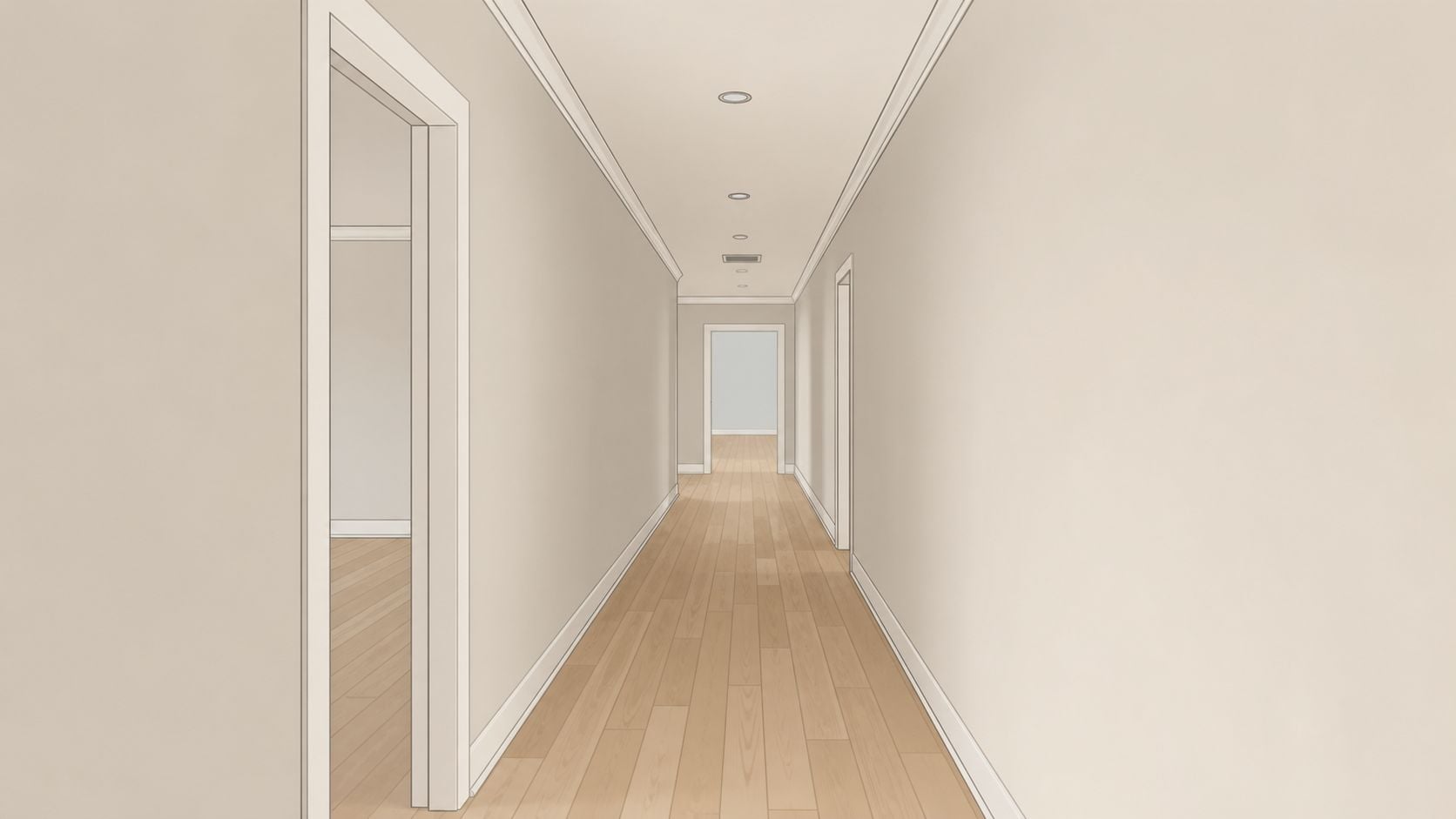
The hallway stops feeling accidental
A narrow corridor needs definition, not volume. A runner gives the eye a path to follow and keeps the space from reading as bare flooring with doors attached. That's why hallway runner rugs work so well in homes where the passage between bedrooms, baths, or a foyer and living space never got much design attention.
The practical benefits matter just as much as the look. A runner protects flooring from repeated foot traffic, softens sound, and makes the house feel more finished without turning the hallway into a room that's trying too hard. For smooth transitions between surfaces, a good visual reference is seamless flooring transitions, because the runner has to cooperate with those breaks instead of fighting them.
Practical rule: if the hallway feels unfinished in bare shoes, it's usually the right place for a runner, but only if the rug leaves enough floor visible to frame the space.
The Willis Standard keeps the choice grounded
A showroom conversation matters. A Design Center consultant can look at the hallway, the baseboards, the door spacing, and the adjacent rooms, then push the choice toward a size and style that fits the home. That matters more than online inspiration, because the hallway is a measurement problem first and a style problem second.
The four decisions are always the same. Size controls whether the hallway feels framed or crowded. Material controls how well the runner handles traffic and cleaning. Style controls whether the passage feels calm, coastal, traditional, or modern. Pad controls safety and longevity, which is where too many returns begin.
That's the right order. People love to shop by pattern first, then wonder why the runner buckles at the door or crowds the baseboard. A smart purchase starts with the hallway itself, then moves to the product.
How to Measure a Hallway for a Runner the Right Way
A hallway rarely measures like a clean rectangle, and that is where bad runner purchases start. Measure the full run first, then look at the obstacles in the space, baseboards, door swings, side openings, and the places where the runner has to sit back from the wall instead of crowding it. A good starting point is to leave 4 to 6 inches of visible floor on each side so the runner frames the corridor instead of taking it over, a sizing rule repeated in professional hallway runner guidance and used for a balanced look runner rug hallway sizing guidance and runner sizing guidance for hallways. The goal is simple. The rug should fit the hall, not force the hall to fit the rug.
Width comes first
Start with width because that is where the eye goes first. A 36-inch hallway usually calls for a 24 to 27-inch runner if you want that framed effect, while 48 to 60-inch corridors usually suit 30 to 36-inch runners runner sizing guidance for hallways. Another hallway guide handles the numbers a little differently, noting that 42-inch hallways often suit 28 to 32-inch runners and 48-inch or wider hallways often suit 32 to 36-inch runners hallway runner size and style guide. That range is normal. Door placement, baseboard depth, and how much visual breathing room you want all change the answer.
Keep at least 4 inches of clear space from baseboards and door frames when the hallway is tight. If the runner touches the wall or crowds the trim, it looks forced and it wears badly at the edges.
Length should respect the end walls
Length is the second decision, and it matters as much as width. The runner should stop 6 to 12 inches from each end so it does not feel jammed into the hallway and does not take the full hit right where people enter and exit runner sizing guidance for hallways. One sizing guide also breaks hallway lengths into common bands, with short hallways typically 6 to 10 ft, standard hallways 10 to 14 ft, and long corridors 14 ft and longer hallway runner size and style guide. Use that as a planning frame. It keeps you from buying a runner that looks clipped at the ends.
Doorways need their own check. A runner should reach at least the edge of the door frame so nobody steps half-on and half-off when crossing from a side doorway, especially in halls with multiple thresholds hallway runner placement rule. That placement also looks cleaner because it avoids the chopped-up look that happens when the rug stops short of the opening.
For irregular layouts, stop guessing and measure the actual shape. Sketch the hall, mark corners, note cutouts, then work those details into the final number. One measurement guide recommends leaving at least 3 inches between the wall and each side of the runner, while also treating 4 to 5 inches on each side as a balanced starting point hallway runner measurement guide. That extra sketch step matters more than most homeowners expect, because a crooked hall or a built-in nook changes the footprint.
| Hallway Width | Recommended Runner Width | Exposed Floor Per Side |
|---|---|---|
| 36 inches | 24 to 27 inches | 4 to 6 inches |
| 42 inches | 28 to 32 inches | about 4 to 6 inches |
| 48 inches | 30 to 36 inches | 4 to 6 inches |
| 60 inches | 30 to 36 inches | 12 inches or more, if the hallway allows it |
Use the Willis sizing guide for rugs when the hallway connects to a larger room plan, because the runner still has to work with the adjoining spaces and not throw off the whole layout.
Choosing Materials and Pile for a Real Working Hallway
A hallway punishes the wrong rug. Shoes land in the same place every day, pets cut across the corners, and a runner that feels luxurious in a showroom can become a maintenance headache the first time sand or grit gets dragged in. The material choice has to match the traffic, not the mood board.
What each material does well
Wool brings softness, resilience, and a more substantial feel underfoot. It makes sense in a hallway where the owner wants a richer look and doesn't mind a more careful cleaning routine.
Cotton is lighter and easier to live with, but it usually belongs in lower-wear spaces. In a busy hallway, it can look tired sooner than the homeowner expects.
Polypropylene and nylon make sense when cleanability and durability matter most. They're practical choices for a passage that gets constant use, especially in homes where muddy shoes, pets, or beach sand show up often.
Sisal and jute look beautiful and textural, but they're less forgiving. They need a pad, they need care, and they reward owners who value the look of natural fiber more than softness.
Blended constructions split the difference. They can offer a useful balance of texture, resilience, and easier maintenance, which is why they're often a sensible compromise for a real hallway.
The right pile matters just as much. A low to medium pile usually outperforms high pile in a corridor because it lies flatter, clears door swings more easily, and resists that crushed look that shows up after repeated traffic. Flatweaves are the workhorse choice for narrow halls because they stay visually light and behave well in tight circulation zones.
The mistake that leads to returns
The common error is choosing a rug that feels too soft for the traffic pattern. It looks inviting on day one, then edges start to curl, the pile crushes, and people begin to notice the rug before they notice the hallway. That is the kind of choice that gets returned or replaced early.
A showroom floor solves that problem better than a screen. At the Rug Market, a homeowner can feel the difference between a hand-knotted wool runner and a machine-made synthetic runner before buying, which is the smarter way to compare texture, edge structure, and how the rug sits underfoot. For a broader view of high-use rug selection, the guide to rugs for high-traffic areas gives useful context before a final decision.
The Rug Pad Is the Real Safety and Longevity Decision
A hallway runner gets the attention, but the pad does the work. Without a good pad, the rug shifts, the edges lift, and the whole setup starts to feel loose underfoot. That's a bad combination in a space where people are moving fast and turning through doorways all day.
What a pad actually changes
A quality rug pad grips the floor so the runner doesn't slide. It cushions foot traffic, helps protect the rug from premature wear, adds a layer of insulation, and reduces the chance of dye transfer on sensitive flooring. That's not decoration, that's the difference between a runner that stays put and one that slowly becomes a nuisance.
A hallway pad should usually stay low-profile so doors still clear cleanly. It also needs to be cut slightly smaller than the runner so it hides underneath instead of peeking out at the edges. If the pad is too large, it can force the runner into the door swing.
Pick the pad to match the floor
Felt pads add cushion and help the rug feel more substantial. Rubber pads add grip. Felt-and-rubber combo pads are the practical middle ground for many hallways because they combine hold and comfort in one layer.
Hardwood needs careful protection, and a hallway with kids, seniors, or pets should not go without a pad. For hardwood-specific runner choices, the hardwood floor rug guide is the right reference before finalizing the setup. On other hard surfaces, the same basic rule holds, the pad should support the rug without adding bulk.
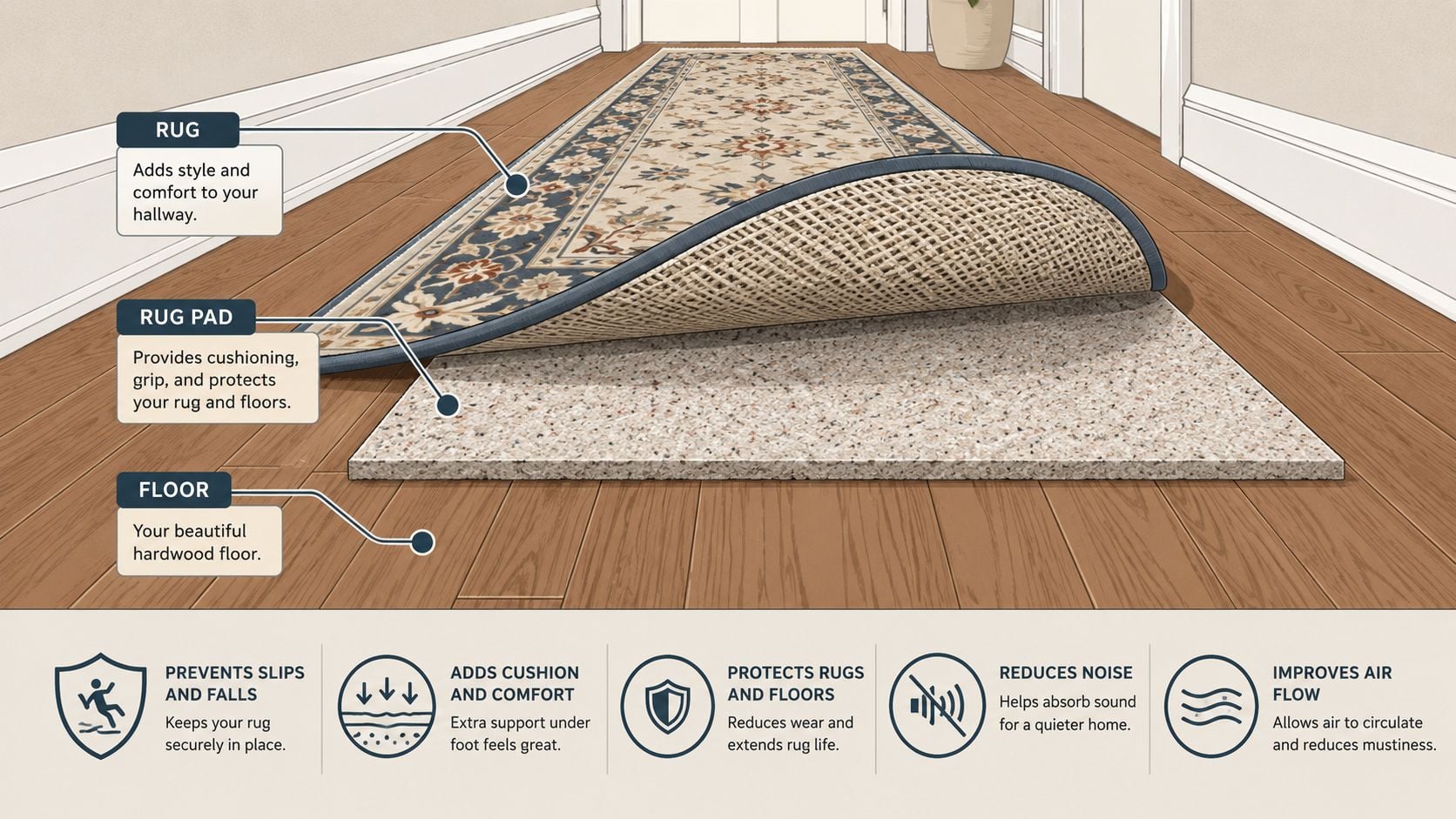
A cheap pad is worse than no pad when it lets the runner buckle at a threshold. If the rug moves or curls, the hallway starts advertising the mistake.
The Design Center can match the pad to the exact rug and floor pairing, which is exactly the kind of detail that prevents the most common hallway complaint. That's the part that turns a pretty purchase into a safe one.
Style and Color Choices for Coastal, Traditional, and Modern Homes
Hallway style should look connected to the rest of the house, not like a sample cut from a trend board. A corridor is a sightline, so the runner has to relate to the rooms on both ends and to the baseboards, wall color, and flooring that frame it. Good style in a hallway is controlled, not loud.
Coastal homes need softness and restraint
Coastal homes usually work best with sand-washed neutrals, muted blues, and natural textures. The runner should feel light enough to keep the hallway airy, especially when the room already has bright walls, pale flooring, or plenty of daylight.
Natural fibers and flatweaves can work beautifully here, as long as the material choice still matches the traffic. A subtle pattern is usually enough. If the rug becomes the loudest thing in the corridor, it's doing too much.
Traditional homes can carry more pattern
Traditional spaces can handle deeper colors, richer contrast, and Persian-inspired motifs without looking crowded. A hallway runner in this setting should pull color from nearby furnishings or art rather than introducing a brand-new palette.
For shoppers tracking broader style direction, the interior design trends 2026 discussion is useful context for how texture, tone, and pattern continue to matter in transitional spaces. The point is not to chase a trend, it's to choose a runner that feels like part of the house's long-term language.
Modern homes need clean line discipline
Modern hallways usually look best with geometric or abstract patterning, lower contrast, and a flatter construction. The runner should reinforce the line of the hallway instead of breaking it up with too much movement.
That is where the Willis Design Center earns its keep. It can customize size, border, color, or material so a style idea fits the actual hall instead of forcing the hall to adapt to a standard runner. For budget-conscious shoppers, the Willis Outlet is the right place to look for discounted runners that still follow the same style direction without sacrificing the whole design.
Cleaning and Maintenance That Actually Extends the Life of a Runner
A hallway runner lives in the dirtiest part of the house, so maintenance isn't optional. The good news is that the routine is simple if the material choice was sensible in the first place. A runner that's easy to care for is usually the one that lasts.
Build a rhythm, not a rescue plan
Quick vacuuming on a low setting keeps grit from grinding into the fibers. Natural fibers should not get a beater bar, because that's how edges and texture get battered faster than they should.
Once a month, rotate the runner 180 degrees so the traffic pattern wears more evenly. That small habit matters because hallway wear tends to happen in the same direction every day.
Seasonally, inspect the edges, check the pad for compression, and deep clean according to the material. Steam cleaning a wool runner is a bad idea, and ignoring a curled corner just invites a trip hazard later.
Match the cleanup to the mess
Sand needs to come out fast, before it behaves like sandpaper in the pile. Pet hair wants a method that won't snag the fibers. Mud should dry first, then be lifted carefully instead of smeared. A wine spill needs immediate blotting, not panic scrubbing.
For broader carpet care principles, understanding carpet care is useful background, especially for homeowners who want a cleaner routine without making the rug harder to live with.
If the runner is hard to clean, it's probably too precious for a hallway. Hallways reward durable materials and punish fragile habits.
The connection is simple. The right pad reduces wear, the right material survives the routine, and the right cleaning schedule keeps the hallway looking intentional instead of tired.
Buying Your Hallway Runner at Willis Furniture
A hallway runner is easier to buy when the store has an actual path for the decision. The Rug Market is where a homeowner who wants to feel the pile, judge the border, and compare real sizes should start, especially when the hallway is unusual or the style needs a hands-on check. The Willis Rug Market carries the kind of options that online thumbnails flatten.
The Design Center makes sense when the hallway is narrow, the thresholds are awkward, or the runner needs to tie into the rest of the home. That's where size, color, border, and material get customized to the room instead of guessed from a screen. The Outlet fits the shopper who wants a more accessible price point without abandoning design, especially for floor samples and overstock pieces.
Willis Furniture & Mattress also offers financing through the Synchrony HOME Credit Card with promotional financing on purchases of $299 or more, which makes sense when the runner is part of a bigger room update. White-glove delivery matters too, because the team inspects, places, and installs the runner where it belongs instead of leaving the homeowner to wrestle with it in the hall.
If the hallway is simple, start at the Rug Market. If the hallway is awkward, go straight to the Design Center. If the budget is tight, check the Outlet first.
Frequently Asked Questions About Hallway Runners
Multiple doorways are fine if the runner reaches the edge of the door frame and nobody lands half-on and half-off. Very narrow halls usually do better with a slimmer runner that preserves clearance instead of forcing coverage.
Long corridors need length discipline, not extra width. If the hallway feels oversized, the runner should still respect the side clearance and stop before the end walls rather than stretching wall to wall.
Runners can go over carpet in some layouts, but only when the layering makes visual sense and the rug stays flat. A runner worth restoring is one with solid edges, usable material, and no structural curling. If the base is failing, replace it.
Willis Furniture & Mattress helps homeowners choose hallway runner rugs with the right size, material, and finish for real-world traffic, not just showroom photos. Visit Willis Furniture & Mattress to see the Rug Market, use the Design Center for a custom fit, and find a runner that belongs in your hallway.


