
Hand Tufted Area Rugs: A Complete Buyer’s Guide


A Virginia Beach homeowner stands barefoot in an empty living room, comparing two rugs that look similar online but feel completely different underfoot. One feels springy and substantial. The other feels soft at first, yet its backing raises questions about how it will handle furniture, sunlight, spills, and daily walking.
That uncertainty is reasonable. Hand tufted area rugs sit between inexpensive machine-made floor coverings and labor-intensive hand-knotted rugs, so the label alone doesn't tell a buyer whether a particular piece is a smart purchase. The useful questions are more specific: What fiber is in the pile? How dense is the construction? What holds the yarn in place? Will the rug live in a calm bedroom or a busy hallway?
What a Hand Tufted Area Rug Actually Is
A hand tufted rug is made by pushing yarn through a stretched primary backing with a hand-held tufting gun. The yarn forms loops or cut pile on the front, while latex adhesive and a secondary backing secure the tufts from behind. Unlike a hand-knotted rug, the yarn isn't held in place by individual knots tied around foundation threads.
That distinction explains the category's appeal. Tufting takes less time and labor than knotting, which allows a rug to offer plush texture, visible dimension, and substantial visual weight without the cost associated with a traditional knotted construction. It isn't the same as a low-cost machine-made rug, either. An artisan can vary pile height, carve motifs, and shape the surface by hand.
Common fibers include wool, wool blends, viscose, polyester, and other synthetic combinations. Fiber changes the way a rug feels, reflects light, responds to furniture, and tolerates traffic. A wool pile generally feels resilient and warm, while a shiny cellulosic fiber can create a smoother, more decorative surface that may require gentler placement.
The backing is part of the product
The latex layer is the defining structural feature buyers need to understand. It keeps the yarn from pulling through the primary canvas, then the secondary fabric backing covers the adhesive and helps the rug maintain its shape. That construction creates softness, but it also means moisture and long-term adhesive breakdown deserve attention.
Practical rule: A hand tufted rug should be selected for the room it can handle, not for the room where it looks attractive in a photograph.
For shoppers considering wool, a closer look at the benefits of wool rugs helps explain why fiber choice matters as much as construction. The most reliable buying process treats the rug as a system, including pile, fiber, adhesive, backing, size, and maintenance needs.
How Hand Tufted Rugs Are Built Step by Step
A hand tufted rug begins with a design and ends with a glued, finished backing. Seeing the process in sequence makes the construction easier to identify when a shopper examines a rug in person.
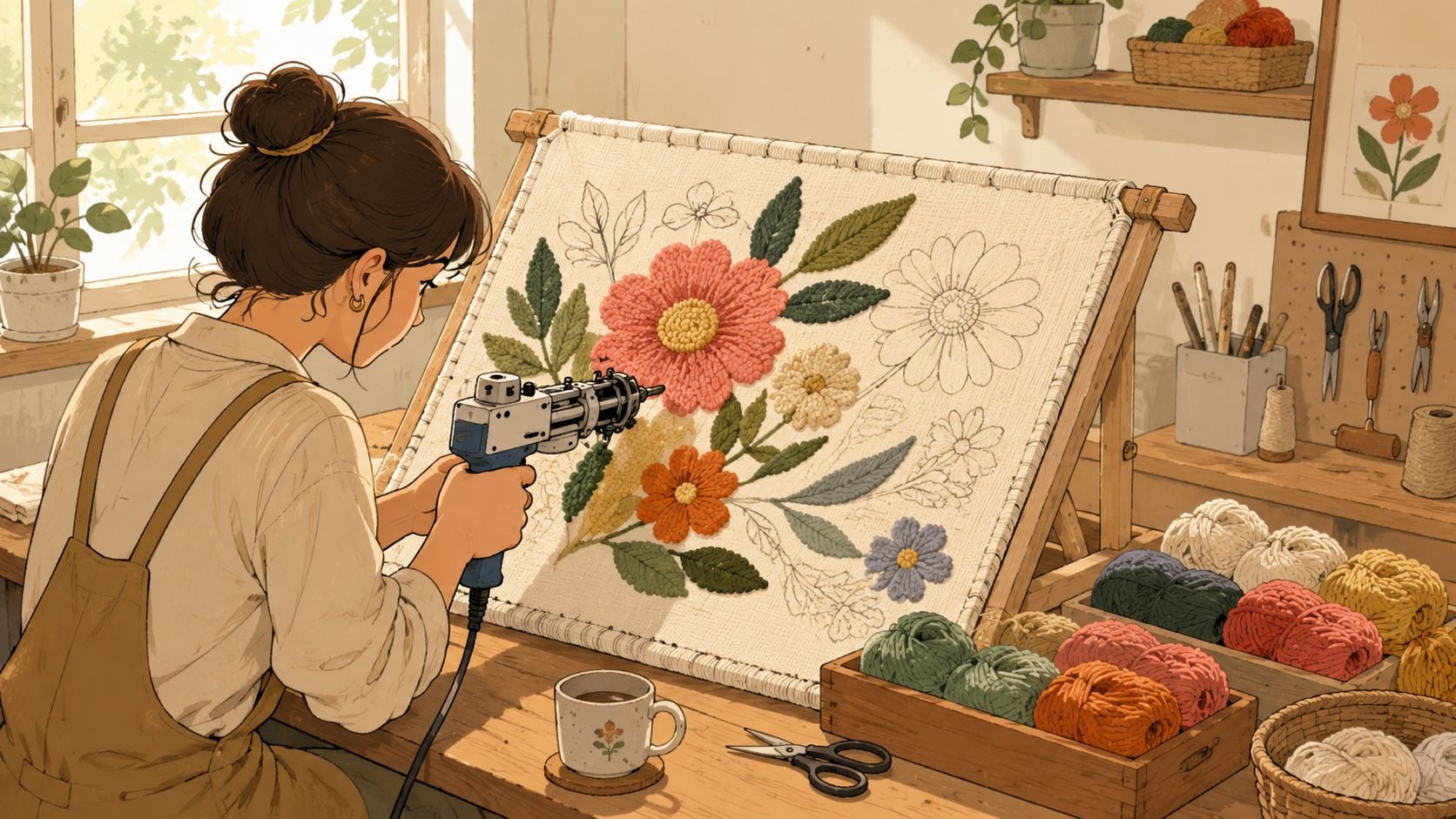
Step one builds the pile
The maker stretches a primary canvas, often a cotton-based foundation, across a frame. The design is traced or marked on the canvas so the artisan can follow the placement of each color and motif.
A hand-held tufting gun then pushes preselected yarn through the backing. The tool can create loops or cut pile, depending on the desired surface. The artisan controls the direction, density, and placement of the yarn, so the front begins to develop as a tactile version of the drawn pattern.
Step two shapes the surface
Once the yarn has been inserted, the pile may be sheared to an even height. The maker can also clip selected areas lower than others, carve around borders, or leave certain motifs raised. That high-low treatment gives many hand tufted rugs their sculpted appearance.
This stage separates a carefully finished rug from a flat, undifferentiated surface. Clean carving can make a border stand out, clarify a floral shape, or give a geometric design a sharper outline.
Step three locks everything in place
The back receives a layer of latex adhesive. The glue grips the yarn and prevents the tufts from sliding back through the primary backing. A secondary cotton, jute, or fabric backing is then applied over the adhesive, creating the finished underside.
The process differs sharply from hand knotting. A hand-knotted rug relies on individual knots tied into the foundation, while a hand tufted rug relies on punched yarn plus adhesive and backing. That faster method is why tufting can deliver a soft wool look and dimensional pattern at a more accessible price than a comparable heirloom construction.
Hand Tufted vs Hand Knotted vs Machine Made
The best construction depends on the room, the household, and the expected service life. No single rug type wins every category.
| Construction | Price Tier | Pile Feel & Look | Typical Lifespan | Best Use Case |
|---|---|---|---|---|
| Hand tufted | Mid-range | Plush, soft, and often sculpted | Roughly 5–15 years in practical residential use, with better-made examples sometimes lasting longer when care and traffic are favorable, as outlined by this hand tufted carpet construction analysis | Bedrooms, living rooms, and lower-moisture spaces with controlled traffic |
| Hand knotted | Premium | Dense, detailed, and individually structured | Generally longer than hand tufted construction when made with comparable quality materials | Long-term furnishings, formal rooms, and high-investment spaces |
| Machine made | Entry to mid-range | Consistent, uniform, and available in many styles | Varies by fiber, pile, and use | Temporary updates, spill-prone rooms, and tighter budgets |
| Flatweave | Entry to premium | Low or no pile, often reversible or highly structured | Varies by fiber and finishing | Doorways, layered arrangements, and rooms where doors need clearance |
Hand tufted rugs often win on substantial feel, carved pattern detail, and faster production than hand-knotted pieces. They can make a room feel finished without requiring the buyer to commit to a construction intended as a multigenerational heirloom.
Their limitation is equally clear. The glued backing doesn't tolerate prolonged moisture or aggressive cleaning as well as a knot-based foundation, and the adhesive can weaken with age. A hand-knotted rug has a different structural logic because its pile is tied into the foundation rather than held primarily by latex.
A buyer comparing the two should examine the differences between hand-knotted rugs and other constructions before deciding. Machine-made rugs remain useful where affordability, uniformity, or easy replacement matters. Flatweaves make sense where a low profile matters more than a plush cushion.
Quality Markers to Check Before You Buy
A rug's front can be beautiful while its construction remains ordinary. Buyers should inspect the piece with their hands and turn it over before focusing on color alone.
Start with the fiber
Wool usually offers a resilient, comfortable pile with good resistance to matting and crushing. Cotton and wool blends can change the softness and price, while viscose often contributes sheen and a smoother decorative effect. Polyester and polypropylene can make a rug more affordable, but they may not deliver the same long-term recovery in demanding areas.
The fiber label should be read alongside the room plan. A soft, luminous pile may suit a guest room beautifully but be a poor match for a doorway where grit and repeated footfall work into the surface.
Press the pile
Press a thumb into the rug and release it. A dense, springy pile should recover with some resilience, while a loose surface can remain compressed beneath furniture or repeated steps. Buyers should also look across the rug from several angles because uneven height, exposed canvas, or inconsistent carving can reveal rushed finishing.
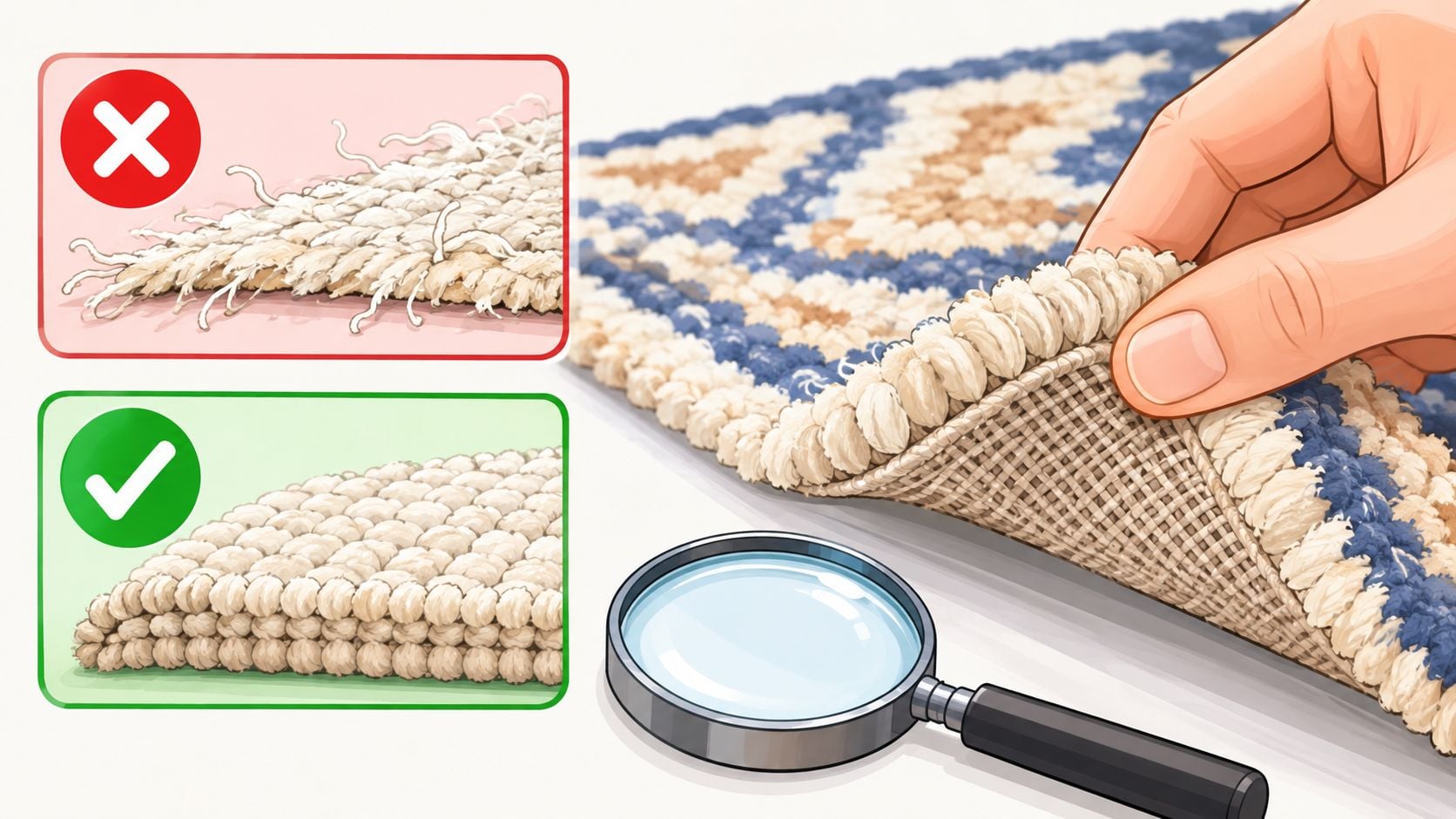
Examine the back
Turn up a corner and inspect the latex coat and secondary backing. A smooth, evenly applied adhesive layer and a firmly attached fabric backing suggest controlled construction. Large voids, excessive clumps, loose edges, or backing that lifts easily deserve closer questioning.
Finishing details matter, too. Surged edges, clean corners, secure transitions, and neatly finished fringe signal attention beyond the central pattern.
The Willis Rug Market gives shoppers a practical setting for this inspection. Samples can be bent, pressed, and compared side by side, which is more informative than trying to infer density from a screen image. A buyer who checks fiber, pile, backing, and edge work in that order is less likely to confuse a dramatic surface with a durable overall build.
Sizing and Styling for Every Room
A hand tufted rug should be sized around the furniture plan, not chosen merely to cover open floor. In a living room, decide whether every seating piece will sit on the rug or only the front legs of sofas and chairs. 8×10 and 9×12 rugs often suit larger seating arrangements, but the furniture footprint and walking paths determine the better fit. Before buying, review how to know what size rug to buy to match the rug to your furniture footprint.
A rug ending just before the seating can make the arrangement feel disconnected. One reaching too far into a doorway may catch beneath the door, turning a styling choice into a daily obstruction. Mark the intended boundaries with painter's tape before shopping. This simple outline shows how much floor will remain visible and whether traffic can move around the rug comfortably.
Match the rug to the room
Dining rooms require enough rug beyond the tabletop for chairs to stay supported as guests pull them out. Allow 24 inches beyond every side of the table so chair legs do not snag the edge.
Bedrooms allow several arrangements. A large rug can extend beneath the lower two-thirds of the bed, while runners can frame each side and provide a softer landing. In hallways, leave comfortable clearance along the walls and keep the runner within the walking route, away from doors and nearby furniture that could catch its pile.
Entryways often suit smaller formats such as 2×3 or 4×6, provided the pile and backing fit the location. Low-pile construction is easier to place near doors. A border pattern can give a narrow entry more definition without making it look crowded.
For an unusually large arrangement, how to place a 12×14 rug provides useful space-planning context. The Willis Design Center can help check measurements, furniture scale, color coordination, and traffic flow. For a larger purchase, Synchrony financing options may help a qualified buyer select the size and fiber the room requires rather than defaulting to the smallest workable rug.
Care and Maintenance That Extends the Life
Care should be predictable rather than complicated. The construction responds best to gentle vacuuming, controlled moisture, a supportive pad, and regular redistribution of traffic.
Rotate the rug 180 degrees every six months so walking patterns and sunlight don't concentrate on one section. A manufacturer care guide for hand tufted wool rugs recommends rotation every 1–2 years, while more frequent movement can make sense in a room with uneven traffic or strong sunlight. The exact schedule should follow the room rather than a rigid calendar.
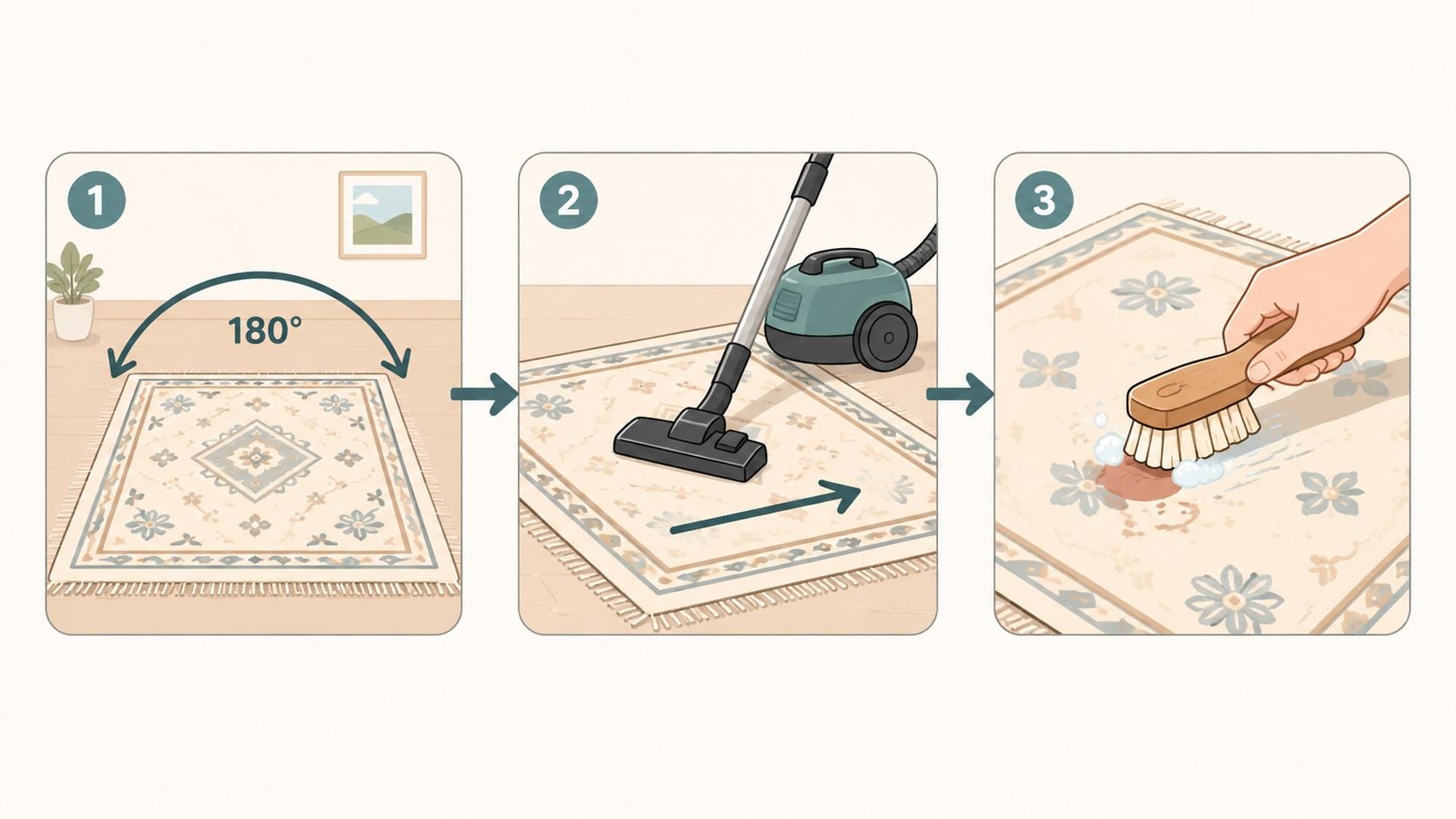
Use less force and less water
A suction-only vacuum or a machine with the beater bar turned off is the safer choice for wool pile. Vacuum high-traffic zones regularly, keep fringe away from the roller, and avoid aggressive passes that can pull at the tufts.
The latex adhesive creates the main moisture warning. Water can reach the glue, weaken its bond, and contribute to odor, mildew, or backing deterioration. Spills should be blotted promptly rather than scrubbed, and steam cleaning should be avoided unless a professional specifically confirms that the rug's construction can tolerate it.
A separate guide to how to deep clean carpets can help clarify the difference between routine surface care and deeper professional treatment. For hand tufted rugs, professional cleaning is generally best scheduled according to use, with many households considering service every 12 to 24 months.
A rug pad deserves priority in the care budget. It reduces slipping, cushions footfall, limits abrasion against the floor, and helps protect the backing from repeated friction. The Willis washable area rug collection may also suit rooms where easy-clean performance matters more than the specific construction discussed here.
Price, Sustainability, and American-Made Choices
Price should be interpreted as a room decision, not as a simple quality ladder. A lower-priced synthetic rug may be sensible for a temporary update or a spill-prone space, while a wool hand tufted rug may make more sense where softness and visual depth matter. Premium artisan construction can justify a larger investment when the buyer values distinctive workmanship and plans to keep the design in place.
The proposed price bands below are useful shopping categories, not verified market statistics. They should be treated as editorial planning ranges and confirmed against the specific rug, fiber, backing, size, and finish.
| Tier | Price Range | Common Fibers | Expected Lifespan | Best Room Use |
|---|---|---|---|---|
| Entry | Under $400 | Synthetic blends | Shorter service life under demanding use | Guest rooms, temporary updates, and lower-cost refreshes |
| Mid-range | $400–$1,500 | Wool and wool blends | Moderate residential service life with suitable care | Living rooms, bedrooms, and measured everyday traffic |
| Premium | More than $2,500 | Higher-grade wool, artisan blends, and specialty fibers | Longer potential service when construction and care support it | Formal rooms, design-led interiors, and long-term furnishing plans |
The figures in this table are budget categories supplied for planning, not claims about every rug in the market. The verified industry context is broader: the Carpet and Rug Institute reports that tufted products account for more than 90% of carpet and rug products created, compared with less than 2% woven and 6.7% made by other methods such as knitted, braided, hooked, or needlepunched, as described in its history of carpet.
Sustainability needs a complete view
Wool can be a durable natural fiber, but responsible evaluation also includes sourcing, dyeing, backing, transport, and expected replacement. Recycled fibers may reduce reliance on new material, while latex adhesive creates a separate end-of-life and indoor-air consideration. Buyers seeking American-made or American-assembled options should ask how much of the manufacturing chain is disclosed rather than relying on a broad label.
The Willis Outlet can be a useful route for closeouts and overstock when budget control matters. Shoppers willing to invest more for craft can compare alternatives in the Rug Market, including hand-knotted and artisan pieces. The right choice balances material preference, room conditions, maintenance willingness, and how often the design is likely to change.
Bringing It All Together at Willis Furniture
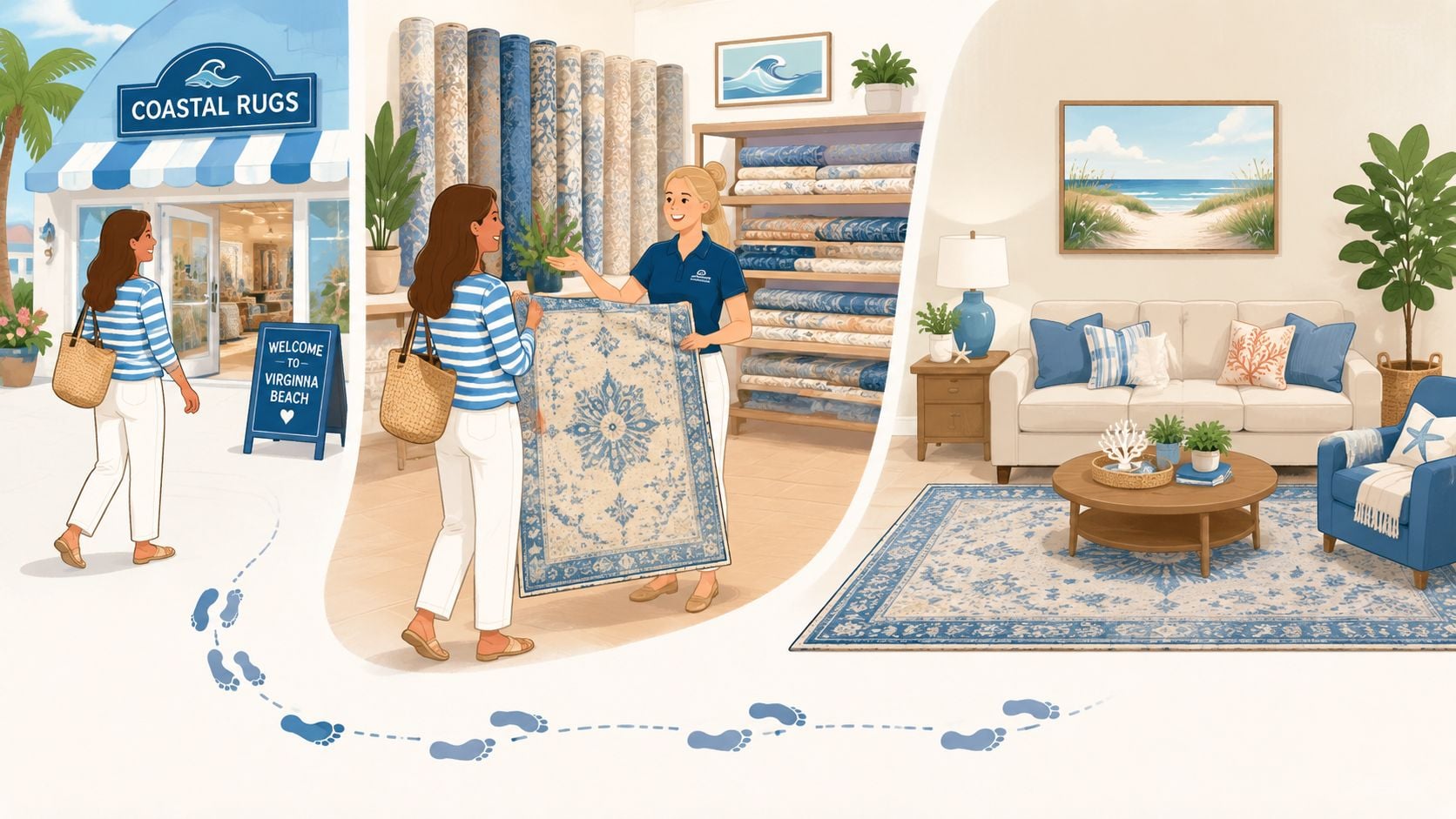
A sound rug purchase starts with the room, then tests the construction against that room. A Virginia Beach homeowner can begin in the Willis Rug Market, where hand tufted options can be viewed alongside hand-knotted and flatweave alternatives. That side-by-side comparison makes differences in pile recovery, backing, edge finish, and visual scale easier to understand.
The next step is measurement. A room plan should record the seating footprint, dining-table clearance, bed position, door swings, and the walking routes that receive the most use. Color samples and nearby upholstery should be considered in the same light where possible, since wool, viscose, and carved pile can change appearance as the viewer moves around the rug.
A practical showroom path
Bring room information. Measurements, photographs, furniture dimensions, and door-swing details give a design consultant useful context.
Compare the underside. The back of each candidate should be inspected for adhesive coverage, secondary backing, edge finishing, and signs of loose construction.
Match fiber to traffic. Wool may suit a room where resilience and comfort matter, while a lower-cost synthetic can be more practical for a temporary or spill-prone setting.
Choose the correct scale. The goal isn't the smallest rug that fits. It's the size that connects the furniture and leaves usable circulation around it.
Plan delivery and protection. A rug pad and careful placement help the selected piece settle into the room without unnecessary folding, sliding, or abrasion.
The Willis Design Center can support room measurements, color matching, traffic planning, and coordinated selections. If the preferred size or fiber stretches the immediate budget, Synchrony financing options may provide a way for qualified buyers to consider the right solution without reducing the purchase to a compromise.
White-glove delivery adds a practical final step. The delivery team can handle placement, rug pad installation, and debris haul-away, leaving the rug unrolled and positioned rather than asking the homeowner to manage a heavy, awkward package alone.
A hand tufted rug earns its place when its fiber, backing, size, and care requirements match the life of the room. That checklist gives the buyer a clearer path than choosing by trend or price alone.
Willis Furniture & Mattress offers a Rug Market, Design Center guidance, financing options, and white-glove delivery for homeowners choosing hand tufted area rugs. Visit Willis Furniture & Mattress with room measurements and furniture details to compare construction, select the right size, and plan a rug that fits the space.


