
How to Choose a Recliner Chair That Fits You


A shopper can spend an afternoon comparing colors, arm shapes, and stitching, then discover that the chair makes the lower back ache after a single evening. That mistake happens because many buyers choose a recliner for the room first and the person second. The better order is straightforward: fit the body, match the mechanism to daily use, test every position, then solve the room placement and finish.
The right recliner isn't just the one that looks impressive beside the sofa. It supports the sitter without forcing the knees, neck, or lower back into awkward positions. This guide shows how to choose a recliner chair with the same practical checks a seasoned showroom advisor uses, including what deserves a higher price and what can be skipped.
Start With Your Body, Not the Room
The floor plan matters, but body fit comes first. A chair that fits between two walls can still leave the feet dangling, the knees unsupported, or the head tilted away from the headrest. Those problems are much harder to solve with cushions or decorative pillows after delivery.
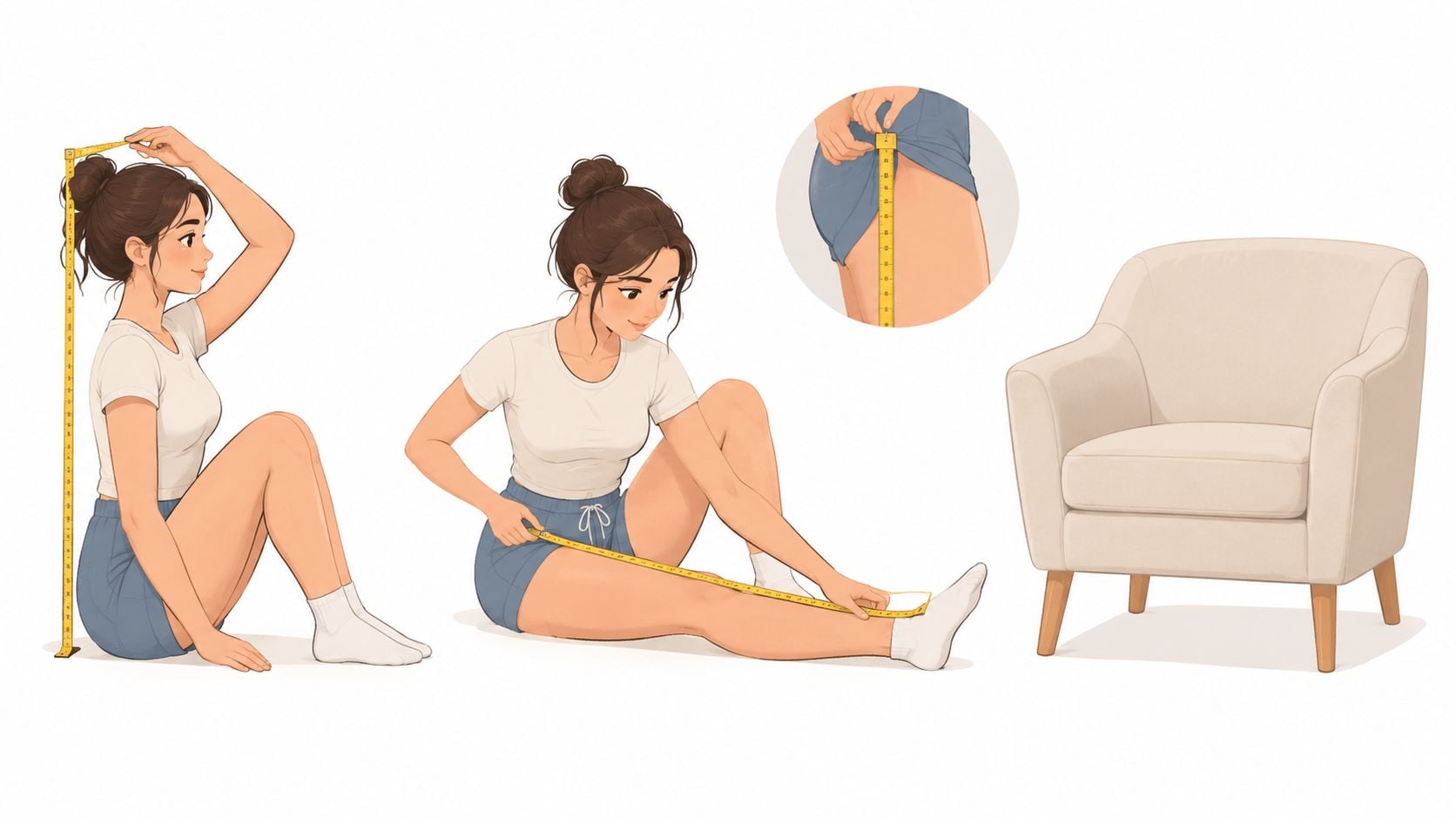
Before visiting a showroom, a shopper should record three measurements and observations:
- Seat height: Measure from the floor to the back of the knee while standing naturally. A suitable seat generally lands at or just below that point, allowing the feet to rest flat and the knees to sit at roughly a right angle.
- Seat depth: Measure from the back of the buttocks to the back of the knee. The chair should support the thighs while leaving a practical gap behind the knees when the lower back is against the backrest.
- Back height: Note where the shoulders and base of the neck sit in a relaxed posture. The cushion should reach the shoulders or base of the neck rather than ending below the point where the head needs support.
Standard recliners commonly measure about 36–40 inches wide, 35–42 inches deep when upright, and roughly 40–42 inches high, while a fully extended chair may reach 60–72 inches in length. Those reference dimensions help narrow the search, but they don't replace body measurements. A recliner dimension guide explains why the same chair can feel supportive to one adult and oversized to another.
The showroom fit test
A useful test takes only a few minutes. The shopper should sit fully back, place both feet flat on the floor, and check that the knees sit at approximately 90 degrees. Two fingers should slide behind the calves without the seat edge pressing into the legs. If the seat is too low, standing can become difficult and pressure can build beneath the thighs. If it's too high, the feet may lose contact with the floor, which reduces stability and can interfere with circulation.
Seat depth deserves equal attention. A practical target is 2–4 inches of clearance behind the knees when the back is supported. Too little space can press into the tendons behind the knees. Too much space can leave the lower legs unsupported and encourage slouching. The back cushion should meet the natural curve of the lower spine rather than pushing the torso forward or leaving a hollow gap.
Practical rule: A recliner passes the body test only when the feet, knees, lower back, and head all feel supported before the chair starts moving.
The back height should also suit the sitter's frame. A shorter adult may find a tall back intrusive around the head, while a taller adult may feel that a low back stops below the shoulders. A shopper can speed up the showroom visit by bringing the measurements and using the furniture measuring guide before selecting colors or upholstery.
Match the Mechanism to Who Actually Uses It
The mechanism should serve a daily habit, not decorate a feature list. A manual recliner is often the sensible choice for a physically capable sitter who wants a simple chair with no cord and fewer operating components. A power model earns its price when precise positioning, effortless adjustment, or repeated use matters. A lift recliner belongs to a different category entirely because it helps the sitter move from sitting to standing.
| Mechanism | Best For | Effort Required | Watch Out For |
|---|---|---|---|
| Manual | Shoppers who prefer simplicity and no electrical connection | Pulling a handle, pushing back, or using body weight to recline | Returning from a deep recline can require upper-body strength |
| Power | Readers, sleepers, television viewers, and anyone who wants precise positioning | Pressing a button or using a remote | The motor adds weight, requires power access, and may complicate servicing |
| Lift | Older adults or people with knee, hip, or balance limitations | The chair tilts and raises the sitter toward standing | Placement, control simplicity, and backup power deserve careful review |
Manual simplicity has a place
Manual operation makes sense for a chair that opens and closes only occasionally. It avoids cord placement and keeps the control method familiar. It also suits shoppers who prefer a quicker return to upright, provided they can comfortably use the lever or push-back motion.
A manual mechanism isn't automatically better because it has fewer electrical parts. The key question is whether the primary user can operate it without straining a shoulder, wrist, or back. A shopper comparing the two approaches can use this manual and power recliner comparison to focus on operation, placement, and practical use instead of assuming that more buttons mean more comfort.
Power earns its place through routine
Power adjustment is worth paying for when the chair is used for long reading sessions, regular naps, or daily television viewing. The sitter can stop at a comfortable angle rather than choosing only a few fixed positions. Optional power headrest or lumbar adjustments can help when the standard geometry doesn't line up perfectly with the user's neck or lower back.
The trade-off is practical. A powered chair needs an outlet within cord reach, adds motor weight, and may take longer to return to upright. Anyone choosing power should decide where the cord will run before delivery, not after the chair blocks a walkway.
Lift is a mobility decision
A lift recliner should be selected for the person who needs help standing, not just for someone who likes extra buttons. Its forward-tilting base changes the exit motion and can reduce the effort required from the knees, hips, or balance system. Easy-grip controls, supportive lumbar shaping, and a seat height around 19–20 inches can be useful targets for older adults, with the final decision based on the seated person's leg length and ability.
The clearest decision rule is simple: choose the simplest mechanism that reliably meets the user's strength, mobility, and routine. A feature that doesn't solve a real daily problem is an expense, not an upgrade.
Why Testing Positions Matters More Than Style
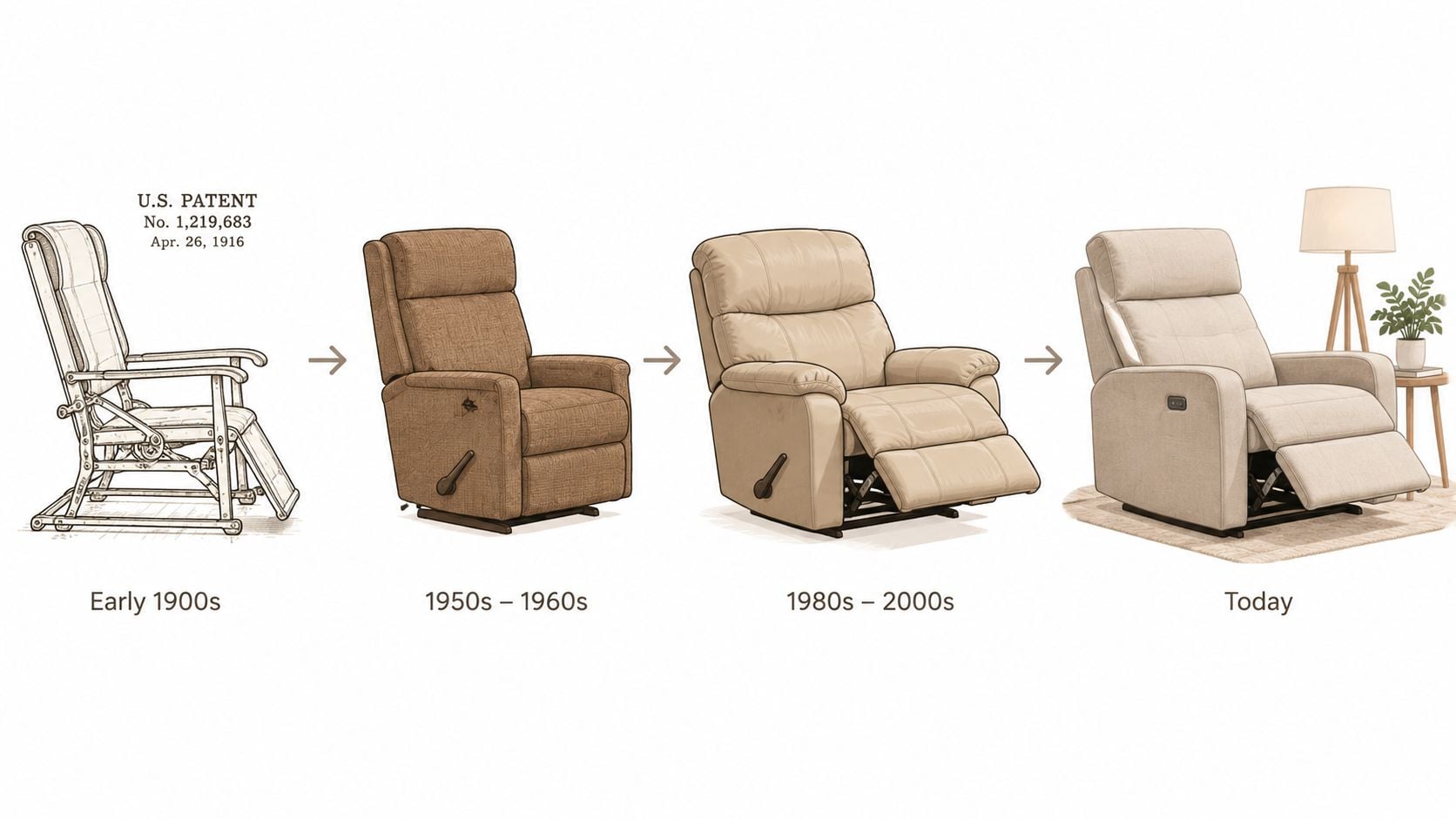
A recliner is designed around movement, so a stationary showroom pose tells only part of the story. Recliners became a mainstream furniture category in the United States during the 1960s and 1970s, after models began to resemble contemporary easy chairs rather than older, heavily mechanical seats. A 1975 New York Times report described the category's rise from 1960 and recorded approximately 3.8 million chairs sold in 1973, with sales totaling about $250.8 million and retail prices ranging from $125 to $800. The historical account of recliner growth helps explain the category's lasting focus on comfort in motion.
That history has a direct lesson for shoppers. The chair's upholstery can look perfect while the mechanism places the head, knees, and lumbar region in the wrong relationship. Testing positions exposes that problem before delivery.
A five-minute showroom sequence
A shopper should complete the following sequence without rushing:
- Start upright. The lower back should feel filled without the lumbar cushion pushing the torso forward. The shoulders should remain relaxed, and the arms should rest without shrugging.
- Move to a television angle. A reclined angle around 110–120 degrees gives the shopper a useful middle position to evaluate. The headrest should support the neck and back of the head instead of allowing the head to fall backward.
- Reach full recline. The legs should extend without pressure from the footrest mechanism. The head should remain cradled, and the sitter shouldn't need to add a pillow to keep the neck aligned.
- Return upright. The sitter should exit the chair in the same way it will be used at home. A difficult return motion is a warning, especially for anyone with reduced leg or upper-body strength.
The test should include the actual habits that matter. A reader can hold a book, a television viewer can look straight ahead, and a sleeper can close the eyes for several minutes to assess head and lumbar support. A swivel or rocker should be operated as well if those movements are part of the intended use.
Geometry comes before appearance
A recliner's style matters after the body approves its geometry. A beautiful chair that causes the head to tilt, the knees to lift, or the lower back to collapse won't become comfortable through attractive stitching. Skipping the movement test is how a chair becomes an expensive object that looks right but rarely gets used.
The buyer should also compare upright and extended dimensions before approving the purchase. Standard models commonly need 12–18 inches of wall clearance, while wall-hugger designs may need only 4–6 inches, according to recliner placement guidance. The fully open length matters just as much as the closed footprint because the footrest can reach into a walkway or collide with a coffee table.
Fabric, Frame, and the Details That Decide Longevity
Once a recliner passes the body and movement tests, construction becomes the deciding factor. The best upholstery depends on the household. Pet owners and parents often need a tight performance weave or top-grain leather that can handle repeated contact and cleaning. Hot sleepers may prefer breathable cloth. Bonded leather deserves caution because heavy flexing on the seat and arms can expose its limitations.
A shopper can perform three quick checks before asking about price.
Three upholstery checks
- Stretch recovery: Press and release the seat fabric. The material should recover without a loose, permanently distorted area.
- Seam density: Inspect the stitching around the arms, seat edge, and footrest. Closely spaced, even stitches generally indicate more deliberate construction than loose or irregular seams.
- Leather surface: Run a fingernail lightly across an inconspicuous area. The surface shouldn't flake, peel, or show an artificial film lifting from the material.
Pet households need more than stain resistance. Claws, shedding, moisture, and repeated cleaning affect the useful life of upholstery, so a practical guide for pet owners can help a household match fabric performance to the animals sharing the chair.
The frame should feel stable when the sitter shifts weight or the footrest opens. Kiln-dried hardwood, appropriately graded plywood, and metal reinforcement at stress points can all support a durable structure. The important question isn't whether a salesperson uses the word “wood.” It is whether the frame resists twisting and whether the mechanism attaches to a properly reinforced base.
What sits underneath
Joint construction matters. Doweled, glued, and screwed connections generally provide a stronger foundation than staples alone. Under the seat, the shopper should ask what spring system supports the cushion and whether the foam holds its shape after repeated compression. A cushion that feels soft in the first minute may flatten quickly if the internal support is weak.
Warranty language can reveal more than promotional descriptions. The buyer should separate coverage for the frame, reclining mechanism, motor, upholstery, and labor. A long frame warranty doesn't necessarily protect the motor or fabric, so each component should be reviewed independently.
Construction check: A recliner should feel stable at the frame, controlled at the mechanism, and resilient at the cushion. Softness alone isn't proof of quality.
A household seeking durable upholstered seating can review durable upholstered furniture options while comparing the construction details in person. The right finish still depends on maintenance habits, sunlight exposure, pets, children, and how many hours the chair receives each day.
Recliners for Seniors, Sleepers, and Small Spaces
The same recliner checklist changes significantly according to the sitter's routine. A senior may need a controlled standing motion, a sleeper may need genuine support in a nearly flat position, and a small-space resident may need a compact footprint that leaves the walkway usable. Treating all three shoppers alike leads to expensive compromises.
| Feature | Seniors | Sleepers | Small Spaces |
|---|---|---|---|
| Main priority | Easy entry and exit with stable support | Sustained comfort across long periods | Compact clearance and preserved traffic flow |
| Mechanism | Lift or easy-operating power | Power with precise positioning | Wall-hugger, manual, or compact power model |
| Worth paying for | Battery backup, easy-grip remote, lumbar support | Lay-flat geometry, adjustable headrest, durable cushioning | Narrow arms, wall-saving movement, swivel or glider function |
| Usually skippable | Decorative motion that doesn't help standing | Features unrelated to sleep posture | Oversized cushions and unnecessary bulk |
The senior buyer
A senior shopper should begin with the exit motion, not the fabric. The seat should support the legs without forcing a deep squat, and the lift function should raise the body steadily rather than tipping it abruptly. An easy-grip remote with large, distinct controls is more valuable than a complicated control panel with features that rarely get used.
Battery backup deserves serious attention when a power lift chair is the primary seat. It can help the chair return to a safe position during a power interruption, although the exact backup system and operating limits should be confirmed with the retailer. The chair also needs enough clearance to rise without striking a table, wall, or nearby furniture.
Supportive lumbar shaping remains essential. A chair that helps the sitter stand but leaves the lower back unsupported during daily use solves only half the problem. Anyone managing persistent back discomfort should also seek appropriate medical guidance, including this imaging guide for back pain, rather than treating a recliner as a substitute for evaluation.
The sleeper
A sleeper needs more than a padded footrest. The chair should approach a completely flat resting geometry, keep the head aligned, and maintain support when the body remains in place for an extended period. An articulating headrest can help the sitter read or watch television before sleep, while mattress-grade cushioning can help resist the feeling of a compressed seat.
USB charging is convenient when the chair is used as a sleep station, but it shouldn't outrank posture, cushion resilience, or a reliable mechanism. A charging port can't correct a seat that tilts the pelvis or leaves the neck unsupported. The priority order should be geometry, cushioning, head support, then convenience features.
The small-space dweller
Small rooms require planning in three directions. The chair needs to fit its upright footprint, open without striking the wall, and leave a clear path around the footrest. Wall-hugger designs can reduce the rear clearance requirement to 4–6 inches, while conventional models often need 12–18 inches, as summarized in small wall-hugger recliner guidance.
Narrow arms can preserve usable width without reducing the seat excessively. A swivel-glider can help the sitter turn toward conversation or a screen, but the rotating base still needs room to move freely. A compact loveseat configuration may work when two people share the space, provided both users can pass the body-fit test rather than accepting a cramped compromise.
The strongest recommendation for all three lifestyles is the same: pay for the feature that removes a real obstacle. Skip massage, lighting, USB ports, or decorative motion when the basic seat height, depth, support, and exit path remain wrong.
Your Recliner Checklist and Next Steps
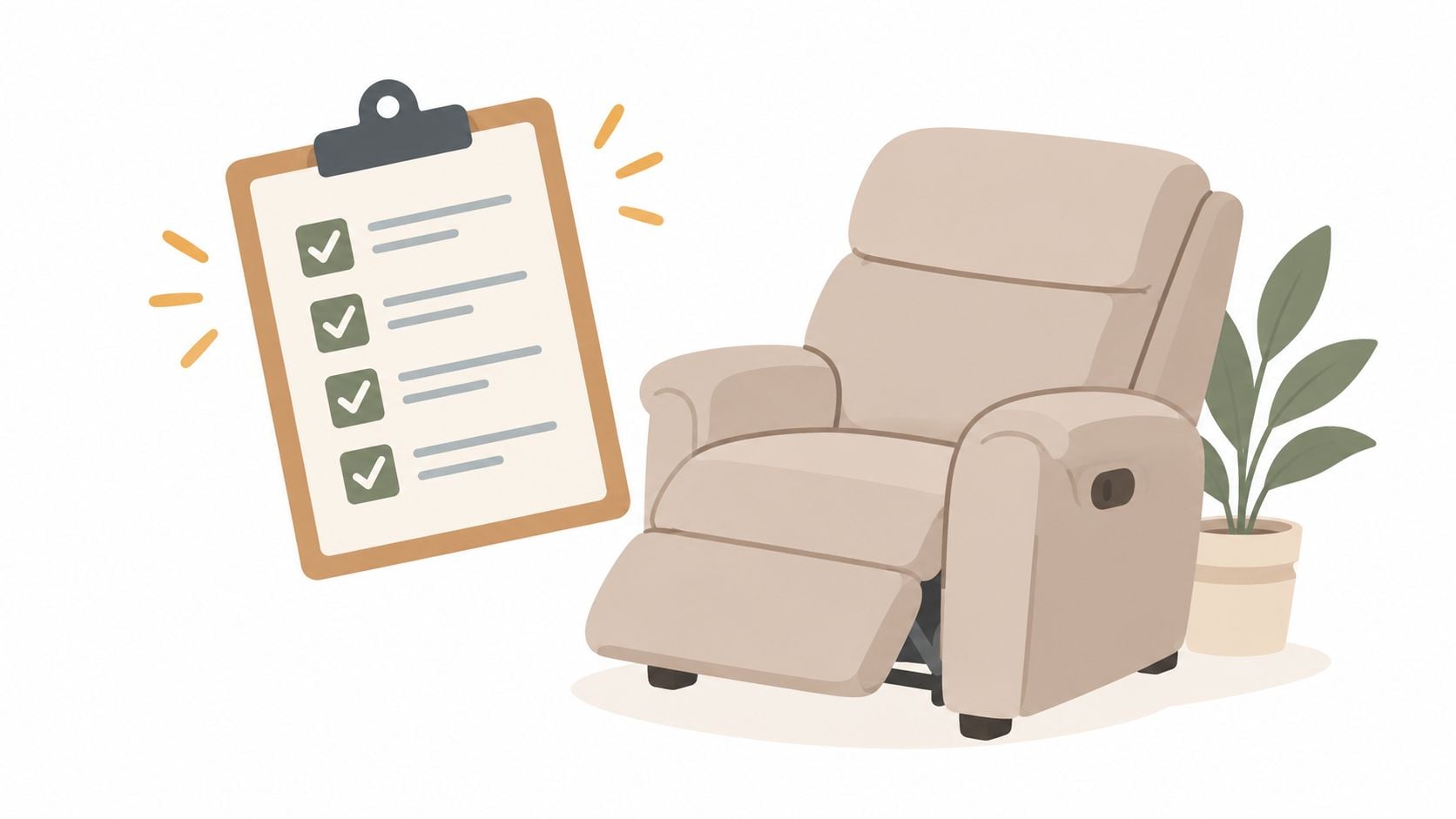
A successful purchase is easier when the decision happens in the right order. The checklist below keeps a shopper from being distracted by upholstery before the chair has proved its fit.
Before shopping
- Record body measurements: Note seat height needs, thigh length, back height, and the clearance required behind the knees.
- Measure the room: Record wall space, doorway width, walkway clearance, and the chair's fully extended footprint.
- Identify the user: Decide whether the primary sitter needs manual simplicity, power adjustment, or lift assistance.
- Set the daily routine: Separate occasional lounging from reading, sleeping, television viewing, or repeated standing.
- Choose practical materials: Consider pets, children, heat, spills, sunlight, and cleaning habits before selecting fabric or leather.
In the showroom
- Sit fully back: Keep both feet flat and check the knee angle before testing the recline.
- Check the lower back: The lumbar area should feel supported without forcing the torso forward.
- Test every position: Move upright, to a viewing angle, to full recline, and back to standing.
- Operate the controls: The primary user should handle the lever, remote, or lift control without assistance.
- Inspect construction: Examine stitching, cushion recovery, frame stability, spring support, joints, and warranty categories.
- Test the room logic: Confirm that the chair's open position won't block the main traffic route or strike nearby furniture.
At the final decision
The primary sitter should approve the chair, not the person decorating the room. If a chair looks perfect but fails the seat-depth, head-support, or exit test, it should be rejected. The most common mistake remains buying a chair that fits the floor plan while ignoring the body inside it.
A higher-end power or lift model can be a sensible investment when it solves a daily mobility or comfort need. Willis's Design Center can help coordinate custom upholstery and room planning, while flexible financing options can make a more expensive mechanism easier to consider within a household budget. For shoppers looking for reduced prices on quality pieces, the Willis Outlet is another practical route, especially when the priority is value rather than a custom finish.
A recliner is a multi-year comfort purchase, so delivery deserves the same attention as selection. A white-glove service that inspects, assembles, and positions the chair can reduce avoidable placement problems, and white-glove delivery information can help shoppers plan the final step.
Willis Furniture & Mattress offers in-person recliner testing, custom upholstery support through its Design Center, flexible financing, and delivery assistance for shoppers matching a chair to their body and home. Shoppers in Virginia Beach and Hampton Roads can visit Willis Furniture & Mattress to compare mechanisms, test positions, and choose a recliner built around real daily comfort.


