
Modern Coastal Living Room: An Expert Guide for 2026


A lot of homeowners in Virginia Beach start in the same place. They want a living room that feels light, calm, and tied to the coast, but they don't want it to look like a vacation rental filled with anchors, rope knots, and souvenir-shop seashells. They want polish, comfort, and a sense of ease that still feels grown-up.
That's where the modern coastal living room stands apart. The best versions don't imitate the beach. They borrow its atmosphere. Soft daylight, relaxed materials, breathable fabrics, and colors that feel pulled from sand, dune grass, weathered wood, and late-evening sky all work together to create a room that feels settled rather than staged.
Table of Contents
- Beyond the Beach House A New Vision for Coastal Living
- Defining Your Serene Color Foundation
- Selecting Furniture with Clean Lines and Lasting Comfort
- Weaving in Natural Materials and Textures
- Accessorizing Rugs Lighting and Final Touches
- Layout and Bringing Your Vision to Life
Beyond the Beach House A New Vision for Coastal Living
You can see the challenge in a lot of Virginia Beach homes. The light is beautiful, the setting feels relaxed, and the room still comes across as heavy, cold, or overly themed. A bulky sofa, bright nautical accents, and flat gray tones can pull the space away from the calm, polished mood homeowners want.
A refined modern coastal living room starts with a different goal. Instead of decorating around shells, rope, and obvious beach references, the room should reflect the comfort of coastal life through proportion, texture, and color restraint. Warm neutrals, sunset-influenced accents, and tactile materials create that effect with much more staying power.
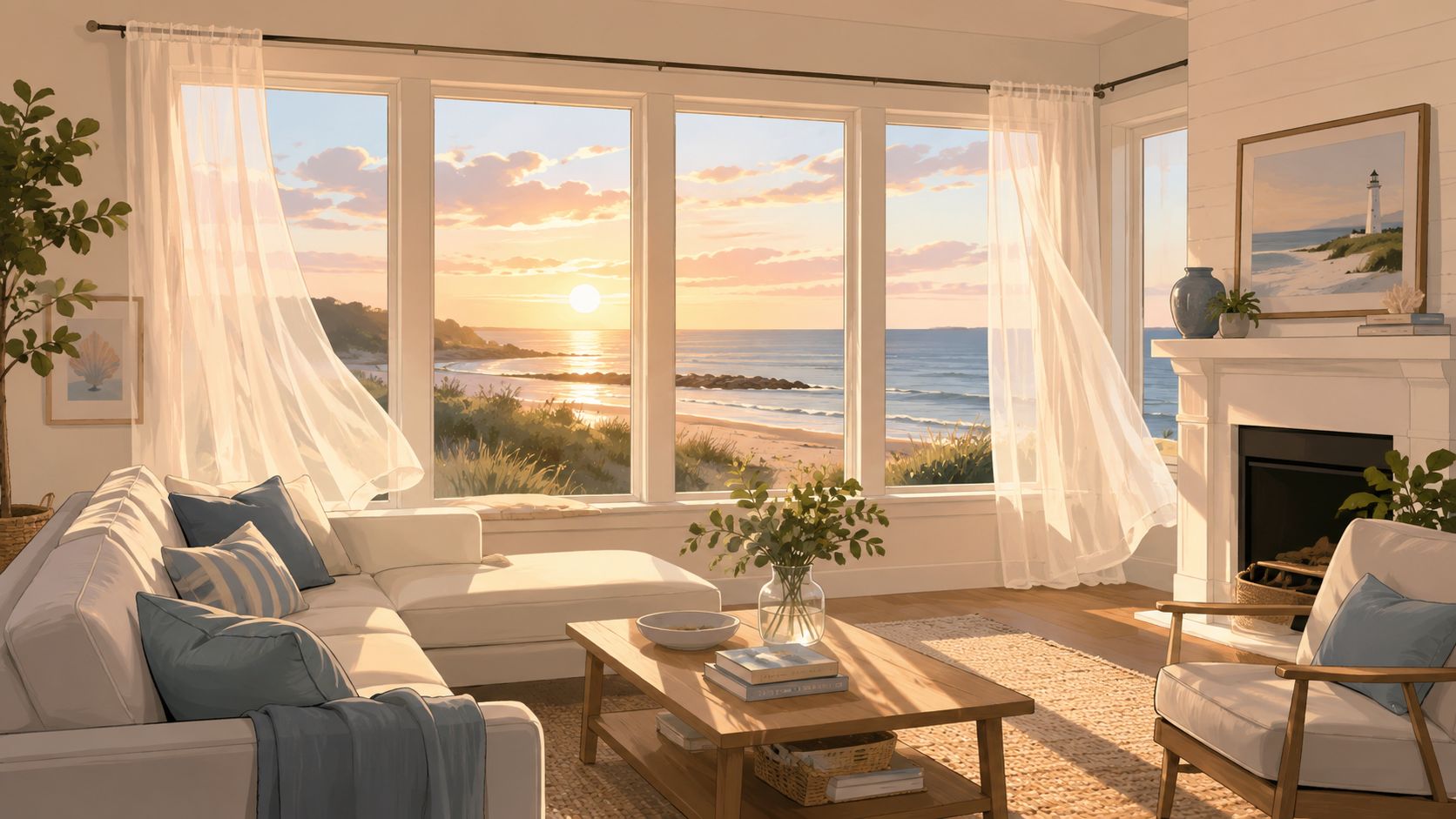
The easiest way to understand the shift is to compare it to tailoring. A themed coastal room can feel like a costume. A refined coastal room feels like well-made clothing in the right fabric and fit. The same idea applies to furnishings. Cleaner silhouettes, warmer base tones, and fewer but better accents give the room a quiet confidence that reads current without feeling stark.
That approach also tends to age better. Rooms built around American-made upholstery, natural fibers, and durable finishes usually hold up more gracefully to real family life, salty air, and changing tastes than trend-driven spaces filled with novelty pieces. For homeowners who want that balance of style and practicality, our team at Willis Furniture can help source custom options that fit your room, your comfort preferences, and your budget, including financing that makes a full-room update more manageable.
One practical adjustment often makes an immediate difference. If an older sofa still works in scale and comfort, refined slipcover styling can soften its profile and move it closer to this look. That is one reason this guide to contemporary coastal sofa covers can be a useful reference.
For a broader look at how this style translates into everyday homes, these coastal home decorating ideas from Willis Furniture show how to create a room that feels collected, welcoming, and distinctly local rather than staged. The best modern coastal spaces do not copy the beach. They borrow its ease, its warmth, and its natural texture, then shape those qualities into a living room that feels polished enough to last.
Defining Your Serene Color Foundation
Color choices often define a room's success, either enhancing it or making it feel clichéd. The old shortcut was blue and white. The newer, more refined approach is warmer and more layered.
Start with the landscape, not the theme
The strongest modern coastal living room usually starts with refined neutrals. According to this 2026 coastal decor outlook, warm shades such as sand, mushroom, ochre, and warm taupe are replacing the cool grays that defined many rooms in the 2010s. That shift matters because warm neutrals reflect coastal light in a softer way and avoid the sterile feeling that cooler palettes can create.
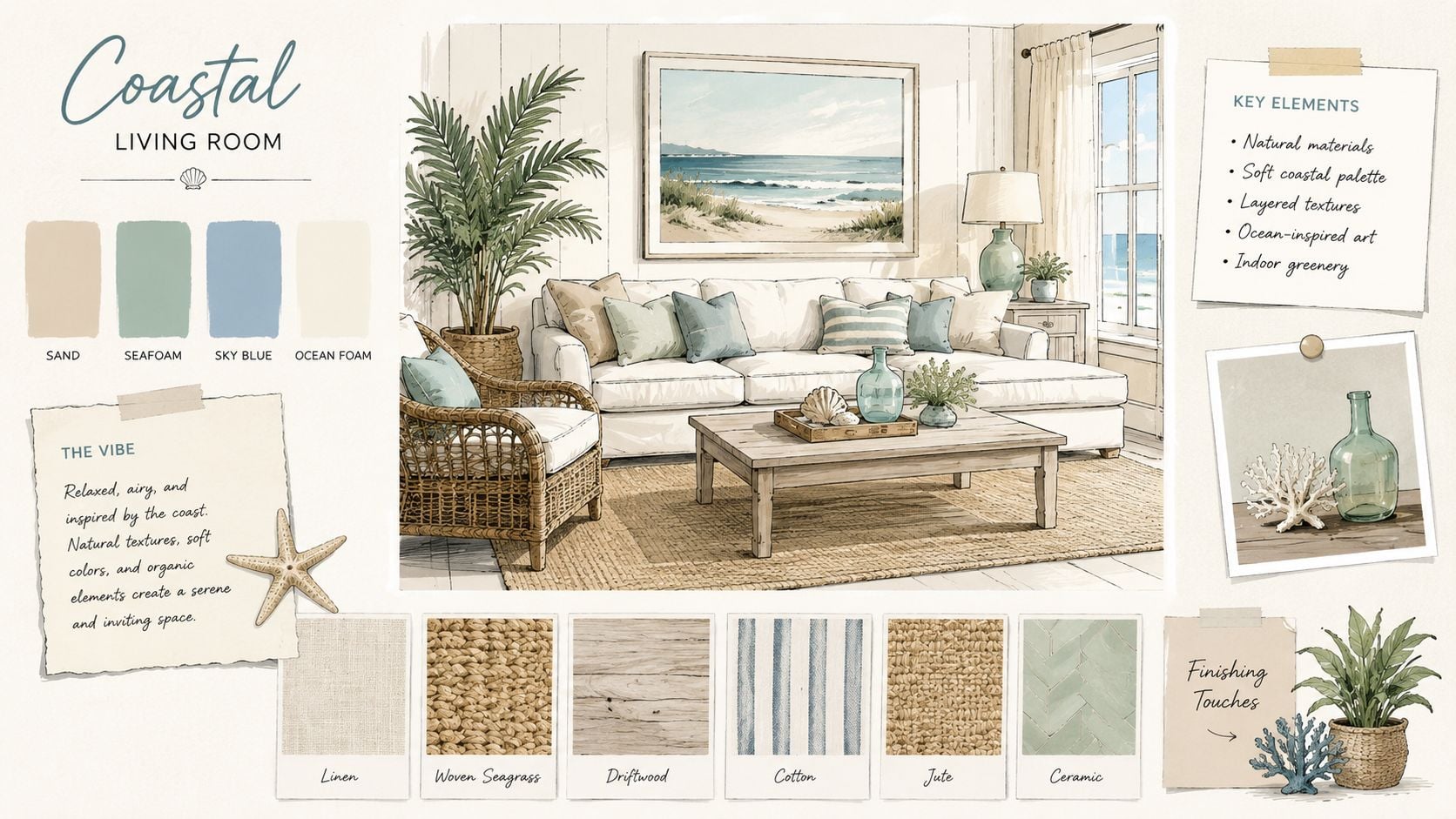
A good way to think about it is this:
- Walls and large upholstery should carry the quietest tones. Warm taupe, sandy beige, mushroom, and soft ivory give the room a stable base.
- Secondary pieces can bring in sea-influenced notes such as pale blue-green or a washed blue, but those shades work best as support rather than the entire story.
- Accent color should come from the shoreline at sunset. Dusty coral, muted salmon, clay, or terracotta often feel fresher than bright navy or obvious turquoise.
That last point trips people up. They worry that a coastal room without a lot of blue won't read as coastal. In practice, the opposite is often true. Warm neutrals and sunset hues usually create a room that feels more mature, less predictable, and more connected to the full coastal environment.
A simple way to balance the palette
A useful decision framework is to assign each color a role.
| Palette role | What it should do | Good examples |
|---|---|---|
| Base | Calm the room and reflect light | Sand, mushroom, warm taupe, soft ivory |
| Bridge | Connect furniture and textiles | Faded sea glass, dune green, pale blue |
| Accent | Add life without clutter | Salmon, muted coral, soft terracotta |
Practical rule: If every surface is trying to say “beach,” the room loses the calm that makes coastal style appealing.
Flooring also changes how all of these colors read. Lighter, sun-washed wood helps warm neutrals feel airy rather than muddy. Homeowners exploring that direction often find it useful to review examples of whitewash wood flooring in Sea Cliff, especially when trying to visualize how pale floors interact with soft upholstery and natural light. For readers trying to pull together paint, upholstery, rug, and wood tones as one composition, this expert's guide to the perfect color palette offers a helpful planning reference.
Selecting Furniture with Clean Lines and Lasting Comfort
A refined coastal room is defined less by what's added than by what's avoided. Too much bulk, too much ornament, and too much visual weight will flatten the entire effect.
Why silhouette matters first
The furniture should look easy to live with before anyone sits down. In modern coastal design, this design reference notes that the style favors clean lines over traditional forms like rolled arms or skirted sofas, and it highlights slip-covered sofas as a lasting staple because they offer a soft, lived-in look and washable practicality for high-traffic coastal homes.
That guidance points to a clear standard. The main seating should have a crisp profile. Track arms, simple bench cushions, exposed wood, and uncluttered forms fit naturally. Deep rolled arms, ornate carving, and heavy skirts usually pull the room toward a more traditional or themed interpretation.

A quick comparison helps:
- Choose this look: low-profile sofa, sleek swivel chair, light wood cocktail table.
- Use caution with this look: overstuffed sectional, dark bulky recliner, heavily carved end tables.
- Best middle ground: one generous comfort piece paired with cleaner supporting shapes.
Where comfort and longevity meet
A lot of shoppers assume “clean-lined” means stiff or delicate. It doesn't. The most successful rooms combine a neat silhouette with upholstery that invites daily use. A washable slipcover, a performance fabric in a linen-like weave, or a chair with a relaxed but controlled shape all support the style without sacrificing comfort.
This is also where quality matters. A living room's core pieces carry the visual identity of the room every day. If the sofa sags quickly or the frame feels oversized for the space, the room won't hold the look for long. Better-built pieces tend to age more gracefully, especially in homes where sunlight, humidity, children, or frequent entertaining put furniture to work.
The room feels coastal because the furniture lets light and space move around it.
For shoppers trying to judge proportion before they buy, this guide to choosing living room furniture is useful for thinking through scale, arm height, seat depth, and how each piece contributes to the overall visual weight of the room.
Weaving in Natural Materials and Textures
A modern coastal room starts to feel refined when the surfaces do more than match. Color sets the mood, but texture gives the room its pulse. In practice, that means pairing quiet finishes with materials that have grain, weave, softness, and irregularity, much like adding bass and percussion to a calm melody.
A warm neutral room especially needs that mix. If the sofa, walls, rug, and tables all read as smooth and pale, the space can feel washed out instead of serene. Texture solves that problem without asking you to add busy patterns or obvious beach motifs.
A simple formula helps. Pair one refined surface with one organic surface nearby. Linen works well beside cane. Matte ceramic looks stronger on a light oak table. A structured sofa gains character when it sits over a woven foundation.
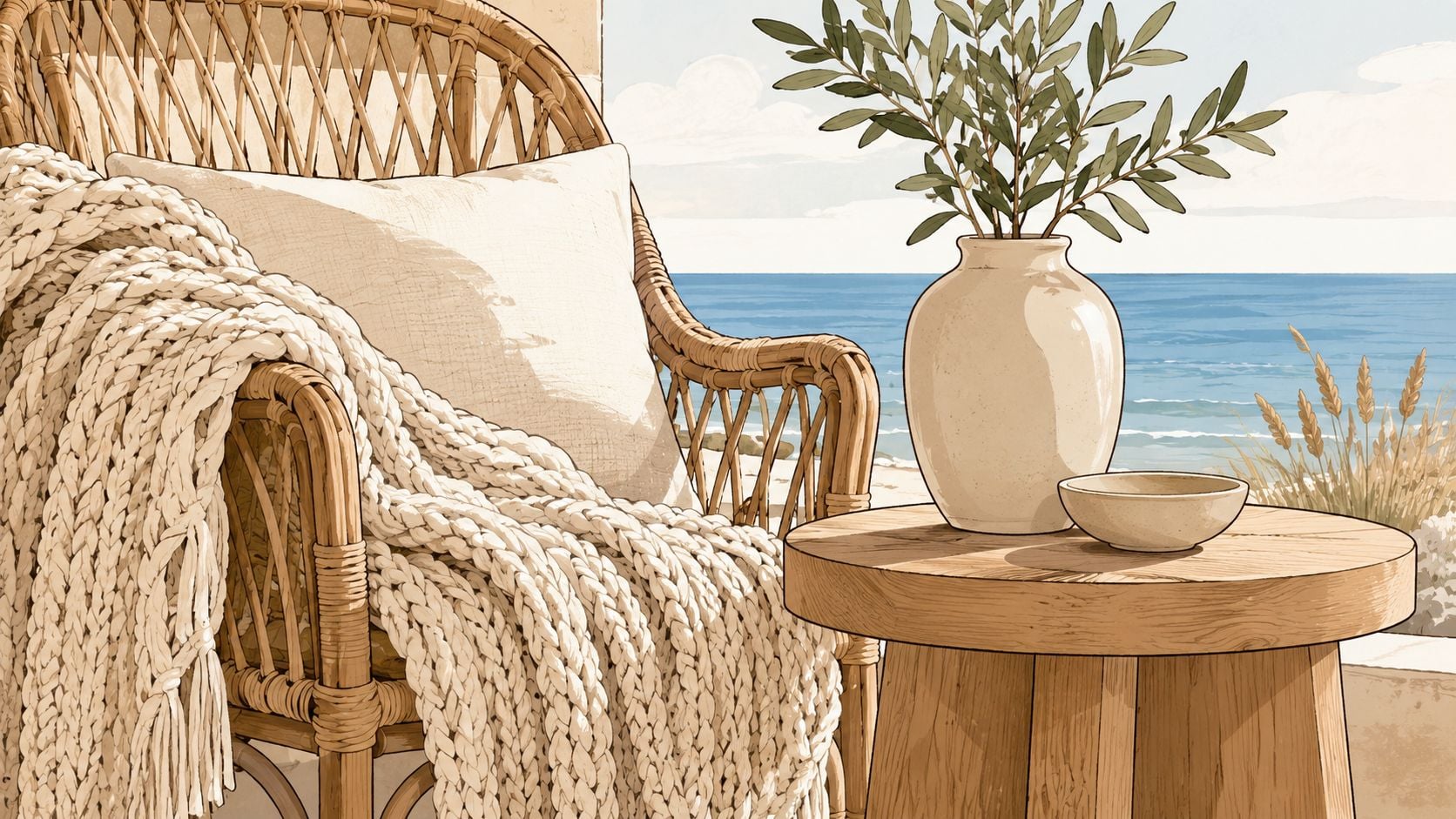
The most successful combinations usually look like this:
| Refined surface | Organic partner | What the pairing adds |
|---|---|---|
| Linen or performance-linen sofa | Jute, sisal, or wool-blend rug | Warmth under clean upholstery |
| Light oak or maple table | Hand-thrown pottery or woven tray | Variation so wood does not feel flat |
| Cotton drapery | Cane, rattan, or woven leather chair | Structure against softness |
| Smooth lamp base | Nubby throw or seagrass basket | Depth in a quiet corner |
The floor often carries more of this work than homeowners expect. A rug is not only a comfort layer. It is one of the main tools for introducing natural texture at a large scale, which is why a living room rug size guide is helpful before you commit to material, shape, and placement.
Material choice also affects how well the room lives over time, especially in Virginia Beach where light, humidity, and daily traffic all shape how furniture ages. Natural woods with visible grain, woven fibers, washable textiles, and low-odor finishes tend to support the relaxed but polished look this style needs. The National Association of Home Builders notes that indoor air quality and low-emission materials are a growing focus in residential design, which supports choosing lower-VOC finishes and better-made furnishings for frequently used rooms, as outlined in this overview of healthy home building practices.
At Willis Furniture, this is often the point where custom ordering makes the room better. You may love the shape of a sofa but need a warmer fabric. You may want the texture of wood but in a finish that reads more sun-washed oak than gray driftwood. Those decisions are what keep a modern coastal room from slipping into cliché.
Use this checklist to keep the mix polished:
- For upholstery: linen-look performance fabrics, cotton blends, and textured neutrals with a soft hand
- For wood tones: light oak, maple, or gently weathered finishes with visible grain
- For accents: matte ceramics, woven baskets, cane panels, rattan details, and seeded glass
- For color accents: rust, clay, sand, and muted sunset tones instead of bright nautical blues
- For long-term comfort: materials that can handle sunlight, guests, and everyday use without looking tired too quickly
Restraint matters here. Too many rough finishes can make the room feel dry and unfinished. Too many sleek ones can make it feel generic. The goal is a balanced mix that feels collected, warm, and luxurious, which is exactly where American-made quality tends to show its value. Better materials hold their shape, wear more gracefully, and give you a room that still feels intentional years later.
Accessorizing Rugs Lighting and Final Touches
The finishing layer is where a modern coastal living room either becomes elegant or slips into theme decor. A shell on every surface, a bright blue throw, or a shiny lamp base can pull the room back toward beach-house cliché. A better approach is quieter and more confident. Use pieces that add warmth, shape, and texture without asking for constant attention.
Begin from the floor up
A rug acts like the room's visual anchor. It gathers the seating area, softens hard flooring, and helps warm neutrals feel intentional instead of flat. In a refined coastal space, that usually means natural fiber rugs, wool blends, or low-pile styles with a soft pattern in sand, oat, clay, or faded sunset tones.
Texture matters as much as color. If the sofa is smooth and the tables are clean-lined, the rug can supply the touch of variation that keeps the room from feeling sterile. If you already have a lot of woven material in the room, a quieter rug may create better balance. The goal is contrast with control.
Size is the detail homeowners misjudge most often. A rug that is too small makes good furniture look as if it is floating apart instead of belonging together. Our rug size guide for living spaces walks through the proportions that help a seating group feel settled and complete.
Let lighting add atmosphere, not glare
Lighting should soften the room by day and warm it by night. That sounds simple, but it helps to treat lighting in layers. Overhead fixtures provide structure, table lamps add glow at eye level, and a floor lamp can brighten a reading corner without making the room feel crowded.
For this style, materials do a lot of the work. Woven shades, linen lamp covers, ceramic bases, aged brass, and matte finishes all support a more refined coastal look than chrome or high-gloss surfaces. Sunset-toned bulbs are not the answer. Warm white light is. It keeps whites creamy, woods richer, and neutral upholstery more inviting.
At Willis Furniture, we often help clients pair lighting with upholstery and rug choices so the room reads as one composition. That is especially helpful if you are custom ordering a sofa or building a space in phases. A strong lamp or accent table can hold the design together while larger pieces are on order, and financing can make it easier to complete the room with intention instead of settling for quick fillers.
Edit with a designer's eye
Accessories should feel collected, not crowded. Start with fewer objects than you think you need, then add only what gives the room a clear purpose.
A disciplined finishing approach usually looks like this:
- Choose one sculptural light fixture and one supporting lamp. Different heights keep the room from feeling flat.
- Use art that evokes the natural world through tone and movement. Abstract horizons, soft washes, and organic forms feel more current than literal coastal scenes.
- Bring in one or two living elements. A branch, olive tree, or simple greenery adds life without becoming a theme.
- Keep tabletop styling restrained. A bowl, a book stack, and a ceramic object often look stronger than many small accessories.
- Repeat your accent colors sparingly. A rust pillow, clay-toned vase, or muted coral artwork can echo Virginia Beach sunsets without overpowering the room.
Budget-conscious decorating can still look polished when each piece earns its place. One well-scaled lamp, a quality rug, or a thoughtfully framed print will do more for the room than a cluster of impulse buys. That is also where American-made quality tends to show its value. Better materials, cleaner construction, and more thoughtful finishes give the room a settled look that lasts.
Layout and Bringing Your Vision to Life
A beautiful modern coastal living room can still feel unsettled if the layout never resolves. Color and texture set the mood, but placement determines whether the room feels calm, refined, and easy to live in.
Layout works like tailoring. Even excellent materials look off if the fit is wrong.
Build the room around real movement
Start with the path people use. In many Virginia Beach homes, the living room connects to a kitchen, hallway, or view toward the windows. Those routes should stay clear and natural, without forcing anyone to angle around a chair arm or squeeze past a bulky table. A well-designed coastal room feels open because movement is easy, not because the room is half empty.
That often means pulling furniture away from the walls. A sofa that floats a few feet into the room can define the main seating area far better than one pushed to the perimeter. Two chairs across from it create conversation. A console behind the sofa can add structure and a finished look without making the space feel heavy.
The goal is order with softness.
Choose one visual leader
Every strong room needs a focal point. Sometimes it is the sofa. Sometimes it is a fireplace, a large window, or a piece of art with warm sunset tones. What matters is clarity. If the eye lands on three different "main" moments at once, the room starts to feel busy, even when the furniture itself is simple.
This is especially important in modern coastal design that avoids obvious beach themes. Instead of filling the room with nautical signals, let shape, balance, and material quality carry the style. Clean-lined seating, a properly scaled rug, and a few textured surfaces in oak, linen, or woven fibers often create a more polished coastal effect than themed décor ever could.
A quick planning check helps:
| Layout question | Strong answer | Weak answer |
|---|---|---|
| What anchors the room? | One clear focal point | Several competing focal points |
| How is seating arranged? | Grouped for conversation and comfort | Spread out based only on wall space |
| How does the room feel to walk through? | Open, direct paths | Tight turns and visual clutter |
Use scale to create calm
Many layout problems are really scale problems. A rug that is too small makes every piece feel disconnected. A coffee table that is too large stops circulation. Seating that is too petite can look nervous in a larger family room, while oversized pieces can crowd a modest footprint.
That is why floor planning matters before you buy the final pieces. Custom orders can solve common fit issues, especially if you need a sofa with a specific depth, a sectional sized for an open-concept room, or chairs that keep sightlines light near the windows. For more complex spaces, this guide to arranging furniture in an open-concept living space offers helpful starting points.
Turn the plan into a finished room
Once the layout is working, the room usually tells you what it still needs. It may need a longer sofa, a round table to soften straight lines, or a warmer accent chair to echo the clay, sand, and sunset tones used elsewhere in the space. It may also need less than you think. Fewer, better pieces usually create the refined coastal look homeowners want.
At Willis Furniture & Mattress, our Virginia Beach Design Center helps translate those decisions into a room that fits your home and your life. American-made upholstery, custom options, and in-store design guidance make it easier to choose lasting pieces instead of temporary placeholders. Financing can also help you complete the room thoughtfully, so the layout, comfort, and quality all work together from the start.


