
Shop the Best Wingback Upholstered Bed Styles in 2026


You're probably standing in the middle of a bedroom that feels almost finished. The walls are painted. The rug is down. The nightstands are close enough. But the bed still isn't right, and because it's the largest piece in the room, everything around it feels unsettled.
That's usually the moment a wingback upholstered bed starts to make sense. It gives the room architecture, softness, and presence all at once. It can lean refined and classic, relaxed and coastal, or richly traditional depending on the fabric, silhouette, and scale. The difference is choosing one that doesn't just look good in a photo, but truly fits your room, your mattress, and the way you live.
The Timeless Allure of the Wingback Bed
A well-designed bedroom needs a focal point that feels grounded. In many homes, that's the bed. When the frame has height, texture, and a shape that gently encloses the sleeping area, the room starts to feel intentional rather than assembled.

The wingback upholstered bed has earned that role for centuries. Its roots trace to 17th-century England during the late Stuart period around 1660-1714, and a notable milestone came in 1666, when Samuel Pepys recorded buying a “new-fashioned” upholstered bed with wings for £12 10s in his diary, a detail cited on this RealRooms Evie bed listing. That history matters because it explains why the style still works. It was designed to feel protective, substantial, and refined.
Why it still feels current
The best wingback beds bridge old-world presence and modern comfort. The wings frame the pillows, the upholstery softens the room, and the taller headboard gives you visual height without the heaviness of a full wood canopy.
A few reasons clients continue to gravitate toward this silhouette:
- It anchors the room: A wingback headboard gives the eye a natural stopping point.
- It softens hard surfaces: Bedrooms often have wood floors, painted walls, and straight-lined case goods. Upholstery balances that.
- It adapts easily: Tufted velvet reads formal. A clean linen-look fabric reads casual and coastal.
- It supports real living: If you read, work, or linger in bed on weekends, the upholstered surround feels more comfortable than a hard headboard.
The strongest bedroom designs usually start with the bed, not the accessories.
If you're comparing silhouettes and trying to sort out what feels classic versus what feels dated, it helps to look at a broader mix of best bedroom furniture brands and how different makers interpret proportion, tailoring, and finish details.
Understanding the Anatomy of a Wingback Bed
Not every upholstered bed is a wingback. The distinction comes down to a few structural and visual elements, and once you know what to look for, shopping gets much easier.

Headboard and wings
The headboard is the dominant feature. On a wingback upholstered bed, it's usually taller and more shaped than a basic panel bed. The wings extend forward from each side of the headboard, creating a slight sense of enclosure.
Think of those wings the way you'd think about the sides of a comfortable lounge chair. They don't close you in. They frame the experience and make the bed feel more finished.
When reviewing silhouettes, pay attention to how the wings are handled:
- Narrow tapered wings feel cleaner and more refined.
- Broader wings create a stronger statement and can feel more traditional.
- Curved wings soften the room.
- Straight wings look more architectural and modern.
Upholstery and frame
The upholstery covers either just the headboard or the full visible frame. A fully upholstered frame gives you a more cohesive look, especially if you want the bed to feel substantial from every angle.
The frame under that fabric matters just as much as the visible finish. A wingback bed that looks elegant but shifts, creaks, or lacks proper support won't feel luxurious for long.
Here's the basic anatomy worth knowing:
- Headboard with wings: The visual focal point and defining feature.
- Side rails and footboard: These shape the bed's profile and determine how much of the mattress is concealed.
- Slats or platform support: These carry the mattress and affect feel, stability, and whether a box spring is needed.
- Feet or legs: These influence both style and cleaning access underneath.
Practical rule: The more dramatic the headboard, the more disciplined the rest of the room should be. Let the bed be the statement.
Why construction details change the experience
Two beds can look nearly identical online and perform very differently in a home. One may have a generous, well-padded headboard and cleanly integrated wings. Another may have thin foam, shallow rails, or weak center support.
That's why it helps to understand what an upholstered bed is beyond surface appearance. Once you know how the visible design connects to the hidden structure, you can judge whether the bed is built for daily use or primarily styled for a catalog page.
Choosing Your Frame and Fabric
A wingback upholstered bed should do two things at once. It should feel beautiful when you walk into the room, and it should stay solid after years of use. That comes down to the frame inside and the fabric outside.
What to look for inside the frame
A stronger build often comes from a mix of materials rather than a single one. According to this engineered wingback platform bed listing, wingback upholstered beds commonly combine MDF, solid wood, and LVL, with a typical maximum weight recommendation of 850 lbs. That same source notes why the combination works. MDF helps resist warping in humid coastal climates like Virginia Beach, while LVL improves tensile strength.
That trade-off is practical, not glamorous. People often hear “engineered wood” and assume “cheap.” In reality, a thoughtful hybrid structure can outperform a poorly made all-wood frame, especially in a region where humidity can challenge stability over time.
What works in fabric, and what doesn't
Fabric choice changes both the look and the maintenance routine. Some materials hide wear gracefully. Others photograph beautifully but demand more care than most households want to give.
| Fabric Type | Best For | Care Level | Willis Design Center Note |
|---|---|---|---|
| Velvet | Formal rooms, rich color, dramatic headboards | Moderate | Beautiful depth and softness. Best when you want a more tailored, elevated mood. |
| Linen-look upholstery | Coastal, casual traditional, lighter palettes | Moderate | A strong choice for airy bedrooms, especially when you want texture without heaviness. |
| Bouclé | Soft, sculptural styling | Higher | Visually striking, but it needs more thought if you have pets or want an easy-clean surface. |
| Performance fabric | Busy households, frequent use, easier upkeep | Lower | Often the safest all-around custom option when longevity matters as much as style. |
A few real-world observations matter here:
- Velvet gives a wingback bed presence fast. It's excellent for moody color, channel tufting, or traditional bedrooms.
- Linen-look fabrics are forgiving in coastal and transitional spaces. They feel relaxed without looking plain.
- Bouclé adds texture, but not every household will enjoy living with it long term.
- Performance fabrics tend to be the practical winner if you want softness without constant worry.
Order fabric samples before committing. A color that looks calm on a screen can feel too cool, too yellow, or too flat once it's in your actual bedroom light.
If you want to compare fiber feel, weave, and cleanability more closely, this guide on types of fabric for upholstery is useful as a starting point.
Finding the Perfect Fit for Your Room and Mattress
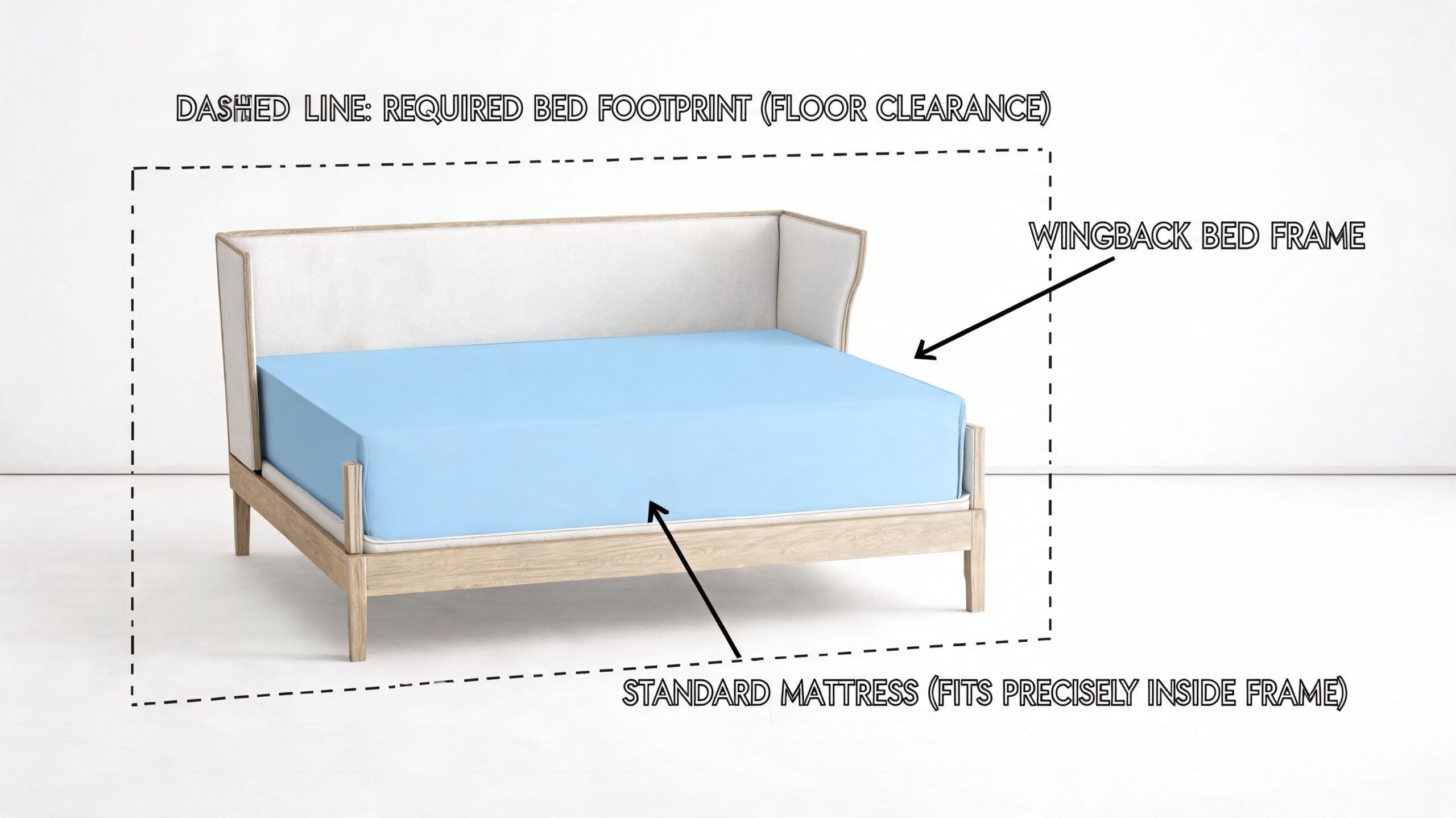
A beautiful bed can still be the wrong choice if the proportions are off. Scale is the first filter. Mattress compatibility is the second, and it's the one that frustrates more shoppers than it should.
Start with room proportion
Wingback beds have visual weight because of the headboard and side presence. In a generous primary bedroom, that's a benefit. In a tighter room, an oversized model can crowd your walkways and make the whole layout feel pinched.
Here's the practical way to judge fit:
- Look at the headboard mass: Tall and broad beds need breathing room on both sides.
- Check nightstand width: A wingback bed looks best when the side tables feel proportionate, not undersized.
- Think about the foot of the bed: Benches, trunks, or ottomans require extra clearance.
- Consider sightlines from the doorway: If the bed dominates the first view too aggressively, the room may feel smaller than it is.
A layout plan can solve many of these issues before delivery. If you're trying to balance bed width, nightstand scale, and walking space, this article on how to arrange bedroom furniture is a helpful reference.
The mattress gap problem
A common problem arises with online purchases. According to shopper discussions collected on this Target Threshold wingback bed questions page, product pages often give vague mattress guidance, which can leave a 20-inch gap between the frame and the bottom of the headboard. That gap doesn't just look awkward. It can affect support, pillow placement, and the overall finished look of the bed.
Common causes include:
- choosing a mattress that sits too low for the rail and headboard design
- assuming every wingback bed is a platform bed
- mixing a low-profile mattress with a frame designed around a foundation
- buying the bed first and trying to “make” the mattress work later
A wingback upholstered bed should cradle the mattress visually. If you can see too much wall between mattress and headboard, the proportions are off.
Textiles matter here too. Once the mattress height is right, layering a coverlet, lumbar pillow, and throw can make the bed feel complete without hiding the headboard shape. For inspiration beyond the bedroom, I like looking at ideas around heirloom textiles for cozy living rooms, because the same principle applies. Layered texture feels welcoming when the foundation underneath is scaled correctly.
How to Style Your Wingback Upholstered Bed
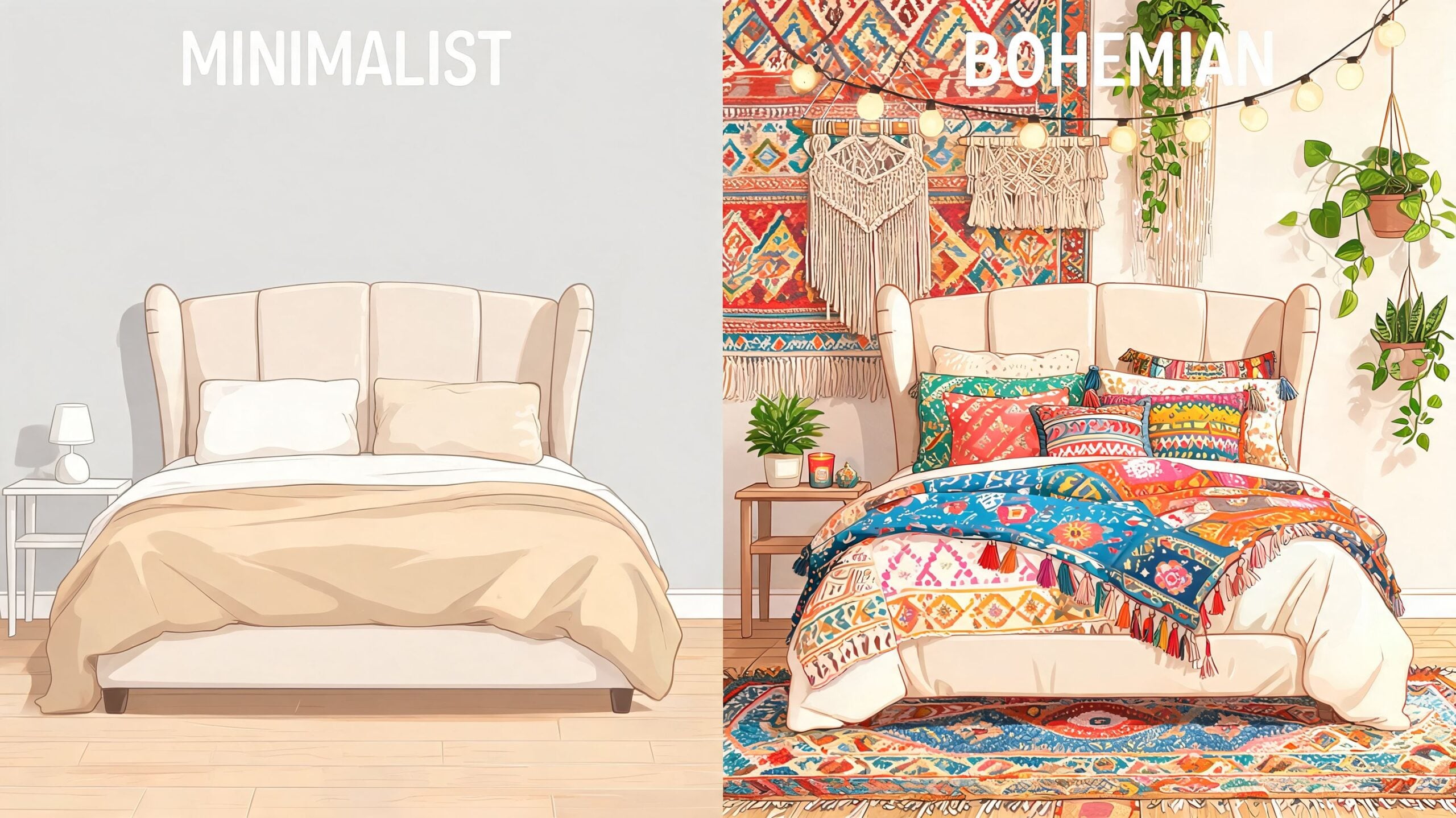
The same wingback upholstered bed can tell very different stories depending on what surrounds it. Styling is where the silhouette either becomes memorable or falls flat.
A coastal retreat look
In a coastal bedroom, the wingback bed should feel airy rather than formal. A lighter fabric, quiet bedding, and soft contrast work best. You want texture to do more of the work than pattern.
Build the look with:
- A relaxed upholstered finish: Linen-look fabric in a soft neutral keeps the bed from feeling heavy.
- Layered bedding: White or sand-toned quilts, tonal shams, and one subtle lumbar pillow feel polished without fuss.
- Nightstands with openness: Painted wood, woven fronts, or light oak pair well with the softness of upholstery.
- Gentle lighting: Ceramic lamps, woven pendants, or refined sconces support the mood.
A traditional sanctuary look
Traditional styling asks more of the bed, and a wingback shape is well suited to it, with tufting, deeper color, or a richer textile creating the sense of an enveloping bedroom.
That room usually benefits from more layering:
- matelassé or quilted bedding
- structured euros behind sleeping pillows
- pleated or patterned drapery
- darker wood tones or antique-inspired case goods
- a rug with enough presence to support the bed visually
According to this category page discussing gaps in retailer guidance, online listings often focus on looks but neglect care and long-term durability in humid climates, even as demand for American-crafted customizable beds has risen 25%. That omission matters. Good styling doesn't stop at the showroom look. It includes choosing a fabric and finish that still look composed after daily life, sunlight, humidity, and routine cleaning.
What usually works best
Bedrooms tend to look more expensive when restraint leads and detail follows.
A few styling choices consistently pay off:
- Let the headboard stay visible: Don't stack pillows so high that you hide the wings.
- Use contrast carefully: If the bed is textured, simplify the quilt. If the bedding is patterned, keep the bed fabric quieter.
- Ground it with a rug: The bed needs visual weight beneath it, especially in rooms with hard flooring.
- Mix soft and hard finishes: Upholstery looks best when balanced by wood, metal, ceramic, or glass.
If you're still sorting out whether your bedroom should lean coastal, classic, or transitional, this guide on how to find your home decorating style can help clarify the direction before you start selecting fabrics and accessories.
Your Dream Bedroom Starts at Willis Furniture
A wingback upholstered bed is one of those pieces that changes more than one corner of a room. It influences comfort, proportion, color, texture, and how the entire bedroom feels when you finally retreat for the night. When the frame is sturdy, the upholstery suits your lifestyle, and the mattress height is right, the room settles into place.
That's why this choice deserves more than a quick online scroll. The silhouette may be timeless, but the success of the purchase depends on details. Frame composition matters. Fabric choice matters. Room scale matters. Mattress pairing matters even more than most shoppers expect.
The advantage of working with a local specialist is that you don't have to solve all of that alone. A strong design team can help you compare headboard shapes, narrow down fabric options for a coastal climate, and create a bed that feels connected to the rest of your home. Mattress fitting should be just as intentional, especially if you want the bed to look right and sleep well. Financing also matters when you're investing in a premium piece, because the right plan can make a better-quality bed far more attainable. And delivery matters. A large upholstered frame should arrive, be assembled properly, and be placed exactly where it belongs without guesswork.
A dream bedroom rarely comes together by accident. It comes together through good decisions, made in the right order, with the right guidance.
If you're ready to choose a wingback upholstered bed that fits your style, your room, and your sleep needs, visit Willis Furniture & Mattress. Their Virginia Beach team can help you customize fabrics in the Design Center, pair your frame with the right mattress using BedMatch technology, explore flexible financing for premium brands, and shop value-minded accent pieces through the Willis Outlet and Rug Market.


